





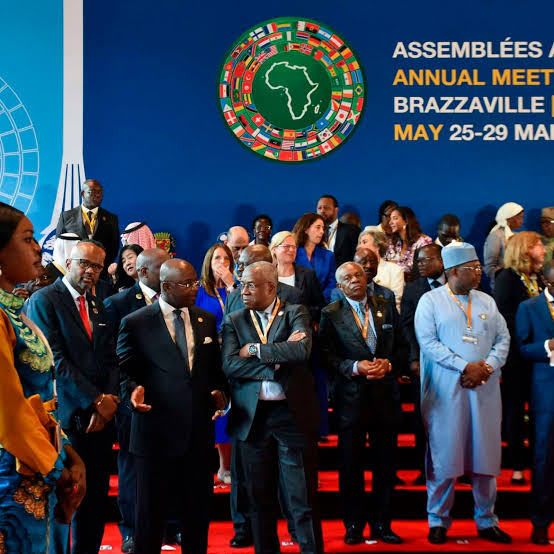
The loss came to light through the bank’s latest disclosures, released during the AfDB annual meeting held in Brazzaville. The figures show Kenya’s shareholding fell from 186,876 shares at the close of 2024 to 180,161 shares. That shift pushed the country’s ownership stake down from 1.16 percent to just 1.034 percent. The forfeited shares were not left idle — they were automatically picked up and redistributed among other member countries.
Where Kenya Now Stands Among AfDB Members
The share loss is not just a financial setback. It is a signal of where Kenya sits relative to its peers. The bank’s biggest shareholders currently include Egypt at 8.5 percent, Nigeria at 7.6 percent, and the United States at 5.5 percent — all significantly ahead of Kenya’s position.
Within East Africa, the contrast is even sharper. Tanzania was the only country in the region that actually grew its shareholding during this period. Kenya, Uganda, Burundi, Rwanda, and South Sudan all saw their stakes diluted. For a country that has positioned itself as a regional economic leader, slipping back while a neighbour moves forward is an uncomfortable reality.
A Contradiction at the Heart of Kenya’s Africa Strategy
What makes this loss particularly difficult to explain is the gap between what Kenya has promised and what it has delivered. President William Ruto hosted the AfDB’s 2024 annual meeting right in Nairobi, using the occasion to signal Kenya’s commitment to deepening its role in African financial institutions. The optics were strong. The follow-through, at least at the AfDB, was not.
To be fair, Kenya did make significant capital injections elsewhere. The country put an additional $100 million into the Trade and Development Bank (TDB) and another $50 million into Afreximbank. Those are real commitments. But the failure to protect its AfDB stake — especially after hosting the institution’s flagship gathering — raises questions about how Kenya is prioritising its continental financial obligations.
Borrowing More While Owning Less
The harder irony is this: as Kenya’s ownership of the AfDB has shrunk, its dependence on the institution for loans has grown. Kenya has now overtaken Nigeria to become the third-largest recipient of AfDB debt disbursements on the continent, sitting behind only South Africa and Morocco.
That creates an unusual dynamic. Kenya is borrowing more from a bank where it holds less and less sway. Ownership stakes at multilateral development banks are not just symbolic — they come with voting rights and influence over how the institution sets policy, allocates resources, and prioritises lending. A shrinking stake means a softer voice at the table, even as Kenya’s financial relationship with the bank deepens.
What Needs to Change
The path forward is not complicated in theory. Kenya needs to meet its capital subscription commitments consistently if it wants to protect and eventually grow its stake. The resources were clearly available — the TDB and Afreximbank injections prove that. The question is whether AfDB shareholding will be treated as a priority alongside those other commitments, or whether it continues to fall through the cracks.
With Africa’s development agenda accelerating under frameworks like the African Continental Free Trade Area (AfCFTA), having influence inside institutions like the AfDB matters more than ever. Countries that hold larger stakes have more say in how development finance is directed across the continent. Kenya losing ground here, at this moment, is a setback worth taking seriously.