







Meta has launched an AI agent built specifically for small and medium-sized businesses. Called the Meta Business Agent, the tool handles customer inquiries, processes payments, books appointments, and generates daily sales summaries, all without human input. It was unveiled at Meta’s Conversations conference in London and marks the company’s first serious push to sell AI directly to businesses as a revenue stream beyond advertising.
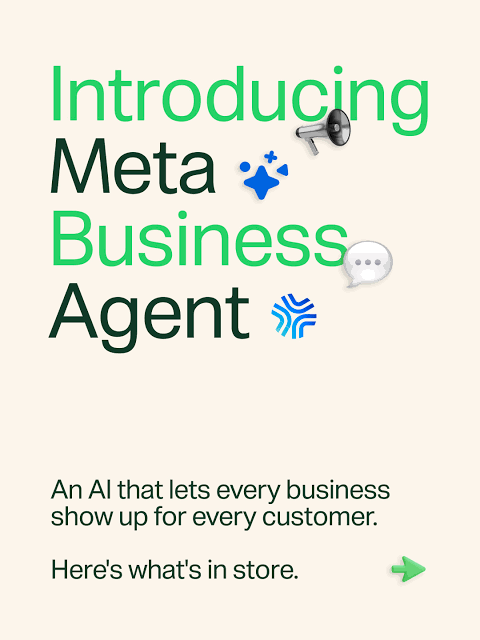
The agent works across WhatsApp, Instagram, and Messenger, three platforms already used by millions of businesses worldwide for customer communication. For SMEs that cannot afford a full customer service team, the timing is significant.
What Makes It Different From a Chatbot
Most business chatbots follow fixed scripts. They respond to keywords and fall apart the moment a customer asks something unexpected. The Meta Business Agent works differently.
It reads a business’s brand tone, product catalog, and customer history, then acts on that information autonomously. It does not just answer questions. It counters objections, recommends products, processes in-app payments, places orders, and books calendar appointments without waiting for a human to step in.
When a conversation becomes too complex, the agent summarizes the full chat and hands it to a human staff member with context already in place. That handoff feature alone saves significant time for small business owners managing high volumes of customer messages daily.
Voice Notes, Morning Briefings and More
Two features stand out for markets like Kenya and wider Africa where voice communication is preferred over typing. The agent can process spoken queries sent as voice notes and respond naturally, removing the barrier for customers who find typing in a second language uncomfortable.
Business owners also receive a morning briefing each day, a summary of overnight customer interactions, trending questions, and buying patterns. For a shop owner who cannot monitor messages around the clock, that daily digest offers a practical way to stay informed without being glued to a screen.
Pricing: What SMEs and Enterprises Will Pay
Meta is currently offering free access globally during an introductory period. After that, pricing splits into two tiers.
Small businesses will pay a fixed monthly fee bundled under Meta One or WhatsApp Business Premium subscriptions, priced between $37.99 and $49.99 per month. Enterprise and large firms will pay on a per-use basis measured by data consumption in tokens, meaning costs scale with usage volume.
The agent connects to third-party tools through a new Business Agent Platform, integrating with ecommerce platforms like Shopify and Shopee, and customer service software like Zendesk. For businesses already using these tools, the setup is designed to feel plug-and-play rather than a major technical project.
The Security Risk Businesses Cannot Ignore
Cybersecurity experts have raised serious concerns alongside the launch. Because the Meta Business Agent connects directly to live product inventory, customer records, and internal business software, it presents an attractive target for attackers.
The specific threat flagged is prompt injection, where malicious instructions are hidden inside ordinary customer messages. If the attack succeeds, the AI agent can be tricked into changing product prices, leaking private backend data, or altering account credentials without the business owner knowing anything has happened.
For SMEs without dedicated IT security teams, this risk deserves careful attention. Businesses adopting the agent should review Meta’s security guidelines, restrict the agent’s access to only the data it genuinely needs to function, and monitor for unusual activity regularly. The convenience the tool offers is real, but so is the exposure if proper guardrails are not in place.
What This Means for African SMEs
For Kenyan and wider African businesses, the Meta Business Agent arrives at a moment when WhatsApp is already the dominant customer communication channel for SMEs. Many small businesses manage sales, support, and payments entirely through WhatsApp chats today.
Also read:Nigerian Fintech Smartcomply Wins Seat at the Table Where Global Payment Security Rules Are Made
An AI agent that plugs directly into that existing behavior, handles after-hours inquiries, and processes payments without additional infrastructure could meaningfully reduce the operational burden on small business owners. The voice note capability adds particular relevance for markets where customers prefer speaking over typing.
The free introductory period offers a low-risk window to test the tool before committing to a paid subscription. Businesses that move early, and take the security precautions seriously, stand to gain a genuine head start on competitors still managing customer conversations manually.