








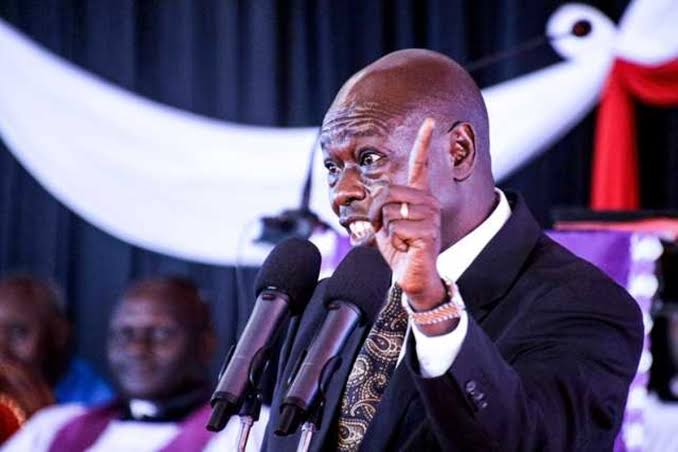
The debate around Kenya’s Finance Bill 2026 is no longer confined to Parliament and tax experts. It has moved squarely into the political arena, with former Deputy President Rigathi Gachagua announcing that his Democracy for the Citizens Party (DCP) will unveil its own alternative budget proposals and make a public case for rejecting the government’s tax measures. The move signals a fresh front in what is already one of the most charged economic conversations the country has had since the anti-tax protests of 2024.

Gachagua, who has been one of the sharpest critics of President William Ruto’s administration since his dramatic falling out with the Kenya Kwanza camp, said the DCP would present a detailed breakdown of alternative proposals while pointing out what the party considers harmful provisions in the current Bill. His message to Members of Parliament was direct: listen to Kenyans before you vote.
What Gachagua Said
“I will issue budget proposals for the DCP Party tomorrow, and I will speak on the Finance Bill, and the reasons why Kenyans should reject it, and MPs should also reject it,” Gachagua stated ahead of the announcement.
He went further, cautioning that if Parliament proceeds to pass the Bill despite public objections, citizens could take to the streets. He also claimed there were plans to deploy police officers to disrupt any protests that might emerge over the legislation, a claim that is likely to draw strong reactions from both the government and civil society.
Whether or not those specific warnings prove accurate, the broader political signal is clear. Gachagua is positioning the DCP as a credible opposition voice on economic matters, one willing to go beyond criticism and offer concrete alternatives at a time when many Kenyans feel the government’s budget priorities do not reflect their daily reality.
Why the Finance Bill 2026 Is So Contested
The Finance Bill 2026 follows the standard legislative path of introducing tax and revenue measures to help fund the government’s budget and narrow the fiscal deficit. But standard process does not mean smooth passage. Like its predecessors, this Bill has run into a wall of public concern driven by the same issues that have dominated economic conversations for the past two years: a high cost of living, sluggish job creation, and deep skepticism about how public money is being spent.
The National Treasury has maintained that the Bill is aimed at broadening the tax base and improving compliance rather than dramatically increasing the burden on ordinary Kenyans. Specific proposals, including changes to PAYE, a planned excise duty on smartphones, and questions around mobile money taxation, have each attracted their own wave of public reaction. For many citizens, the cumulative effect of years of tax adjustments without visible improvement in public services has made any new finance legislation an uphill political sell.
Parliament Opens the Door for Public Input
Alongside the political noise, Parliament has moved to bring citizens formally into the process. The Departmental Committee on Finance and National Planning announced public hearings running from June 2 to June 8, 2026, giving individuals, businesses, professional bodies, civil society groups, and other stakeholders the opportunity to present their views before lawmakers finalise the legislation.
Feedback gathered during those sessions is expected to inform amendments before the Bill proceeds to its second reading. Parliament has encouraged broad participation, recognising that the issues at stake, revenue collection, public spending priorities, and the cost of living, touch virtually every Kenyan household and business.
The Kenya Revenue Authority and Treasury officials have also been engaging with various stakeholder groups ahead of the final parliamentary vote, though critics argue that meaningful changes to the Bill’s most contentious proposals are still needed.
The Shadow of 2024 Still Looms Large
It is impossible to discuss any finance bill in Kenya right now without referencing the events of mid-2024, when widespread anti-tax protests forced the government to withdraw its Finance Bill and triggered a significant political crisis. That moment reset the terms of the taxation debate in ways that still reverberate today.
Read also:Finance Bill 2026: The 5 Issues Every Kenyan Is Talking About
Citizens who participated in those protests, and many who watched from the sidelines, emerged with a sharper sense of their ability to influence legislation and a lower tolerance for tax proposals perceived as unfair or poorly justified. Any government that tables a finance bill in this environment does so knowing that public sentiment can shift quickly and that the consequences of getting it wrong extend well beyond Parliament.
Gachagua’s entry into this conversation, backed by a formal party structure and an alternative budget framework, adds a new dimension. If the DCP’s proposals resonate with MPs or gain traction among the public, they could complicate the government’s path to passing the Bill in its current form.
What to Watch in the Coming Days
The next few days will be telling. The DCP’s alternative budget will be scrutinised not just for its political intent but for the substance of its economic proposals. Can it offer realistic alternatives that address Kenya’s genuine fiscal challenges while easing the burden on ordinary citizens? That is the question that will determine whether Gachagua’s move is remembered as a meaningful contribution to the debate or simply political theatre.
Meanwhile, Parliament’s public participation hearings are gathering momentum, and the final shape of the Finance Bill 2026 remains genuinely uncertain. With street protests still fresh in collective memory, the government, lawmakers, and opposition figures alike are navigating terrain where the stakes are high and the margin for miscalculation is narrow.