








National Bank of Kenya (NBK) has delivered a strong half-year performance under its new owner, Access Bank of Nigeria. Profit after tax rose 61% to KSh 1.72 billion for the six months ended 30 June 2026, while profit before tax more than doubled, climbing 124.3% to KSh 2.18 billion from KSh 974.1 million in the same period last year.

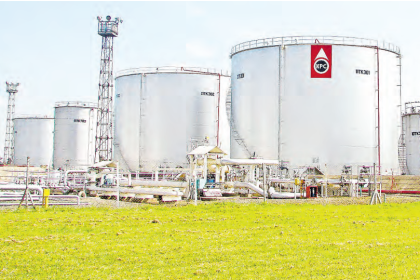
National Bank of Kenya headquarters. The bank recorded a sharp rise in profitability in the first half of 2026 following its acquisition by Access Bank.
The results confirm that the bank is making solid progress after the completed sale from KCB Group to Access Bank. Earnings per share also improved significantly, rising 61.9% to KSh 0.68.
H1 2026 Financial Highlights
| Metric | H1 2026 | YoY Change |
|---|---|---|
| Profit Before Tax | KSh 2.18 billion | +124.3% |
| Profit After Tax | KSh 1.72 billion | +60.5% |
| Earnings Per Share | KSh 0.68 | +61.9% |
| Total Assets | KSh 157.09 billion | +18.9% |
| Net Loans & Advances | KSh 61.28 billion | +38.4% |
| Customer Deposits | KSh 116.34 billion | +16.1% |
Swipe left or right on mobile to view the full table.
What Drove the Strong Performance
The biggest contributor to the profit jump was a sharp fall in funding costs. Interest expenses dropped 29% to KSh 1.80 billion. This reduction more than offset a modest 2.7% decline in gross interest income and lifted net interest income by 11% to KSh 5.40 billion.
At the same time, the bank expanded its lending aggressively. Net loans and advances grew 38.4% to KSh 61.28 billion. Total assets rose nearly 19% to KSh 157.09 billion, while customer deposits increased 16.1% to KSh 116.34 billion. These numbers show that NBK is both growing its balance sheet and managing its cost of funds more efficiently under the new ownership.
The half-year results build on the strong momentum already seen in the first quarter of 2026, when profit after tax rose 275% to KSh 1.03 billion. The consistent improvement across two consecutive quarters suggests that the turnaround strategy under Access Bank is taking hold.
Areas That Still Need Attention
While profitability improved sharply, two areas require careful monitoring. The bank’s liquidity ratio declined from 69.5% to 61.1%. Gross non-performing loans also rose slightly by 3.2% to KSh 17.85 billion. These figures indicate that credit risk management and liquidity buffers will remain important priorities for management as the bank continues to expand its loan book.
Access Bank will need to balance growth ambitions with the need to keep asset quality and liquidity at healthy levels. The second half of 2026 will be an important test of whether the bank can maintain strong earnings while containing these risks.
How NBK Compares with Other Mid-Tier
The first half of 2026 has produced mixed results among Kenya’s medium-sized banks. Here is how NBK stacks up against two of its peers that have already released full half-year numbers:
| Bank | H1 2026 PAT | YoY Growth | Main Driver |
|---|---|---|---|
| National Bank of Kenya | KSh 1.72 billion | +60.5% | Lower funding costs + loan growth |
| Family Bank | KSh 3.70 billion | +61.8% | Strong net interest income & government securities |
| Stanbic Bank Kenya | Approx. KSh 6.5–6.6 billion | +1.0% | Lower loan loss provisions |
Swipe left or right on mobile to view the full table.
Family Bank matched NBK’s strong profit growth rate, largely through a different strategy that leaned more on government securities. Stanbic, the largest of the three by assets, delivered almost flat earnings despite expanding its balance sheet. NBK’s pretax profit growth of more than 124% remains one of the fastest recoveries among mid-tier lenders this half year.
Also read:Family Bank Profit Jumps 61.8% to KSh 3.70 Billion
What This Means for Kenyans
A healthier National Bank of Kenya is good news for the wider banking sector and for ordinary Kenyans. Stronger mid-sized banks increase competition for deposits and loans, which can eventually lead to better rates, better products and improved service for customers and small businesses.
The 38.4% growth in net loans shows that the bank is actively putting money into the economy. This is particularly important at a time when many businesses and households still need affordable credit. At the same time, the sharp reduction in funding costs demonstrates that the bank is becoming more efficient under Access Bank’s ownership.
For existing NBK customers, the continued recovery should support greater stability and longer-term investment in technology and branch services. For the market as a whole, the performance of NBK under new ownership adds another competitive player in a sector that has seen significant consolidation in recent years.
Looking ahead, the second half of 2026 will be critical. Investors and customers will be watching whether the bank can sustain this earnings momentum while keeping non-performing loans and liquidity under control. If it succeeds, National Bank of Kenya could emerge as one of the clearer mid-tier turnaround stories of the year.
Overall, the H1 2026 results show that National Bank of Kenya is firmly on a recovery path under Access Bank. The numbers are solid, the direction is positive, and the bank now has a clearer foundation on which to build.
Sources
- Capital FM – NBK profit jumps 61% to Sh1.72bn
- Khusoko – National Bank of Kenya H1 2026 results (24 August 2026)
- Access Bank and KCB Group announcements on the completed acquisition
- Earlier Q1 2026 results and market reports on mid-tier bank performance