


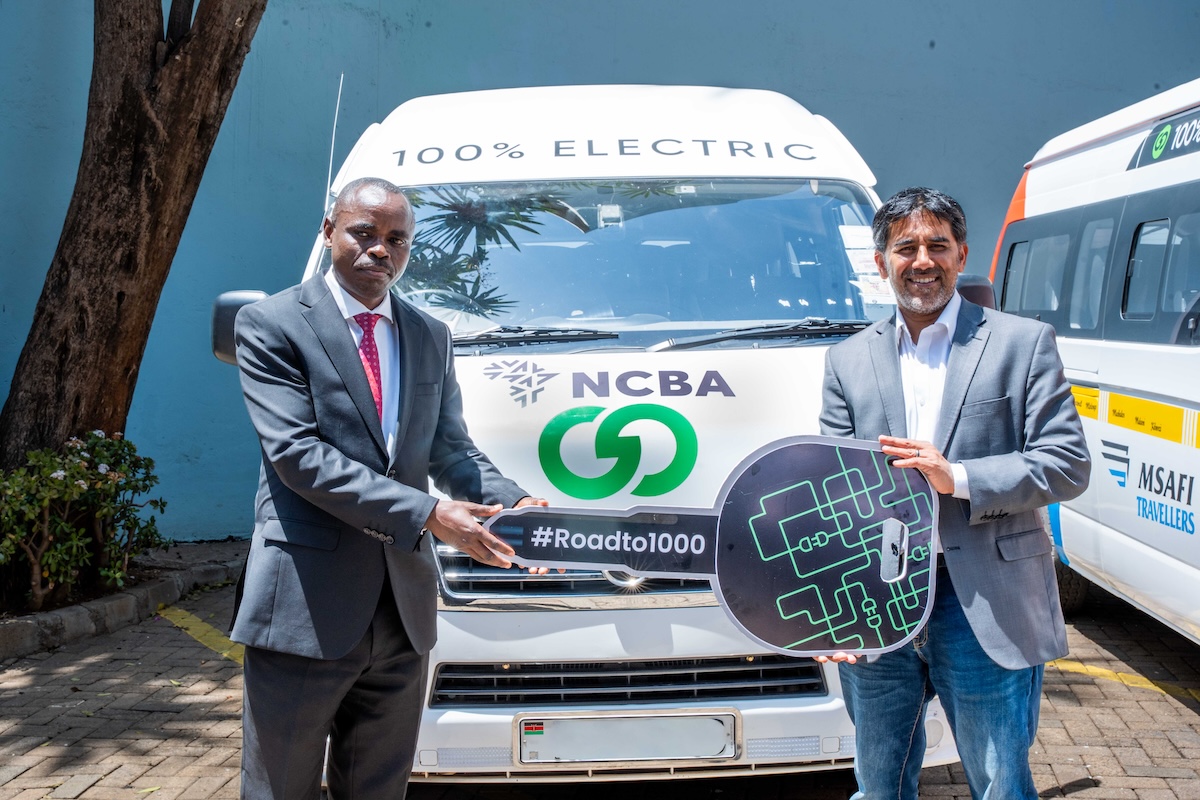
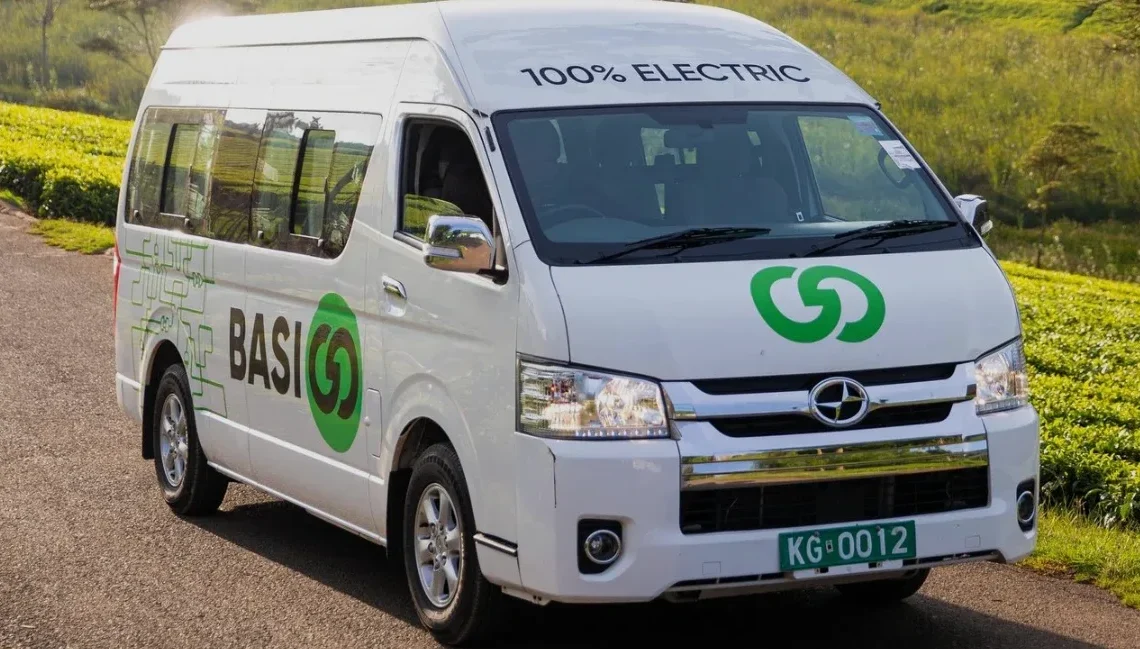
Kenya’s shift toward electric public transport just got a genuine financial backbone. NCBA Group has signed a strategic partnership with e-mobility startup BasiGo to finance 1,000 electric vehicles for the country’s commercial transport market.
The deal targets PSV SACCOs, businesses, schools, and hospitals, aiming to accelerate clean energy adoption across Kenya’s transport sector. NCBA also becomes the first local investor to directly finance BasiGo as a corporate entity, a meaningful shift beyond the single-vehicle consumer loans that have typically defined EV financing in Kenya so far.
Key Financing Structures
The partnership blends NCBA’s standard asset finance capabilities with BasiGo’s subscription-based model to lower the upfront capital barrier that has historically kept many operators out of the EV market.
| Borrower Type | Financing Available | Repayment Term | Processing Fee |
|---|---|---|---|
| Established PSV SACCOs & Companies | Up to 90% | Up to 60 months | 1.5% (discounted) |
| Individual SACCO Members | Up to 80% | Up to 48 months | 1.5% (discounted) |
Beyond traditional asset finance, NCBA and BasiGo have also introduced leasing as an additional financing route, giving operators more flexibility in how they structure their transition to electric vehicles depending on their cash flow and business model.
How the Pay-As-You-Drive Model Actually Works
NCBA’s credit structure is designed to work alongside BasiGo’s Pay-As-You-Drive subscription model, where operators pay a flexible, per-kilometer fee rather than carrying the full cost of battery, charging, and maintenance upfront.
For standard Nairobi transit routes, this rate typically runs between KSh 20 and KSh 44 per kilometer, depending on the specific vehicle chassis size and battery arrangement. BasiGo embeds digital telemetry software inside each electric bus, which records exact daily mileage and automatically generates a digital invoice at the end of each day, with payment deducted electronically from the operator’s collected passenger fares.
Crucially, this single per-kilometer fee is genuinely all-inclusive. It covers nightly charging infrastructure use, comprehensive vehicle insurance, scheduled parts servicing every 15,000 kilometers, roadside assistance, and even a free battery replacement if the cells drop below performance standards.
Credit Eligibility for Kenyan SACCOs
NCBA has notably lowered the traditional barriers to entry for PSV operators looking to finance EVs under this partnership. SACCOs no longer need to provide a formal SACCO guarantee or freeze members’ share contributions as collateral, a requirement that has historically slowed down asset financing approvals in the sector.
Applicants must still submit a fully completed NCBA Asset Finance Application Form, along with original bank, SACCO, or M-Pesa statements to demonstrate consistent cash flow and route activity. Established SACCO entities need to demonstrate capacity to cover a 10 percent upfront deposit, with NCBA financing the remaining 90 percent, while individual SACCO members applying separately need to cover a 20 percent deposit. Both borrower types pay the same discounted 1.5 percent processing fee upon approval, down from NCBA’s standard asset financing rates.
Where the Money Is Coming From
This commercial rollout draws from NCBA’s dedicated KSh 2 billion e-mobility financing facility, established under the bank’s Change the Story sustainability agenda. NCBA has already channelled more than KSh 800 million from this facility into active sustainable mobility assets, meaning the BasiGo deal represents a significant new deployment of remaining capacity rather than an entirely separate pool of funds.
Robert Marete, Deputy Director and Head of Department at NCBA Leasing, and Jit Bhattacharya, CEO and Co-Founder of BasiGo, launched the partnership together, framing it as a way to make electric vehicles commercially viable at scale rather than just putting more EVs on the road. Lennox Mugambi, NCBA’s Group Director for Asset Finance and Business Solutions, has separately noted that the bank’s broader push in this space is about building financing genuinely suited to how these businesses actually operate.
Part of a Bigger Pattern for NCBA
This deal builds on a growing pattern of NCBA e-mobility partnerships this year. Just weeks earlier, in July 2026, NCBA signed a similar strategic partnership with ePure Motion, offering qualifying salaried customers up to 100 percent financing on passenger EVs over terms as long as 72 months, alongside comparable 80 and 90 percent financing tiers for PSV SACCO members and companies.
NCBA has also struck a separate asset financing agreement with Salvador Caetano Kenya Limited covering both electric and premium internal combustion vehicles, reinforcing the bank’s position as Kenya’s leading asset finance provider, with a 35.4 percent hire purchase market share as of April 2026.
Why This Matters for Kenya’s Transport Sector
Shifting from diesel to electric power gives operators real insulation from fluctuating fuel costs, while cutting maintenance overheads significantly given how few moving parts electric drivetrains carry compared to combustion engines. For SACCOs operating on thin margins, that predictability alone can make a genuine difference to long-term profitability.
With NCBA now positioned as BasiGo’s first local corporate investor, this partnership also signals growing confidence among Kenyan financial institutions that e-mobility has moved past the pilot stage and into genuine commercial viability.
Related:NCBA, HEVA Fund Launch KSh 20 Million Collateral-Free Loans at 9% for Creative Start-Ups
Frequently Asked Questions
How many electric vehicles will this NCBA-BasiGo partnership finance?
The partnership targets financing for 1,000 electric vehicles, primarily electric vans and buses for Kenya’s commercial transport market.
How much deposit do SACCOs need to qualify for EV financing?
Established PSV SACCOs and companies need a 10 percent deposit, with NCBA covering the remaining 90 percent, while individual SACCO members need a 20 percent deposit for 80 percent financing.
What does BasiGo’s Pay-As-You-Drive fee actually cover?
The per-kilometer fee covers charging, insurance, scheduled servicing every 15,000 kilometers, roadside assistance, and free battery replacement if performance drops below standard.
Is this NCBA’s first electric vehicle financing partnership?
No, NCBA also partnered with ePure Motion in July 2026 for similar EV financing, and separately with Salvador Caetano Kenya for both electric and combustion vehicle financing.
Where does the funding for this partnership come from?
The capital is drawn from NCBA’s KSh 2 billion e-mobility financing facility under its Change the Story sustainability agenda, of which more than KSh 800 million has already been deployed.
Bottom line
This deal changes the game for how EV financing actually works in Kenya. Instead of one operator taking out one loan for one bus, NCBA is now backing BasiGo directly as a company, which means the money can move faster and reach more SACCOs at once.
Paired with the ePure Motion and Salvador Caetano deals from earlier this year, NCBA has clearly decided electric transport is where it wants to plant its flag. For PSV SACCOs weighing whether to make the switch, the lower deposit requirements and Pay-As-You-Drive setup make this one of the easiest entry points into electric vehicles that Kenya has seen so far.
Read the original announcements via Business Quest and Femme Hub. For more on NCBA’s e-mobility financing, visit NCBA Group’s official site, or learn more about BasiGo’s electric vehicles directly at basigo.co.