





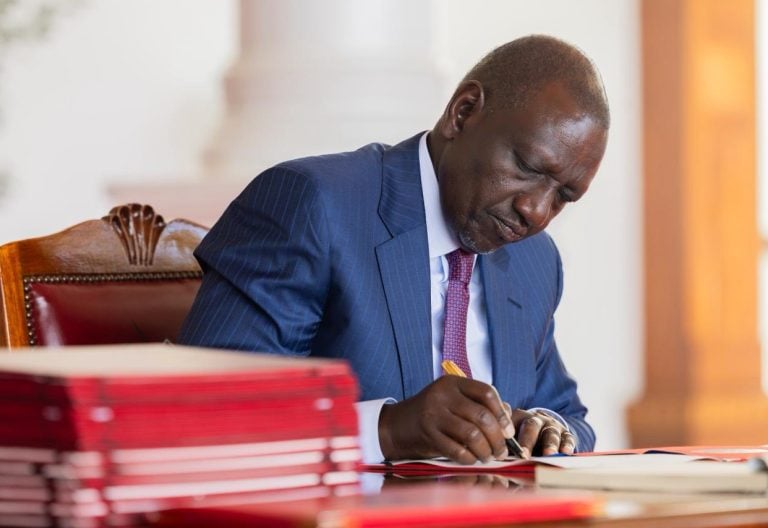
President William Ruto has ordered an immediate crackdown on foreigners running small shops and hawking in Kenya, with operations to start on Monday. Speaking to MSME traders at State House on Wednesday, 2 September 2026, he said hawking and small retail must be reserved for Kenyans, and told Parliament and the Trade ministry to rush a Trade Bill that would write those limits into law.
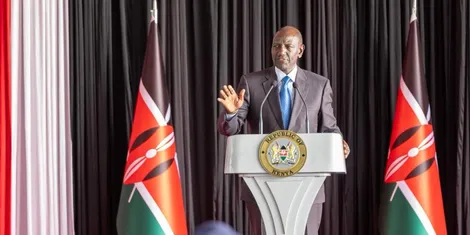
President William Ruto meets MSME traders at State House, Nairobi, on 2 September 2026. He ordered a Monday start to enforcement against foreigners in small retail and hawking, and directed KRA to reverse the higher consolidated cargo benchmark.
The same meeting produced a second instruction that directly answers recent street protests: KRA must restore the minimum customs valuation benchmark for consolidated general cargo from KSh 3.2 million back to KSh 2.5 million.
What Ruto ordered on foreign small traders
Ruto told traders the government welcomes genuine foreign investment, but not competition in street vending and micro retail. “We have not improved investor confidence for hawkers to come to Kenya,” he said. He added that it cannot be that someone comes from China or elsewhere to hawk or open a small shop.
He directed National Assembly Majority Leader Kimani Ichung’wah and Trade Cabinet Secretary Lee Kinyanjui to fast-track the Trade Bill now before Parliament. According to the President, the bill will list business categories that should be reserved by law for Kenyan citizens.
The intended effect is clear: hawking, small retail kiosks and estate-level shops would sit on the citizen-only side of the line. Larger manufacturing, industrial and high-value projects would remain the preferred channel for foreign capital. Officials have not yet published a full schedule of reserved activities; that detail will depend on the final text of the bill and any regulations that follow.
| Directive | Detail |
|---|---|
| Who is targeted | Foreign nationals in small-scale retail and hawking |
| Start of operations | Monday (following 2 September order) |
| Legal vehicle | Trade Bill to reserve selected trades for Kenyan citizens |
| Officials tasked | Kimani Ichung’wah (Majority Leader); Lee Kinyanjui (Trade CS) |
| President’s framing | Foreign capital for industry and investment, not street trade |
Trader protests that set the stage
Local traders in markets such as Nyamakima, Kamukunji and Gikomba have repeatedly shut shops and marched over two linked grievances: foreign competition in small retail, and higher import clearance costs on shared containers.
In late August, sections of the Nairobi CBD closed as traders protested the KRA decision that lifted the minimum customs benchmark for a 40-foot consolidated container from KSh 2.5 million to KSh 3.2 million. That is a 28 per cent rise, or KSh 700,000 more on the reference used under simplified clearance. Many micro-importers do not fill a container alone. They share space for clothes, household goods and electronics. A higher floor squeezes already thin margins.
KRA had defended the KSh 3.2 million figure as a risk-management benchmark, not a flat tax on every box. The authority said the old KSh 2.5 million level had stayed put for years and that consolidators sometimes under-declared high-value goods. Traders could seek itemised checks where they believed the true value was lower. Market groups still rejected the hike as unaffordable and impractical for shared cargo.
KRA told to reverse the KSh 3.2 million benchmark
At the same State House meeting, Ruto ordered KRA to reverse the consolidated cargo benchmark to KSh 2.5 million. He also told the Commissioner General to prepare a list of high-value goods that should not sit inside the simple consolidation arrangement, so those items can be valued separately.
That instruction is a direct response to the August protests. It does not erase KRA’s power to value goods correctly where the actual consignment is worth more. It does restore the reference traders had demanded. Separately, Ruto ordered a sharp cut in Kenya Railways freight charges on 20-foot containers, from about KSh 75,000 to KSh 10,000, as a further cost relief for the same MSME audience.
| Customs item | Previous | KRA revision (Aug 2026) | Ruto order (2 Sept 2026) |
|---|---|---|---|
| Consolidated 40-ft cargo benchmark | KSh 2.5 million | KSh 3.2 million (~+28%) | Revert to KSh 2.5 million |
| Nature of figure | Simplified clearance reference | Higher risk-management floor | Restore prior floor; list high-value exclusions |
What the Trade Bill is meant to do
Ruto described a Trade Bill already in Parliament that would name business lines closed to foreigners. The political pitch is protection of Kenyan MSMEs in informal and micro retail. Parallel local-content debates in other bills have floated high local procurement targets for foreign firms, including agricultural sourcing. Those are related policy tracks, not the same instrument as the reserved-trades list he flagged on Wednesday.
Until the bill is passed, gazetted and operationalised, enforcement will rest on existing immigration, work-permit and business-licensing rules, plus whatever operational instructions ministries and county governments issue after Monday. Legal certainty for both Kenyan traders and lawful foreign investors will depend on clear definitions: what counts as “small shop,” “hawking,” and who qualifies as a citizen-owned enterprise.
What it means for Kenyan traders and foreign operators
For Kenyan MSMEs, the day delivered two wins they had demanded: a public line against foreign street-level competition, and a roll-back of the higher cargo benchmark that triggered shop closures. Markets that live on thin margins and shared imports will watch how fast KRA implements the reversal and how counties handle licensing on the ground.
For foreign nationals already in micro retail, the Monday start date signals enforcement risk. Work permits and business licences that never authorised street hawking or estate kiosks will come under pressure. Investors who put capital into factories, logistics and large retail formats sit outside the President’s stated target, but they will still want clean rules so legitimate foreign investment is not confused with informal trading.
Implementation will decide whether this becomes orderly regulation or messy street-level conflict. Counties run many market and licensing functions. National agencies control immigration and customs. Coordination matters. So does due process for people who hold valid papers.
Bottom line
On 2 September 2026 Ruto tied two MSME complaints into one State House package: stop foreigners from dominating hawking and small shops, and cut the customs pressure that traders said was killing shared imports. The Trade Bill is the longer legal fix. The Monday crackdown is the short operational signal. The KRA reverse order is the immediate cost relief.
Markets will judge the package by what happens next week: who is closed, how the KSh 2.5 million benchmark is applied again, and whether the Trade Bill’s reserved list is drafted tightly enough to protect citizens without chilling lawful investment.
Sources
- Kenyans.co.ke: Ruto orders crackdown on foreigners operating small shops, hawking from Monday
- Kenyans.co.ke: Ruto orders KRA to revert consolidated cargo valuation to KSh 2.5 million
- Tuko: Nairobi traders protest KSh 3.2m cargo rule
- Tuko / KRA reporting on the KSh 2.5m to KSh 3.2m benchmark
- KRA public clarifications on the consolidated cargo benchmark (August 2026 media briefs)