








Key takeaway: Under Section 203 of the Insurance Act, once you have submitted all relevant documents, an insurer generally has 90 days to admit or deny liability, fix the amount due, confirm who should be paid and settle the claim. Simple claims often finish sooner. Delays usually start when documents are incomplete, liability is disputed or the case needs investigation or a court order.
- The Legal Clock: 90 Days Under Section 203
- Typical Timelines by Claim Type
- Claims Process Step by Step
- 1. Notify early
- 2. Complete the document file
- 3. Acknowledgment after full documents
- 4. Assessment or investigation
- 5. Offer and discharge voucher
- 6. Payout
- What Delays Claims in Kenya
- If Your Claim Is Delayed
- Documents That Usually Speed Things Up
- Frequently Asked Questions
- Bottom Line
If your windscreen is cracked, a hospital bill needs reimbursement, or a car is written off, the first question is usually the same: how long will this take?
The short legal answer is anchored in Section 203 of the Insurance Act. The practical answer is messier. Straightforward claims can clear in days or a few weeks. Theft, total loss, fraud checks and third-party injury cases can run much longer, especially if police files or court decrees are still open.
This guide explains the legal clock, typical timelines by claim type, the step-by-step process under IRA claims rules, what causes delay, and what to do if the insurer goes quiet.
The Legal Clock: 90 Days Under Section 203
Section 203 of the Insurance Act says that where the claimant has submitted all the relevant documents, every insurer shall, for claims on policies it issued:
- admit or deny liability;
- determine the amount due;
- establish the identity of the claimant; and
- pay the claim,
within ninety days of the date of reporting of the claim, or, where liability is fixed by a court, within ninety days of that determination.
The Insurance Regulatory Authority (IRA) has publicly summarised the same point: insurers have 90 days to settle once all correct documents are submitted.
Important details many policyholders miss:
- The 90 days are tied to a complete file, not to the day you first called the call centre with a half story and no abstract.
- If the insurer cannot pay within that period, it may apply to the Commissioner for an extension of not more than 30 days.
- If the amount still sits unpaid after the period (or any extension), a penalty equal to five per cent of the unpaid amount becomes due.
- Section 203(1) does not apply to settlement of index-based insurance or micro-insurance claims.
So the law is not “every claim pays in 90 days no matter what.” It is “once the full documentation is in, the insurer must move through admission, quantification, identity and payment inside that window, subject to the rules above.”
Typical Timelines by Claim Type
These ranges are practical industry experience, not fixed statutory periods. Your policy wording, assessor diary and document speed still control the outcome.
Mobile: Swipe left / right → ←
| Claim type | Typical time (practice) | What usually drives speed |
|---|---|---|
| Simple claims (windscreen, small medical reimbursement, straightforward funeral expense) | About 7–14 working days | Complete papers, low investigation need |
| Minor motor own-damage | About 2–4 weeks | Assessor visit, garage quote, repair authority |
| Total loss, theft, major fire | About 6–12 weeks or more | Police abstract, investigation, valuation, logbook issues |
| Third-party injury or fatality after court judgment | Often 1–6 months after judgment | Decree extraction, identity of payee, legal process |
← Swipe on mobile →
Motor repairs also depend on the garage. An insurer can approve a claim quickly and still wait on parts, bodywork or a re-inspection before the final release.
Claims Process Step by Step
The Insurance (Claims Management) Guidelines set market-conduct rules on how insurers handle claims. The 2022 guidelines, published as a Gazette Notice, are a key reference for process and timing at each stage.
1. Notify early
Report the incident to your insurer or broker as soon as you can. Many policies require prompt notice. For road accidents involving injury, traffic rules also require police reporting within tight timelines. Late notice does not always kill a claim, but it can slow investigation and raise questions.
2. Complete the document file
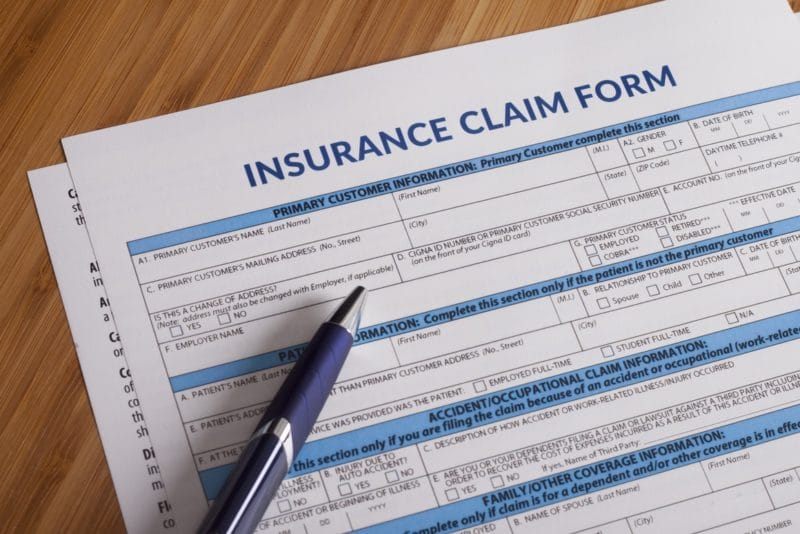
Ask the insurer for the claim form and a written list of required documents. Typical motor files include a police abstract, driver’s licence, logbook or registration details, repair estimates and photos. Medical and life claims need different papers, such as hospital invoices, death certificates or physician reports.
The statutory 90-day settlement framework is built around a complete file. Incomplete papers pause the real clock in practice.
3. Acknowledgment after full documents
Under the Claims Management Guidelines (2022), once the insurer has received all the documents from the claimant, it should acknowledge receipt within two working days.
That acknowledgment matters. Guidelines also link acknowledgment of full documentation to how the reporting date is understood for Section 203 purposes.
4. Assessment or investigation
If the claim can be settled immediately, the insurer should do so without delay.
If a service provider is needed to quantify loss, the insurer should appoint one and tell you what is happening. Where a fuller investigation is required, you should be notified.
After an investigation report is received, the guidelines require the insurer to make an offer or communicate declinature, with reasons, within seven calendar days.
Where an assessment has been done, Section 203 also requires that a copy of the assessment report be made available to the claimant.
5. Offer and discharge voucher
When liability is admitted, the insurer often issues a discharge voucher (DV) stating the amount to be paid. Signing and returning it generally means you accept that settlement. Kenyan courts have treated a signed discharge voucher as creating a binding settlement contract, absent fraud or other grounds to set it aside.
Under the guidelines, acts consistent with settlement, including making an offer, issuing a discharge voucher, or authorising repair or replacement, are treated as admission of liability for Section 203 purposes.
Read the DV carefully before you sign. If the figure is wrong, query it in writing instead of signing under pressure.
6. Payout
After a signed voucher and any final formalities, payment is usually by electronic transfer to a nominated bank account. Timing after sign-off often runs from a few business days to about two weeks, depending on bank details, cheque processes where still used, and whether payment is to you or a garage.
Mobile: Swipe left / right → ←
| Stage | What the rules expect |
|---|---|
| Full documents received | Acknowledge within 2 working days (Claims Management Guidelines 2022) |
| Investigation report received | Offer or decline with reasons within 7 calendar days |
| Full Section 203 duties | Admit/deny, quantify, identify claimant and pay within 90 days (subject to the Act) |
| If payment still not possible | Extension of up to 30 days may be sought from the Commissioner |
| Unpaid after the period | 5% penalty on unpaid amount can apply |
← Swipe on mobile →
What Delays Claims in Kenya
- Missing documents: police abstract, licence, medical notes, bank details, logbook, KRA PIN or next-of-kin papers.
- Liability disputes: unclear fault, multiple vehicles, or incomplete police records.
- Fraud checks: staged accidents, inflated invoices or inconsistent statements freeze progress until investigators finish.
- Third-party and court matters: the 90 days after a court determination only start once that determination exists.
- Repair logistics: approved claims still wait on parts, workshops and re-inspection.
- Policy issues: unpaid premiums, excluded use, drink-driving exclusions or non-disclosure arguments.
If the insurer asks for one more document, send it once, keep a copy, and get written confirmation of receipt. That paper trail is what later supports an IRA complaint.
If Your Claim Is Delayed
- Write to the insurer and broker. Ask for the claim number, outstanding documents, and a decision date.
- Check that your file is truly complete. The 90-day framework does not help a half-submitted claim.
- Escalate inside the company to the claims manager, then the complaints desk.
- If the statutory period has run without valid extension and without settlement, complain to the Insurance Regulatory Authority.
IRA consumer channels are listed on the regulator’s website, including phone contacts and complaint routes. Use the official IRA site for the current complaints email and toll-free numbers, as contact details can be updated.
Keep every email, SMS, assessor report and discharge voucher. IRA intervention works better with a clear timeline and proof of what was submitted when.
Documents That Usually Speed Things Up
- Fully filled claim form
- Police abstract where required
- ID or passport of the claimant
- Bank details matching the payee
- Photos, invoices and medical reports where relevant
- For motor: licence, inspection report, repair estimate, logbook path for total loss
Ask your insurer for a checklist on day one. Do not rely on memory or WhatsApp voice notes alone.
Read also:Top Insurance Companies in Kenya 2026: Rankings, Claims Data & How to Choose
Frequently Asked Questions
How long does an insurance claim take in Kenya by law?
Once all relevant documents are in, Section 203 generally requires the insurer to admit or deny liability, determine the amount, identify the claimant and pay within 90 days, or within 90 days of a court determination where that applies. A further extension of up to 30 days may be sought. Micro-insurance and index-based claims are treated differently under the Act.
When does the 90-day period start?
It is tied to proper reporting with all relevant documents, not to an incomplete first call. Claims Management Guidelines also link acknowledgment of full documentation to how the reporting date is understood for Section 203.
How long does a simple motor or medical claim take?
Many simple files clear in about one to two weeks once papers are complete. That is practice, not a separate legal deadline.
What is a discharge voucher?
It is the settlement document stating the amount the insurer will pay. Signing it usually accepts that amount and closes further argument on the settled sum, unless the voucher is later challenged on recognised legal grounds.
What if the insurer exceeds 90 days?
Ask in writing whether an extension was granted. Unpaid amounts after the statutory period can attract a five per cent penalty under Section 203. You can also complain to the IRA with your full file.
Does every claim get paid in 90 days?
No. The insurer may deny liability if the loss is not covered. Disputes, incomplete documents, fraud investigation and court processes all affect timing and outcome.
Who regulates insurers in Kenya?
The Insurance Regulatory Authority (IRA) oversees the industry under the Insurance Act.
Bottom Line
In Kenya, the main legal benchmark is 90 days under Section 203 of the Insurance Act after all relevant documents are submitted: admit or deny, quantify, identify the payee and pay, with a possible 30-day extension and a five per cent penalty if money still sits unpaid. IRA Claims Management Guidelines add shorter process steps, including acknowledgment of full documents within two working days and a decision within seven days of an investigation report. Simple claims often settle faster. Complex motor, theft, fire and court-linked third-party claims take longer. Your best defence is a complete file, written follow-up and, where needed, an IRA complaint with dates and documents attached.
Sources:
Kenya Law – Insurance Act, Section 203 (Settlement of claims);
Kenya Law – Insurance (Claims Management) Guidelines, 2022;
Insurance Regulatory Authority (IRA);
IRA Kenya – public note on Section 203 90-day settlement;
Business Daily – IRA claims payment framework context.
This article is for information only and is not legal, insurance or claims advice. Policy terms differ. Confirm your cover, timelines and complaint channels with your insurer and the IRA. Laws and contacts can change.