






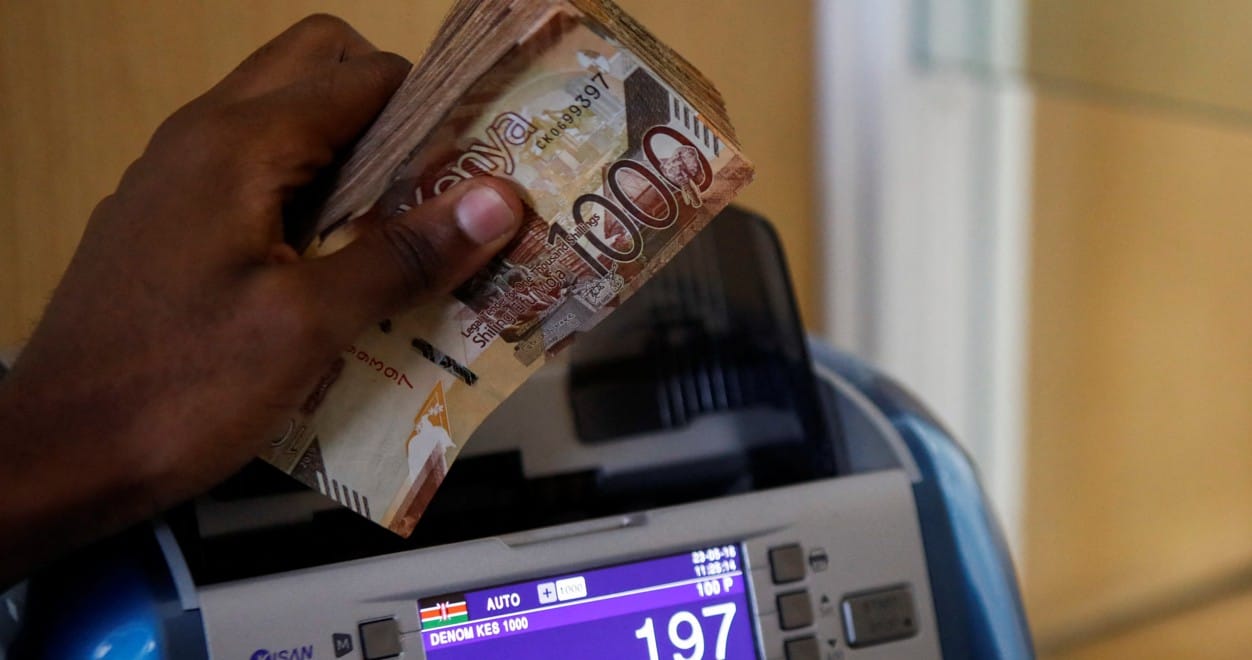
Commercial banks’ lending to Kenya’s private sector grew 10.6% year on year in September 2026, up from 10.3% in August, according to the Central Bank of Kenya’s Monetary Policy Committee. That is a sharp turnaround from January 2025, when private-sector credit contracted by 2.9%.

Key takeaway: Private-sector credit grew 10.6% in September 2026 as the gross NPL ratio fell to 13.9%. CBK held the Central Bank Rate at 8.75% for a fourth straight meeting, while average commercial lending rates stood at 14.4%.
At the same time, loan quality improved. The ratio of gross non-performing loans (NPLs) to gross loans fell to 13.9% in September, from 14.8% in June 2026 and 17.6% in August 2025, the lowest reading in that stretch of the recovery.
The MPC left the Central Bank Rate (CBR) at 8.75% on 7 October 2026, the fourth straight meeting at that level, even as credit demand stayed firm and inflation had risen to 6.8% in September.
Key Numbers at a Glance
Swipe left and right on mobile →
| Indicator | Latest reading | Comparison |
|---|---|---|
| Private-sector credit growth | 10.6% (Sept 2026) | 10.3% in Aug 2026; -2.9% in Jan 2025 |
| Gross NPL ratio | 13.9% (Sept 2026) | 14.8% in June 2026; 17.6% in Aug 2025 |
| Central Bank Rate | 8.75% | Held for fourth consecutive MPC meeting |
| Average commercial lending rate | 14.4% (Sept 2026) | 14.3% in Aug 2026; 17.2% in Nov 2024 |
| Private-sector credit stock (mid-2026) | About KSh 4.29 trillion (June) | Continued expansion into Q3 on double-digit growth |
CBK-linked series put outstanding private-sector credit near KSh 4.29 trillion in June 2026. With double-digit year-on-year growth still in place through September, the stock has remained at multi-year highs. Exact September stock figures should be read from the latest CBK monetary or statistical bulletin when published in full.
Where the New Lending Is Going
The MPC said demand was strong across several segments of the economy. Lending grew in:
- Trade
- Building and construction
- Agriculture
- Finance and insurance
- Consumer durables
Agriculture has been one of the clearer credit stories this year. CBK data cited in mid-year reporting showed farm loans rising sharply into June 2026, with outstanding agricultural credit around KSh 204 billion after a large year-on-year increase. That fits the wider pattern of banks putting more money into production and value chains after the rate-easing cycle.
Not every sector has expanded at the same pace. Manufacturing, real estate and some transport-linked books have looked softer in earlier 2026 snapshots. The latest MPC summary does not publish a full September sector-by-sector contraction table, so those older mid-year declines should not be presented as the official September scorecard.
Rates: Policy Held, Lending Costs Still Elevated
CBK cut the CBR to 8.75% from 9.0% in February 2026 and has kept it there through four MPC meetings. That easing cycle followed a period of much tighter policy and helped bring average commercial lending rates down from the 17.2% peak recorded in November 2024.
In September 2026, however, the average commercial bank lending rate edged up to 14.4% from 14.3% in August. Borrowers are getting more credit than a year ago, but the gap between the CBR and what banks charge remains wide. CBK has pointed to the Risk-Based Credit Pricing Model as one channel that should improve transmission of policy rates into actual loan prices over time.
Why NPLs Are Improving
A lower NPL ratio usually means either fewer bad loans, a larger total loan book, or both. CBK said the September improvement reflected lower non-performing loans in financial services, agriculture, trade, and energy and water. Banks have also continued to set aside provisions against problem loans.
At 13.9%, asset quality is better than the 17.6% distress peak of August 2025, but still high by historical comfort levels. Households, trade, real estate and manufacturing remain areas where bad loans have concentrated in recent supervision reports.
Read also:Beyond Bank Loans: Funding Options Kenyan Small Businesses Should Know About
What This Means for Businesses and Households
- Credit is flowing again after the early-2025 contraction, especially into trade, construction, farming and consumer durables.
- The price of credit is lower than late 2024, but average bank rates near 14.4% are still heavy for many MSMEs.
- CBR is on hold while CBK watches September’s 6.8% inflation, oil prices and exchange-rate risks ahead of the next MPC meeting in December.
- Asset quality is healing, which supports more lending capacity if banks stay well capitalised and liquid.
CBK also raised its 2026 GDP growth forecast to 5.0% from 4.9%, citing stronger industry and services, with 2027 still projected at 5.3%.
Bottom Line
Private-sector credit growth accelerated to 10.6% in September 2026, while the gross NPL ratio fell to 13.9%, according to CBK’s October MPC update. The central bank held the CBR at 8.75% for a fourth straight meeting. Average commercial lending rates were about 14.4% in September, well below late-2024 peaks but still high for many borrowers.
The loan book remains near record levels after the mid-year stock of about KSh 4.29 trillion and continued double-digit growth. Demand is clearest in trade, construction, agriculture, finance and insurance, and consumer durables. How far rates fall from here will depend on inflation, oil prices and how fully banks pass on the policy stance.
Sources: Central Bank of Kenya MPC communications as reported by The Kenya Times – CBK holds CBR at 8.75%, credit growth 10.6%, NPL 13.9%; People Daily – CBK holds rate, growth forecast 5%; Business Today – CBK retains 8.75%; Capital Business / The Online Kenyan – private-sector credit 10.6%; private-sector credit stock series (June 2026 ~KSh 4.29 trillion). Average lending rates and sector lists follow CBK MPC wording. Exact September stock levels and older mid-year sector decline rates should be confirmed against the full CBK statistical release. This article is for information only and is not lending or investment advice.