






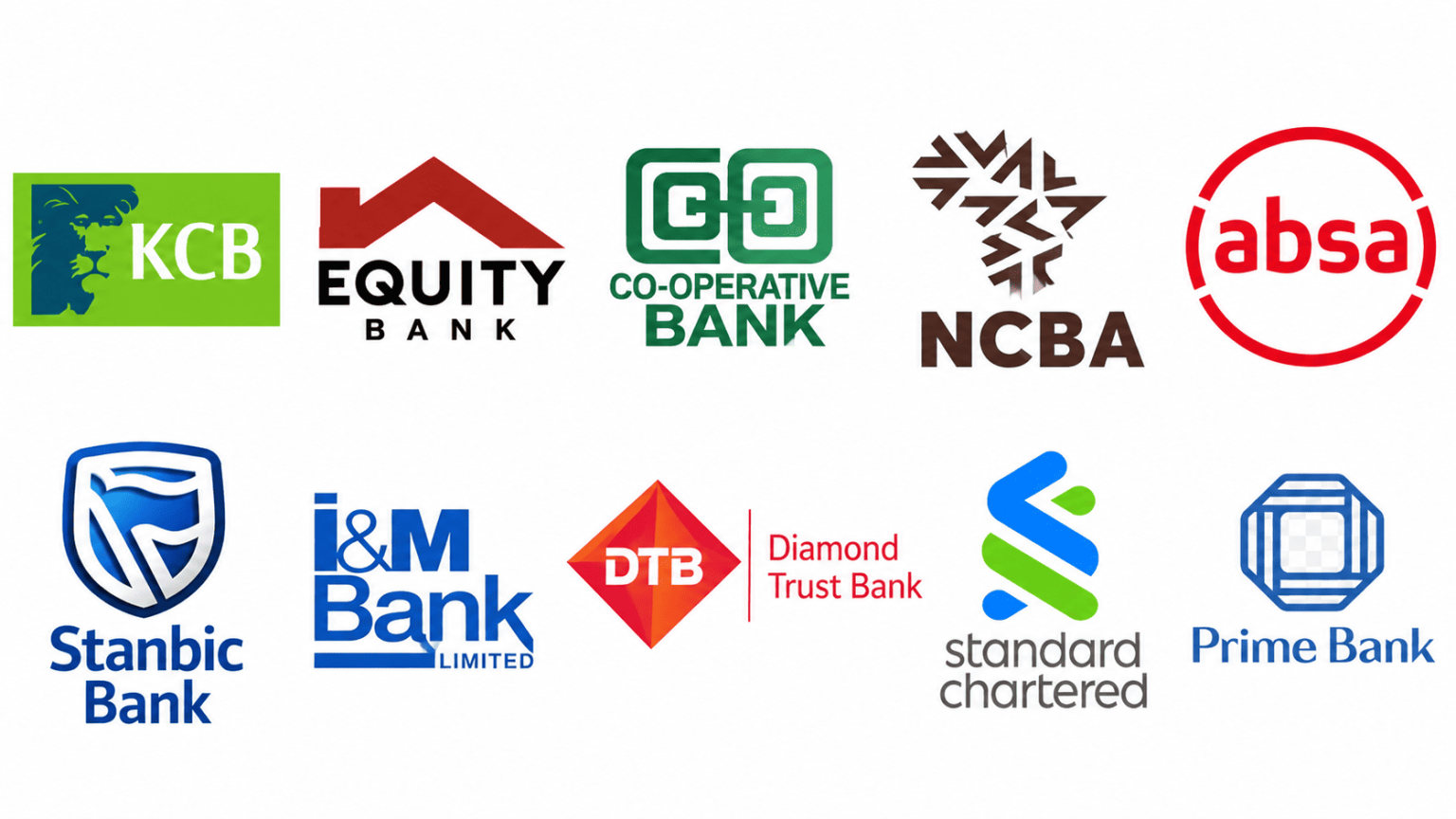
KCB Bank Kenya, Equity Bank Kenya and Co-operative Bank of Kenya remain the three largest banks in Kenya by the Central Bank of Kenya’s weighted market-size index as at 31 December 2025.
- Top 10 Banks by CBK Market-Size Index (December 2025)
- How CBK Classifies Banks
- Banking Sector Context in 2025
- Choosing a Bank by Need
- Frequently Asked Questions
- Which is the largest bank in Kenya in 2026?
- Is Standard Chartered still a Tier 1 bank?
- Where can I confirm the latest rankings?
- Do these rankings change every year?
- Which bank is best for MSME loans?
- Official Bank Websites
- Sources
The rankings come from the CBK Bank Supervision Annual Report 2025, published in September 2026. The index measures net assets, deposits, capital, deposit accounts and loan accounts rather than assets alone. Eight banks currently sit in the large (Tier 1) peer group and together control 69.7% of the market-size index.
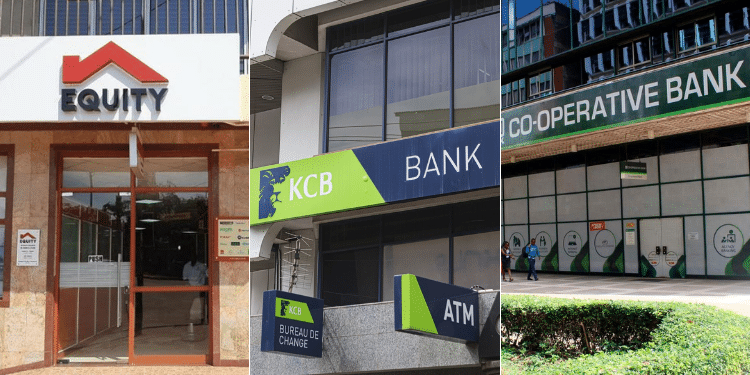
Top 10 Banks by CBK Market-Size Index (December 2025)
| Rank | Bank | Market-Size Index | CBK Peer Group | Net Assets (approx.) |
|---|---|---|---|---|
| 1 | KCB Bank Kenya | 17.3% | Tier 1 (Large) | KSh 1.50 trillion |
| 2 | Equity Bank Kenya | 11.8% | Tier 1 (Large) | KSh 1.04 trillion |
| 3 | Co-operative Bank of Kenya | 9.4% | Tier 1 (Large) | KSh 759.4 billion |
| 4 | NCBA Bank Kenya | 7.9% | Tier 1 (Large) | KSh 616.8 billion |
| 5 | Absa Bank Kenya | 6.4% | Tier 1 (Large) | KSh 536.7 billion |
| 6 | Stanbic Bank Kenya | 5.8% | Tier 1 (Large) | KSh 531.6 billion |
| 7 | I&M Bank | 5.6% | Tier 1 (Large) | KSh 459.7 billion |
| 8 | Diamond Trust Bank (DTB) | 5.6% | Tier 1 (Large) | KSh 449.2 billion |
| 9 | Standard Chartered Kenya | 4.5% | Tier 2 (Medium) | KSh 364.5 billion |
| 10 | Prime Bank | 4.3% | Tier 2 (Medium) | — |
Source: CBK Bank Supervision Annual Report 2025 (data as at 31 December 2025). Standard Chartered’s index fell below the 5% threshold, moving it from the large to the medium peer group.
How CBK Classifies Banks
The Central Bank of Kenya places commercial banks into three peer groups using its weighted market-size index. The index combines five elements: total net assets, total deposits, capital and reserves, number of deposit accounts, and number of loan accounts. This approach gives a broader view of a bank’s footprint than a ranking based only on balance-sheet size.
- Large (Tier 1): Market-size index of 5% and above. Eight banks held 69.7% of the index at end-2025, down from 75.6% the previous year.
- Medium (Tier 2): Index between 1% and under 5%. Eleven banks held 23.2%.
- Small (Tier 3): Index below 1%. Twenty banks held 7.1%.
As at 31 December 2025, Kenya had 39 commercial banks. The large peer group’s combined share declined mainly because Standard Chartered moved into the medium group after its index dropped to 4.5% from 5.4% in 2024. Sidian Bank moved up from the small group into the medium group in the same period.
Banking Sector Context in 2025
The CBK report shows the wider sector remained profitable even as total income declined. Profit before tax rose 17.7% to KSh 306.3 billion in 2025. The gain came largely from lower interest expenses after the Central Bank Rate was reduced, rather than from higher income. Total net assets grew 10.3% to approximately KSh 8.35 trillion.
Gross loans expanded to about KSh 4.35 trillion. The gross non-performing loan ratio eased to 16.0% from 17.1% the previous year. Seven commercial banks failed to meet the minimum core capital requirement of KSh 3 billion. CBK also recorded a higher number of regulatory breaches, including issues related to risk-based credit pricing models and single-obligor limits.
These figures provide the backdrop for the market-share rankings. Scale remains concentrated among the largest institutions, but the medium peer group gained ground in 2025.
Choosing a Bank by Need
Size does not determine the best bank for every customer. The three largest banks offer the widest branch and agent networks, while other Tier 1 and Tier 2 banks compete on digital products, corporate banking, trade finance or specialised lending.
- Broad retail access: KCB Bank and Equity Bank operate the largest physical networks. KCB’s agency banking network is among the widest in the country and has partnered with other providers for cash-in and cash-out services.
- MSME and small-business lending: Equity Bank led new MSME loan disbursements in the first nine months of 2026 with KSh 127.95 billion, according to the Kenya Bankers Association. Co-operative Bank ranked second and KCB third over the same period.
- Cooperative and salaried accounts: Co-operative Bank has long-standing links with SACCOs and cooperatives, which supports its retail and SME franchise.
- Mobile and asset finance: NCBA is known for mobile-first products, including Loop, and for vehicle and equipment finance.
- Corporate, trade and wealth: Stanbic, I&M, Absa, DTB and Standard Chartered focus more heavily on corporate clients, trade finance and higher-value retail or private banking.
Average commercial bank lending rates stood at 14.4% in September 2026, according to CBK data. Rates vary by bank, product and customer risk profile. Customers should compare current published rates and fees rather than relying solely on market-share rankings.
Frequently Asked Questions
Which is the largest bank in Kenya in 2026?
KCB Bank Kenya is the largest by CBK’s weighted market-size index (17.3% as at December 2025), ahead of Equity Bank Kenya (11.8%). On a pure asset basis, KCB also held the leading position in the same period.
Is Standard Chartered still a Tier 1 bank?
No. Its market-size index fell to 4.5% in 2025, below the 5% threshold, so CBK reclassified it into the medium (Tier 2) peer group. It remains a significant institution, particularly in corporate and wealth banking, but no longer meets the large-bank threshold on the composite index.
Where can I confirm the latest rankings?
The official source is the CBK Bank Supervision Annual Report, available on the Central Bank of Kenya website (centralbank.go.ke). The 2025 edition covers the position as at 31 December 2025. Later quarterly results from individual banks can show updated balance-sheet figures, but the peer-group classification is updated annually.
Read also:Tier 1, 2, and 3 Banks in Kenya (2026 List)
Do these rankings change every year?
Yes. CBK updates the peer groups annually. Market shares also shift as banks grow or shrink their balance sheets, deposits and customer bases. The large peer group’s combined share fell in 2025 mainly because of Standard Chartered’s reclassification.
Which bank is best for MSME loans?
According to Kenya Bankers Association data for January–September 2026, Equity Bank disbursed the largest volume of new MSME loans (KSh 127.95 billion), followed by Co-operative Bank and KCB. The right choice still depends on the specific product, collateral requirements and relationship the business already has with a bank.
Official Bank Websites
- KCB Bank Kenya
- Equity Bank Kenya
- Co-operative Bank of Kenya
- NCBA Bank Kenya
- Absa Bank Kenya
- Stanbic Bank Kenya
- I&M Bank
- Diamond Trust Bank
- Standard Chartered Kenya
- Prime Bank