






The Institute of Public Finance (IPF) has projected a KSh1.352 trillion budget deficit for the 2027/2028 financial year, warning that the gap could push Kenya’s public debt to about 71% of GDP.
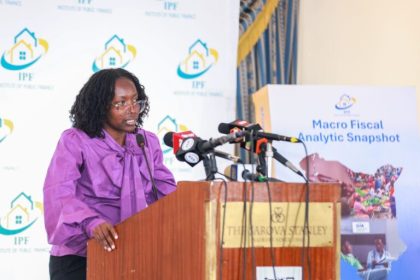
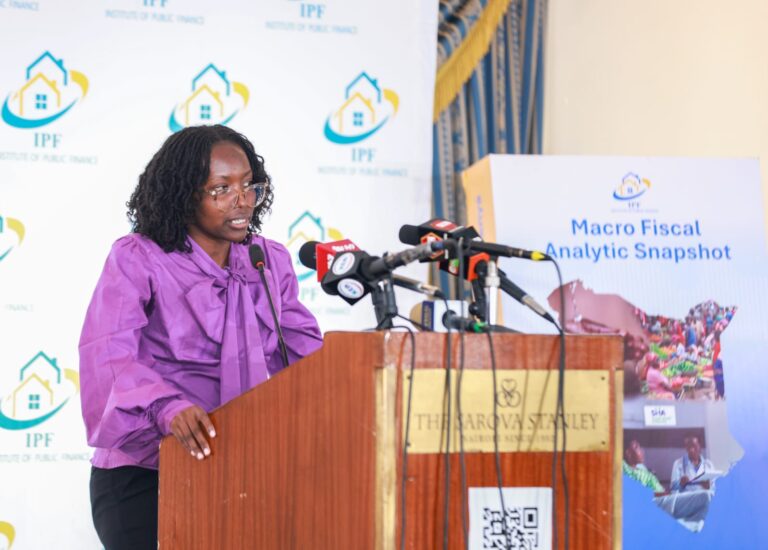
The findings are contained in the institute’s Annual National Shadow Budget 2027/2028, which was launched in Upper Hill, Nairobi, on Wednesday, 25 November 2026. IPF says the deficit arises from projected expenditure of KSh5.415 trillion against expected revenue of KSh4.003 trillion.

Key Fiscal Projections for FY 2027/28
IPF’s shadow budget places total government spending at KSh5.415 trillion and revenue at KSh4.003 trillion. The resulting shortfall of KSh1.352 trillion is the deficit including grants.
The projected deficit includes grant receipts, which reduce the financing gap between government expenditure and revenue. This explains why the KSh1.352 trillion deficit is lower than the direct difference between the two headline figures.
Of the deficit, approximately 69% is expected to be financed through domestic borrowing under the framework examined by IPF.
| Item | IPF Projection (October Framework) |
|---|---|
| Total Expenditure | KSh 5.415 trillion |
| Expected Revenue | KSh 4.003 trillion |
| Budget Deficit (including grants) | KSh 1.352 trillion |
| Domestic Financing Share | ~69% |
| Projected Debt-to-GDP | ~71% |
Spending Composition and Debt Service
IPF also raised concerns about the composition of government spending. Its analysis indicates that recurrent expenditure will account for approximately 74% of the FY2027/28 budget, leaving development spending below the 30% threshold set out in the Public Finance Management Act. The institute argues that this spending structure limits the resources available for development priorities.
IPF projects interest costs of approximately KSh1.46 trillion in FY2027/28, consuming about 45% of ordinary government revenue. The institute warns that this will leave fewer resources available for development projects and essential public services.
Treasury Revises 2027/28 Deficit Projection
The IPF projection is based on the earlier fiscal framework for FY2027/28. In its subsequent 2027 Budget Policy Statement, the National Treasury revised the projected deficit to KSh1.229 trillion, equivalent to 5.4% of GDP, from KSh1.353 trillion in the October framework.
The revised framework also reduces proposed domestic financing from KSh929.1 billion to KSh658.9 billion while increasing external financing from KSh423.8 billion to KSh570 billion. The Treasury’s revised figures provide a different fiscal outlook from the assumptions examined in IPF’s November shadow budget.
| Item | October Framework | Revised Treasury BPS |
|---|---|---|
| Expenditure | KSh 5.415 trillion | KSh 5.236 trillion |
| Revenue | KSh 4.004 trillion | KSh 3.923 trillion |
| Deficit | KSh 1.353 trillion | KSh 1.229 trillion |
| Domestic Financing | KSh 929.1 billion | KSh 658.9 billion |
| External Financing | KSh 423.8 billion | KSh 570 billion |
Implications for Businesses and Households
Sustained high domestic borrowing tends to compete with private sector credit. When the National Treasury absorbs a large share of available funds from banks and institutional investors, commercial lending rates can remain elevated for longer, affecting businesses seeking working capital or expansion finance.
At the same time, the concentration of revenue on interest payments reduces the government’s ability to increase spending on development projects without new tax measures or further borrowing. IPF has flagged the revenue targets as ambitious relative to recent collection trends and the electoral cycle.
Context and Outlook
The Shadow Budget is IPF’s independent assessment of the government’s fiscal plans. It is released annually to provide Parliament, civil society and the public with an alternative view of revenue realism, spending priorities and debt sustainability.
The 2027/28 projections come as the country prepares for the next general election. Past election years have often seen slower revenue growth and higher spending pressures. IPF’s analysis suggests these factors add further uncertainty to the official macroeconomic assumptions underlying the budget.
Whether the actual deficit remains at either the IPF or the revised Treasury projection will depend on revenue outturn, expenditure control and the final financing mix approved by Parliament.