







Manufacturing is changing faster than at any point in recent memory. Factories that once relied entirely on human labor are now being redesigned around artificial intelligence and robotics. Semiconductor plants are struggling to keep up with surging global demand. And closer to home, East African manufacturers are making a quiet but significant shift, turning to local raw materials and pressing governments for support as production costs continue to climb. Here is a clear picture of where the industry stands today.
The forces reshaping manufacturing are not moving in isolation. What happens in semiconductor factories in Asia directly affects production costs in Nairobi. What global sustainability standards demand of multinationals eventually lands on the desks of factory managers in Thika. Understanding these connections matters for anyone watching where East African industry is headed.
AI and Robotics Are No Longer the Future, They Are the Factory Floor
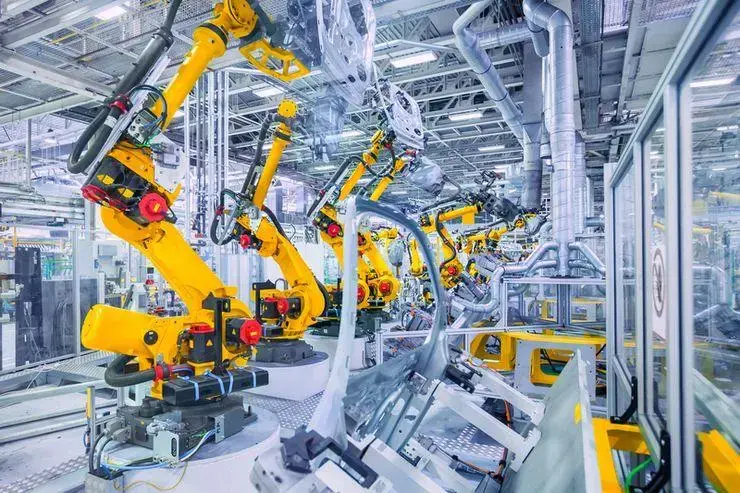
Industrial automation has been discussed for years, but 2025 and 2026 have marked a genuine turning point. Companies like Fanuc, one of the world’s leading industrial robotics manufacturers, and tech giants including Google are pushing what is now being called Physical AI, systems where artificial intelligence directly controls specialized robots on the production line.
This is not basic automation. These robots adapt in real time, make decisions based on sensor data, and handle tasks that previously required skilled human hands. Textile production, electronics assembly, and precision component manufacturing are among the sectors seeing the fastest uptake. For global manufacturers, the appeal is clear: lower long-term labor costs, fewer errors, and the ability to run production around the clock.
The challenge, particularly for developing economies, is that this shift concentrates advanced manufacturing capability in countries and companies that can afford the upfront investment, widening the gap between high-tech producers and those still building foundational industrial capacity.
Semiconductors: A $1 Trillion Industry Racing to Keep Up
Fueling much of this AI-driven manufacturing surge is the global semiconductor industry. Chip sales jumped 25% in the first quarter of this year, driven almost entirely by demand from AI hardware, data centers, and smart manufacturing systems. The sector is now firmly on track to surpass $1 trillion in annual sales, a milestone that would have seemed ambitious just a few years ago.
According to the Semiconductor Industry Association, this growth reflects not just AI demand but also renewed investment in chip supply chain resilience following the global shortages of recent years. For East African manufacturers who depend on imported electronics components, a tighter and more expensive global chip market adds another layer of cost pressure to an already difficult operating environment.
East Africa Turns to Local Sourcing as Costs Bite
While global manufacturers chase automation, their East African counterparts are focused on a more immediate challenge: keeping production costs under control. The response, increasingly, is to source raw materials locally rather than relying on expensive imports vulnerable to currency fluctuations and global supply disruptions.
Companies based in Nairobi and Thika, including New Dawn Manufacturing, have been scaling up capacity for locally produced goods targeting both household and institutional markets. The logic is straightforward. Locally sourced inputs cost less to transport, are not subject to import duties, and insulate businesses from the kind of global supply chain shocks that have repeatedly disrupted operations over the past few years.
This trend aligns with broader regional goals. The African Continental Free Trade Area (AfCFTA) framework actively encourages intra-African trade and local value addition, giving manufacturers a policy tailwind as they pivot away from import dependency.
Green Energy and Sustainability: Manufacturers Want Government to Step Up
Sustainability is no longer optional for manufacturers with any international exposure. Global buyers, particularly from Europe, are tightening environmental standards across their supply chains, meaning Kenyan factories that export or supply multinationals must meet increasingly strict decarbonization requirements.
The problem is cost. Transitioning to cleaner energy sources while already absorbing high electricity tariffs is a significant financial burden for most local manufacturers. Industry players are calling on the Kenyan government to introduce affordable green financing options and targeted incentives to make the transition manageable.
Kenya already has a strong foundation to build on. The country generates over 90% of its electricity from renewable sources, largely geothermal and hydropower, giving it a genuine advantage in the regional clean energy conversation. What manufacturers need now is for that advantage to translate into lower, more stable electricity costs and accessible financing for energy-efficient equipment upgrades.
What This Means for Kenya’s Industrial Ambitions
Kenya has positioned manufacturing as a pillar of its long-term economic growth strategy. The trends playing out globally, AI adoption, semiconductor demand, sustainability standards, and supply chain localization, all intersect with decisions being made right now in Kenyan factories and government offices.
The manufacturers who will thrive are those who can navigate rising costs through smarter sourcing, access green financing before competitors do, and gradually build the technical capacity to benefit from, rather than be left behind by, the global automation wave. None of that happens without deliberate policy support and a government that treats manufacturing not as background noise but as a genuine national priority.
The global factory is being rebuilt. East Africa has a real opportunity to claim a stronger place in it, but the window will not stay open indefinitely.