
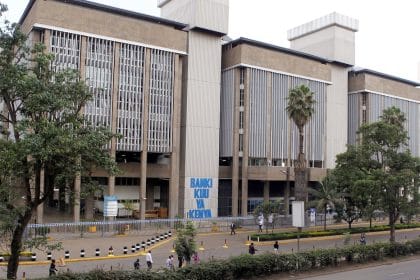









The Central Bank of Kenya (CBK) has proposed draft prudential rules that would tighten oversight of hive-down transactions, where a bank moves a business unit, assets, liabilities or a specific operation into a new or existing subsidiary inside the same group.

According to reporting by Business Daily on 30 September 2026, the draft rules are meant to protect investors and depositors and to improve transparency when banking groups reorganise their internal structures.
The proposals sit inside CBK’s wider package of revised draft Prudential Guidelines, Risk Management Guidelines, Guidance Notes and a Domestic Systemically Important Banks (D-SIBs) framework, which the regulator put out for public comment in September 2026. Comments close on 7 November 2026.
What Is a Hive-Down?
A hive-down is an internal restructure. A licensed bank transfers part or all of a business line, or a package of assets and liabilities, into a subsidiary it already owns or is creating.
These moves are common in groups that run banking, investment, insurance or regional units under one holding company. They can simplify operations, ring-fence risks or prepare for mergers, but they can also shift customer relationships, capital and contingent liabilities across legal entities.
CBK wants clearer advance visibility of those shifts before they are completed.
What Banks Would Need to Submit
Business Daily’s report on the draft guidelines says commercial banks would have to give CBK detailed information before restructuring. That material is described as including:
- Schedules of assets and liabilities being moved
- Customer migration and service continuity plans
- Pre- and post-restructure group structure charts
- Details on non-operating holding companies (NOHCs), where relevant
- Internal transitional service agreements covering shared systems, staff or support during the move
Exact wording and final requirements will depend on the published draft text and any changes after consultation. Banks and advisers should work from the official CBK draft documents, not secondary summaries alone.
Why the Timing Matters
Several large Kenyan banking groups already operate under holding-company models, with licensed banks and other subsidiaries under one roof. Intra-group transfers of business lines and assets have become a regular part of how those groups organise capital, regional expansion and product lines.
The draft hive-down focus also lands shortly after a high-profile asset transfer. On 23 September 2026, CBK announced the transfer of all assets and liabilities of Access Bank (Kenya) Plc to National Bank of Kenya Limited (NBK).
That deal followed CBK approval on 17 August 2026 under Section 13(4) of the Banking Act, and National Treasury approval on 21 September 2026 under Section 9(1). Access Bank PLC (Nigeria) owns both entities after acquiring Transnational Bank (later Access Bank Kenya) in 2020 and NBK from KCB Group in 2025. CBK said the transfer takes effect once the parties complete their Business and Assets Transfer Agreement, and welcomed the move as supporting stability, resilience and competition.
That transaction is a full business transfer between two licensed banks under common ownership. The new draft hive-down rules, as described in current reporting, are aimed more broadly at how groups move units and balances inside their structures. Readers should not treat the Access Bank–NBK deal as identical to every hive-down, but it shows why CBK is paying closer attention to how banking businesses are shifted across legal entities.
What the Wider Draft Package Covers
The hive-down language sits within CBK’s September 2026 consultation on revised prudential and risk rules. That package also addresses capital conservation, recovery planning, systemically important banks and broader risk-management standards.
Public comments on the draft revised Prudential Guidelines, Risk Management Guidelines, Guidance Notes and D-SIBs framework are due by 7 November 2026, using CBK’s comments template and the email channel set out in the public notice.
Swipe left or right on mobile to view the full table →
| Item | Status / detail |
|---|---|
| Proposal | Draft rules on hive-downs / intra-group business and asset transfers |
| Stated aim | Protect investors and depositors; improve structural transparency |
| Wider package | Draft Prudential Guidelines, RMGs, Guidance Notes, D-SIBs framework |
| Comment deadline | 7 November 2026 |
| Recent related transfer | Access Bank Kenya assets and liabilities to NBK (announced 23 Sept 2026) |
What This Means for Banks and Customers
For banking groups, the draft would raise the documentation and planning bar before internal transfers. That may slow pure paperwork exercises, but it should also force clearer customer continuity plans when accounts, loans or services move between entities.
For depositors and investors, stronger pre-approval disclosure is meant to reduce the risk that group restructures leave unclear who holds deposits, loans, capital or contingent liabilities after the move.
Nothing in the draft, as currently reported, automatically blocks legitimate group reorganisations. It is about earlier, fuller oversight.
Read also:CBK Proposes Tougher Capital Rules for Kenya’s Big Banks
Bottom Line
CBK’s draft prudential guidelines would put hive-down and related intra-group business transfers under closer review, with banks expected to file detailed structure, asset and customer-continuity information before moving units or balances inside a group.
The proposals form part of a broader prudential overhaul open for comment until 7 November 2026. They come days after CBK cleared the transfer of Access Bank Kenya’s business, assets and liabilities to NBK. Final rules will depend on the official draft text and the outcome of public consultation.
Sources:
Business Daily – CBK to review business, assets transfers in banks’ restructure (30 September 2026);
CBK – Draft Prudential Guidelines, Risk Management Guidelines, Guidance Notes and D-SIBs framework (public consultation);
CBK Press Release – Transfer of Access Bank (Kenya) Plc business, assets and liabilities to NBK (23 September 2026);
Central Bank of Kenya.
This article summarises draft proposals and reported requirements. Final obligations will be set in the official guidelines after consultation.