
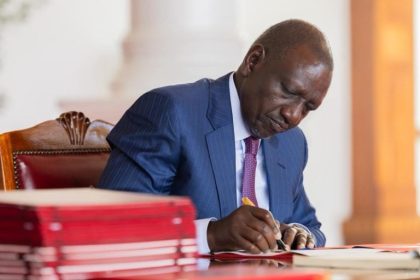







A company that has already been paid for a loss cannot turn around and sue someone else for the same loss. That is the principle that just cost Del Monte Kenya a Sh43.7 million compensation claim against Kenya Railways Corporation, dismissed by the High Court despite years of litigation over a damaged cargo shipment.
The case never reached the question everyone expected it to answer, whether Kenya Railways was negligent. It collapsed instead on a legal technicality that turned out to be fatal to the entire claim.
An Email That Sank a Multi-Year Lawsuit
The case did not fall apart because of weak evidence about the derailment. It fell apart because of an internal Del Monte email that surfaced during cross-examination, stating plainly that “our hands are tied once we were compensated by insurance.”
That single line confirmed what Del Monte had never disclosed in its own court filings. Its insurer, regulated under Kenya’s Insurance Regulatory Authority framework, had already paid out in full for the damaged cargo before the lawsuit against Kenya Railways reached this stage.
Why Getting Paid Twice Is Not Allowed
The judge ruled that awarding Del Monte further damages would amount to what courts call prohibited double recovery, effectively letting the company profit twice from a single loss. Under Kenyan contract and insurance law, once an insurer settles a claim in full, the insured party has no outstanding financial loss left to sue over.
The correct legal pathway, had Del Monte’s insurer wanted to recover what it paid out, was subrogation, a well-established principle where the insurer sues the negligent third party directly to reclaim its own payout. That is not the route this case took.
The Derailment That Started It All
Back on June 3, 2020, a train hauling Del Monte’s canned pineapple products from Thika to Mombasa derailed at Dandora Railway Station. Nine wagons overturned, destroying the cargo and prompting Del Monte to sue Kenya Railways Corporation for negligence and breach of contract.
Kenya Railways countered that the derailment was caused by track damage from illegal quarrying near the station, not by any fault in how the train was operated. The court never had to settle that argument on its merits.
A Costly Pleading Mistake
Del Monte’s legal team never declared the insurance payout in its pleadings, nor did they frame the case as a subrogation claim on the insurer’s behalf. Instead, the suit proceeded as though Del Monte itself had suffered an uncompensated loss, which the evidence eventually proved false.
Read also:High Court Orders KRA to Pay Sh29.4 Million to Pernod Ricard Kenya Over Missed Deadline
That omission, whether an oversight or a deliberate strategy, gave the court no option but to dismiss the case once the truth came out under cross-examination. Kenyan courts have consistently applied this standard in commercial disputes involving insured losses.
The Lesson for Kenyan Businesses
Any company pursuing compensation after an insured loss needs to disclose that payout upfront, in full, at the pleading stage. Trying to collect twice, once from an insurer and again from a third party in court, is not a grey area under Kenyan case law. It is a settled legal principle that courts enforce strictly.
If a business or its insurer believes further recovery is justified beyond an insurance payout, the case must be filed transparently as a subrogation claim from the start. Del Monte’s Sh43.7 million lesson is now a clear warning for any Kenyan company tempted to skip that step.