








In 2025, Kenyan factories exported 148 million apparel pieces to the United States, up from 116 million pieces the year before. That is a 27.6% jump in a single year, a number that any export-oriented economy would normally celebrate. But the value of those shipments tells a different story. Total earnings from those exports fell 4.1% to KSh 58.1 billion, down from KSh 60.6 billion in 2024.
Read that again. More pieces. Less money. That is not a good trade.
A Sector That Looks Healthy on the Surface
To be fair, several headline indicators from Kenya’s textile sector look encouraging. The number of AGOA-accredited enterprises rose from 40 in 2024 to 44 in 2025. Capital investment in the sector climbed 10.4% to KSh 42.3 billion. Formal employment under AGOA expanded by a remarkable 22.8%, bringing the total workforce to 82,026 workers. At a time when many sectors of Kenya’s economy are dealing with layoffs and shrinking margins, an industry that added tens of thousands of formal jobs in one year is doing something right.
The broader manufacturing sector also held its ground. Total manufacturing output grew 2% to KSh 3.8 trillion, maintaining a 7.1% share of GDP in 2025. These are not signs of a sector in crisis.
But when you look underneath those numbers, a more uncomfortable picture emerges. Kenya is investing more, hiring more, and producing more. The reward for all of that effort, measured in actual earnings per garment, is going down.
Why Are Earnings Falling Even as Volumes Rise?
Industry players point to three forces converging at the same time, and none of them are easy to fix quickly.
The first is weakening consumer demand in Western markets. American consumers, squeezed by inflation and economic uncertainty at home, are buying fewer clothes and trading down when they do buy. Retailers respond to that pressure by squeezing suppliers, demanding lower prices per unit and shifting orders toward cheaper, basic garments rather than higher-value items.
The second force is aggressive price competition from Asian textile exporters, particularly from countries where labour costs are lower and production at scale is more established. When a Bangladeshi or Vietnamese factory can produce a basic T-shirt at a lower cost per unit, global buyers have leverage to push Kenyan factories to match or lose the order.
The third is structural: Kenya’s AGOA exports have gradually shifted toward lower-value, basic garment categories where margins are thin and price competition is fiercest. The more Kenya’s export mix tilts toward commodity apparel, the more vulnerable it becomes to the pricing pressures described above.
The result is what economists call a volume-versus-value crisis. Kenyan workers are stitching more clothes than ever before. Global buyers are paying less per item. The gap between those two realities is where Kenya’s earnings are disappearing.
AGOA’s Uncertain Future Adds to the Pressure
The timing of all this is not ideal. In February 2026, President Donald Trump signed legislation extending AGOA through December 2026, ending months of uncertainty that had unsettled manufacturers across sub-Saharan Africa. The extension was welcomed in Kenya, where the apparel industry had been watching Washington’s deliberations with considerable anxiety.
But the tone coming out of Washington made clear that the extension was not a blank cheque. US Trade Representative Jamieson Greer stated after the renewal that AGOA for the 21st century must demand more from trading partners and deliver more market access for US businesses. That language signals a renegotiation of terms, not a continuation of the status quo.
With the current extension running only to the end of 2026, Kenyan manufacturers are operating under a six-month clock. Industry voices are pushing for a broader Kenya-US bilateral trade agreement that would provide the kind of long-term certainty that periodic AGOA renewals have never really delivered. A dedicated bilateral deal would reduce the vulnerability that comes from waiting every few years to find out whether the preferential access that entire factories, supply chains, and workforces depend on will continue.
The Value Chain Problem Kenya Has to Solve
The deeper issue is one that has been discussed in Kenyan policy circles for years without sufficient action: moving up the value chain.
Right now, Kenya’s competitive position in apparel exports rests almost entirely on the cost advantages that AGOA’s duty-free access provides. Strip that away, or let the product mix drift further toward cheap basics, and there is not much left to distinguish Kenyan garments from those produced in much larger, cheaper, and better-connected manufacturing economies.
The path forward is clear in theory, even if it is difficult in practice. Kenya needs to move into premium apparel, branded fashion segments, and higher-margin finished products where price competition from low-cost Asian exporters is less intense and where buyers are less focused purely on the cheapest option. That requires investment in design capability, quality standards, fabric sourcing, and the kinds of long-term buyer relationships that come from consistently delivering something that buyers cannot easily source elsewhere.
Some manufacturers are already moving in that direction. But without deliberate industrial policy support, access to affordable capital for upgrading equipment, and a trade strategy that actively targets higher-value market segments, the broader sector will remain in a cycle where growing volumes and falling earnings cancel each other out.
More Workers, But What Are They Earning?
The employment numbers deserve a closer look. Adding over 15,000 formal jobs in a single year is a genuine achievement, and the apparel industry deserves credit for it. But formal employment and decent wages are not the same thing. If the earnings per garment are falling and factories are competing on price, there is downward pressure on wages and working conditions too.
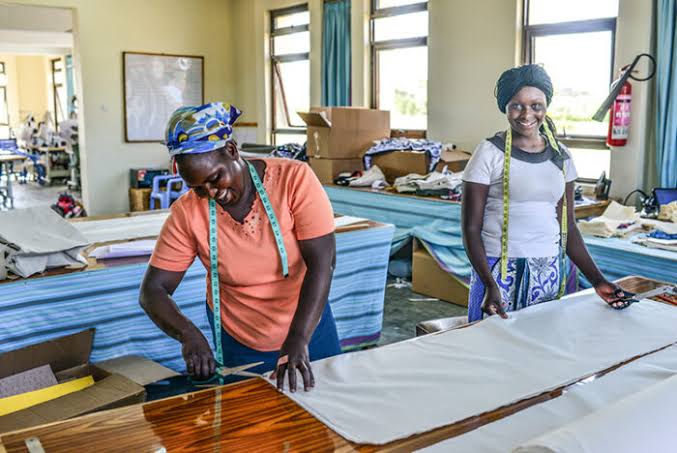
Kenya’s textile workers, most of whom are women, are among the most productive in Africa. They deserve to be part of a sector that is moving toward higher value, not one that is racing to the bottom on price. The volume record set in 2025 is genuinely impressive. The earnings decline that came alongside it is a warning that should not be ignored.
What Needs to Happen Next
The Economic Survey 2026 data gives Kenya both the evidence and the urgency to act. A few things need to happen, and they need to happen before the December 2026 AGOA deadline focuses minds even further.
- Kenya needs a credible push to diversify its export mix toward higher-value apparel categories, supported by trade promotion, design investment, and targeted incentives for manufacturers willing to upgrade.
- The government needs to pursue a Kenya-US bilateral trade framework aggressively, using the current AGOA extension period as negotiating time rather than simply waiting for the next renewal crisis.
- Industrial policy should prioritise access to affordable credit for manufacturers looking to invest in equipment, skills, and product development. The 10.4% rise in capital investment shows appetite is there. The financing environment needs to support it.
- Worker welfare cannot be an afterthought. A sector employing over 80,000 people deserves wage and conditions frameworks that reflect the value those workers are generating, even when global buyers are pressing prices down.
Kenya has built something real in its AGOA apparel sector. The 148 million pieces shipped in 2025 represent real factories, real jobs, and real economic contribution. But shipping more for less is not a sustainable trajectory. The country needs to earn more for what it makes, not just make more of it.
Sources & Further Reading: