
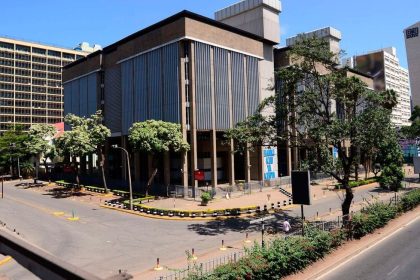


The Nairobi Securities Exchange suffered a sharp correction during the week ending September 17, 2026, as investors took profits after months of strong gains.
By the close of trading on September 17, total market capitalisation had fallen from KSh 4.154 trillion to KSh 3.948 trillion, a loss of KSh 206 billion in one week, according to the Central Bank of Kenya’s Weekly Bulletin.
The Sell-Off, By the Numbers
The figures below cover the week ending September 17, 2026.
| Index | Weekly Change | Closing Level |
|---|---|---|
| NASI (NSE All Share Index) | -4.96% w/w | 235.26 |
| NSE 20 Share Index | -6.47% w/w | 4,084.15 |
| NSE 25 Share Index | -5.85% w/w | 6,594.84 |
| Market Capitalisation | -4.96% w/w | KSh 3.948 trillion |
Trading activity actually rose even as prices fell. A total of 178.71 million shares changed hands, up 26.46 percent from the previous week, while equity turnover jumped 44.75 percent to KSh 9.27 billion.
The number of deals told a different story, falling 14.30 percent to 77,103, suggesting fewer but much larger trades drove the sell-off.
A Correction That Started Earlier Than It Looked
This week’s losses were actually the tail end of a longer slide. Market capitalisation had already peaked at a record KSh 4.285 trillion on September 3, before easing to KSh 4.126 trillion by September 15.
That means the bourse had already shed roughly KSh 158 billion before Wednesday’s record single-day decline. The four counters driving most of that early slide, Safaricom, Equity Group, KCB Group, and Co-operative Bank, alone accounted for KSh 113.6 billion of the decline.
Wednesday’s Record Single-Day Rout
The worst of the damage came on Wednesday, September 16, when the exchange erased KSh 139.63 billion in a single session, the largest single-day market capitalisation loss on record, surpassing the previous record set during the March 2020 Covid-19 market rout. That single-day plunge pushed market capitalisation down 3.38 percent to KSh 3.987 trillion, briefly slipping below the KSh 4 trillion mark for the first time since the milestone was crossed in August.
The sell-off that day was broad, with 46 stocks declining against just nine gainers. Banking heavyweights bore the brunt of it, with Co-operative Bank falling 7.32 percent, KCB Group dropping 6.39 percent, Equity Group losing 5.41 percent, and Absa Bank Kenya down 5.30 percent, while Safaricom eased a comparatively modest 3.84 percent.
What Drove the Correction
Analysts attributed the sell-off partly to profit-taking after the NSE’s strong 2026 rally. Standard Investment Bank research analyst Melodie Ndanu pointed to investors “taking profits and locking in substantial capital gains after the strong rally,” also citing higher crude oil prices and uncertainty around US interest rates.
Global financial conditions added further pressure after the US Federal Reserve raised its federal funds target range by 25 basis points to 3.75 to 4 percent on September 16. Oil prices compounded the pressure, with Brent crude moving above $107 a barrel amid heightened Middle East tensions before easing later in the week.
The Safaricom Wildcard
The week’s biggest curveball came from the courts. On September 15, a three-judge High Court bench nullified the government’s KSh 204.3 billion sale of a 15 percent stake in Safaricom to South Africa’s Vodacom Group, ruling that the transaction had failed to meet constitutional public participation requirements.
Safaricom initially gained 2.2 percent after the ruling before the stock came under pressure as the broader market sell-off intensified, closing the week around KSh 35.30. Both the government and Vodacom have confirmed plans to appeal.
Foreign Investors Keep Selling
Foreign investors extended a selling streak that began in August, when they offloaded a net KSh 4.55 billion of Kenyan shares, their biggest monthly sell figure of the year. That trend continued into September, with a further KSh 1.6 billion in net foreign outflows recorded during the first two weeks of the month alone.
Much of that foreign activity concentrates on a handful of large, liquid counters, including Safaricom, Equity, KCB, Co-operative Bank, and EABL, largely because of their inclusion in MSCI’s frontier and small-cap indices. The Daily Handle reported that local corporate investors, including fund managers and pension funds, bought some of the shares being sold by foreign investors during the week.
A Friday Rebound
The market recovered on Friday, September 18, with the NASI rising 1.42 percent to close at 238.61, up from 235.26 the day before. Co-operative Bank led the rebound, jumping 8.92 percent to KSh 34.80, while Safaricom edged up 0.28 percent to KSh 35.30.
The rebound came after the sharp losses recorded earlier in the week, so the KSh 3.948 trillion market capitalisation figure reflects Thursday’s close rather than where the market ended the week on Friday.
The Bond Market Feels It Too
Kenya’s fixed income market did not escape the pressure. Secondary market bond turnover fell 42.29 percent to KSh 34.88 billion during the week, while yields on Kenya’s 2028 Eurobond rose from 6.719 percent to 6.805 percent.
At the Treasury bill auction held on September 17, investors still submitted bids worth KSh 42.7 billion against an advertised KSh 28 billion, a performance of 152.6 percent, suggesting appetite for government debt remained healthy even as equities wobbled.
Read also:NSE Weekly: Market Cap Drops KSh 177.6 Billion in Sharpest Sell-Off Since March
Bottom Line
Despite the sharp correction, the NASI remained about 27.3 percent higher than at the start of 2026, while market capitalisation remained substantially above its end-2025 level.
Friday’s rebound suggests some of the week’s losses were already being unwound before markets closed, even as the underlying pressures, from the Fed’s rate hike to the Safaricom court case, remain unresolved.
Sources:
Central Bank of Kenya Weekly Bulletin
The Kenyan Wallstreet
Safaricom PLC
US Federal Reserve, FOMC Statement, September 16, 2026