
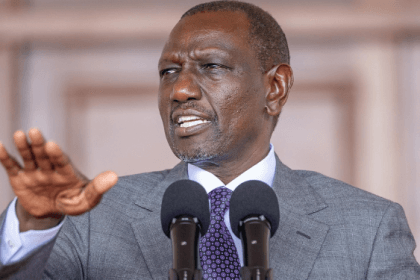








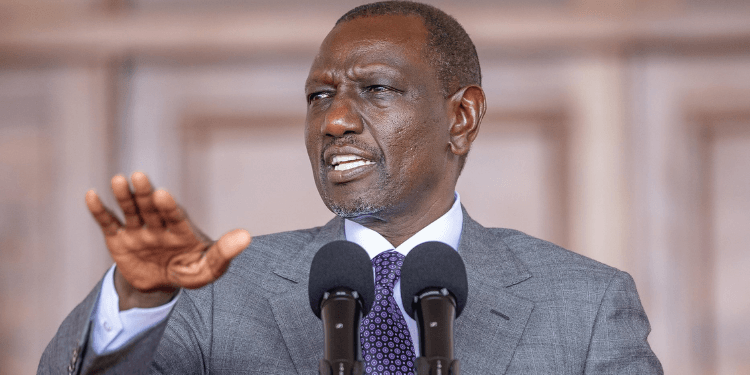
Key takeaway: President William Ruto has urged commercial banks to cut lending rates further after the average commercial bank lending rate stood at 14.39% in July 2026, while the Central Bank Rate is 8.75%. He spoke at the Central Bank of Kenya’s 60th anniversary on 17 September 2026.
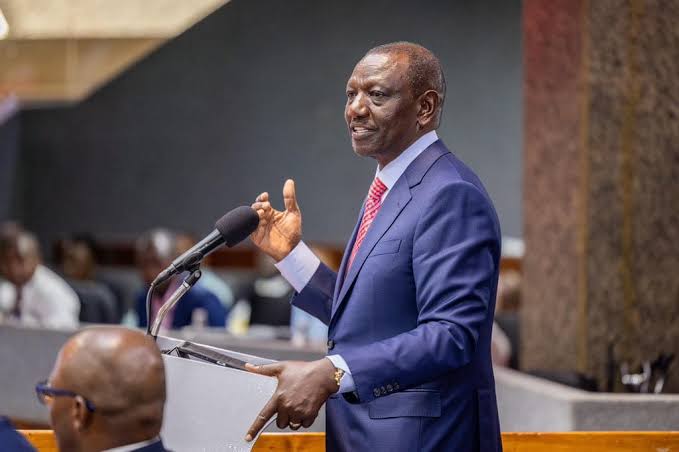
President William Ruto has called on commercial banks to lower loan interest rates from the current average of about 14.39%, saying credit is still too expensive for many households and businesses even after monetary policy easing.
He made the remarks on Thursday, 17 September 2026, during celebrations marking the 60th anniversary of the Central Bank of Kenya (CBK) in Nairobi.
What Ruto Said
Ruto noted that the Central Bank Rate (CBR) now stands at 8.75%. Lending rates have come down from earlier peaks, he said, but remain high for ordinary borrowers.
“The central bank rate now stands at 8.75 per cent. The lending rates have declined. But at 14.39 per cent in July, credit remains expensive for many Kenyans and their businesses,” he said, according to reporting of the speech.
He argued that economic stability should now feed through to cheaper, more accessible credit so that households can invest, businesses can expand and jobs can be created.
“Kenya does not need strong banks merely for the sake of having strong banks,” he said. “We need strong banks capable of financing a strong economy.”
He also said stability is not the same as prosperity. It is the foundation on which prosperity must be built.
The Rate Gap at a Glance
Mobile: Swipe left / right to see all columns → ←
| Indicator | Level | Period / note |
|---|---|---|
| Central Bank Rate (CBR) | 8.75% | Current policy rate (held through 2026 MPC decisions) |
| Average commercial bank lending rate | 14.39% | July 2026 (CBK / cited by Ruto) |
| Approximate gap | About 5.6 percentage points | CBR vs average lending rate |
| Bank-level lending rates (recent CBK list) | Roughly 10.5%–19% | Range across commercial banks (varies by bank and product) |
← Swipe table left and right on mobile →
CBK’s own key rates board has shown the July 2026 average lending rate at 14.39%, with the CBR at 8.75%. June 2026 average lending was reported around 14.38% on the weighted averages series — close to the July figure Ruto used.
Why the President Is Pushing Now
Ruto framed the call as the next step after a difficult period of high inflation, pressure on the shilling, expensive external borrowing and tight policy.
He said Kenya had strengthened key buffers including a more stable shilling and healthier foreign exchange reserves and that those gains must reach the real economy through credit.
“Having secured this foundation of stability, it is now time to translate it into tangible benefits for ordinary Kenyans,” he said in remarks covered by multiple outlets.
He urged lenders to support productive sectors, including:
- Micro, small and medium enterprises (MSMEs)
- Agriculture and farming
- Manufacturing
- Infrastructure, technology and export businesses
- Young entrepreneurs
He also stressed converting national savings into domestic production, rather than leaving credit barriers in place that keep money from reaching productive activity.
How Lending Rates Have Moved
Commercial lending rates have already eased from the highs of late 2024, when averages were reported near 17% in some months. By mid-2026 the sector average had moved into the mid-14% range as the CBK cut the CBR in steps from a peak near 13% in 2024 toward the current 8.75%.
That pass-through has been incomplete. The policy rate has fallen faster and further than the average customer loan rate. Banks still price loans with risk premiums, funding costs, credit quality and capital buffers in mind. Individual rates also differ widely by bank, collateral and borrower type.
CBK data and market compilations have shown some institutions pricing well below the average and others well above it. A recent multi-bank list put some of the lowest published rates near the low-11% or even high-10% range for selected lenders, while others remained in the mid-to-high teens.
What This Means for Borrowers and Banks
For households and SMEs, a lower average rate would cut the cost of working capital, asset finance and personal loans — if banks actually reprice new and existing facilities. A presidential appeal is political and moral pressure, not a legal rate cap.
Banks will still assess risk. High non-performing loan history in some segments, collateral gaps and operational costs help explain why average lending can stay several points above the CBR even when the policy rate falls.
For the banking industry, the speech keeps the spotlight on transmission of monetary policy — how quickly and fully CBR cuts show up in customer loan books and on lending to MSMEs and productive sectors that the government wants to grow.
Context: CBK at 60
The Central Bank of Kenya was established in 1966, succeeding the East African Currency Board. The anniversary event brought together the President, CBK Governor Kamau Thugge and financial-sector leaders.
Ruto used the milestone to link financial-sector stability with a broader growth agenda: inclusion, credit for production, and banks that finance farms, factories and enterprises rather than only balance-sheet strength.
He also linked affordable credit to financial inclusion gains, noting formal access to financial services has risen sharply over two decades (figures cited in coverage include a rise from about 26.7% of adults in 2006 to about 84.8% in 2024).
Read also:CBK Proposes Tougher Capital Rules for Kenya’s Big Banks
Frequently Asked Questions
What average lending rate did Ruto cite?
14.39% for July 2026.
What is the Central Bank Rate now?
8.75%.
When and where did he make the call?
17 September 2026, at the CBK’s 60th anniversary celebrations in Nairobi.
Did he order banks to cut rates?
No. He urged and challenged commercial banks to make credit more affordable and accessible. Lending rates remain set by banks within the regulatory framework.
Who should benefit, according to Ruto?
Households, MSMEs, farmers, manufacturers, exporters, technology and infrastructure activity, and young entrepreneurs.
Have lending rates already fallen?
Yes, from highs above 17% in late 2024 toward the mid-14% range by mid-2026, but still well above the CBR.
Bottom Line
President Ruto used the CBK’s 60th anniversary to press commercial banks on the cost of credit. With the CBR at 8.75% and average lending still around 14.39% in July 2026, he argued that stability must now show up as cheaper loans for Kenyans and businesses.
Whether average rates move further depends on banks’ pricing, risk and competition not on the speech alone. Borrowers should still compare total cost of credit across lenders rather than assume a single national “loan rate.”
Sources
- Kenyans.co.ke – Ruto Calls on Commercial Banks to Lower Loan Rates From 14% Average
- Business Today – Ruto Urges Banks to Cut Lending Rates
- People Daily – CBK @60: Ruto tells banks to lower cost of credit
- Central Bank of Kenya
- CBK – Commercial Banks Weighted Average Rates
Interest rates change. Figures above reflect reported levels as of the July 2026 lending average and the current CBR of 8.75%.