






Buying shares means owning a small piece of a listed company. On the Nairobi Securities Exchange (NSE), you can buy and sell those pieces through a licensed intermediary after opening a Central Depository System (CDS) account. This guide lists ten established NSE-listed firms that many investors watch for size, liquidity or dividends. It is educational, not personal investment advice. Share prices move daily. Always verify live quotes and company filings before you trade.
- How buying shares in Kenya works
- Comparison table: selected large NSE stocks
- Top 10 companies: short profiles
- 1. Safaricom PLC (SCOM)
- 2. Equity Group Holdings (EQTY)
- 3. KCB Group (KCB)
- 4. East African Breweries (EABL)
- 5. Co-operative Bank of Kenya (COOP)
- 6. Absa Bank Kenya (ABSA)
- 7. NCBA Group (NCBA)
- 8. Standard Chartered Bank Kenya (SCBK)
- 9. Stanbic Holdings (SBIC)
- 10. KenGen (KEGN)
- Bonus: Kenya Power (KPLC) — yes, shares exist
- How to choose which Kenyan shares to buy
- How to buy shares in Kenya (step by step)
- How much money do you need?
- Are Kenyan shares a good investment?
- Frequently asked questions
- Bottom line
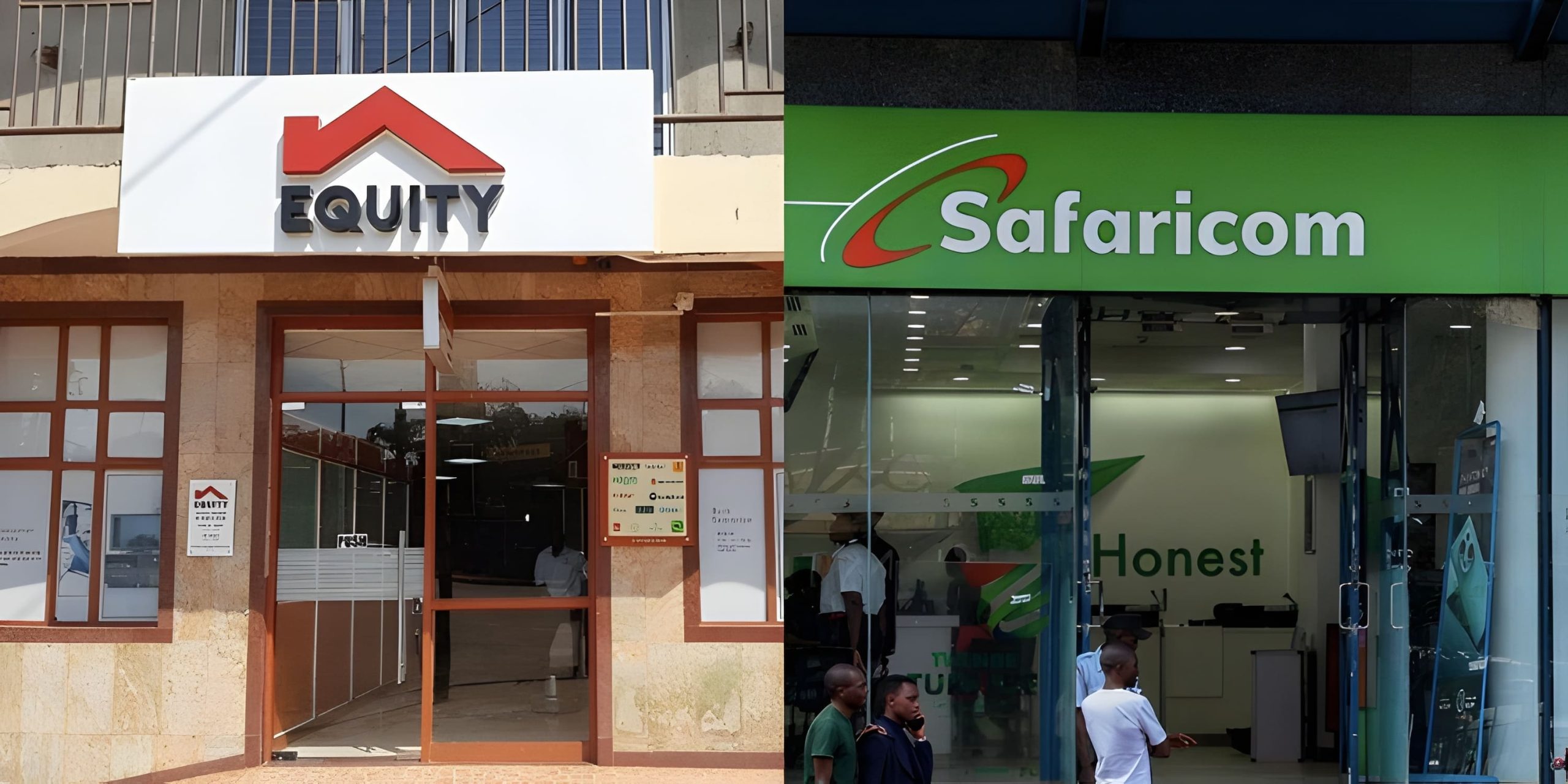
Safaricom, Equity Group and KCB Group are among the largest stocks on the Nairobi Securities Exchange by market value. Prices and rankings change with trading. Confirm live data before investing.
You will learn what these companies do, how they roughly ranked by market capitalisation in mid-to-late 2026, how Kenyan share buying works, how much money you may need, and answers to common FAQs. Kenya Power (KPLC) is also covered because many readers ask whether its shares still trade on the NSE.
How buying shares in Kenya works
An NSE-listed company is one that has floated shares on the Nairobi Securities Exchange under Capital Markets Authority (CMA) rules. Ownership is held electronically in a CDS account run by the Central Depository and Settlement Corporation (CDSC).
CDS account: Your electronic share wallet. You open it through a Central Depository Agent (CDA) such as a CMA-licensed stockbroker, investment bank or custodian. You need a national ID or passport, KRA PIN, photos and the CDS1 form. Apps such as Dosikaa can open or link a CDS account and let you trade with a chosen broker.
Broker / investment bank: Places buy and sell orders for you. CMA guidance is clear: deal only with licensed entities. Compare fees, apps, research and funding options (including M-Pesa on some platforms).
Basic costs: Expect brokerage commission (often around 1–2% depending on size and broker), plus smaller exchange, regulator and depository charges. Round-trip buy-and-sell costs can total roughly 3% of the trade value for small deals. Resident individuals normally face 5% withholding tax on dividends.
Minimum lots: Many stocks trade in board lots (commonly 100 shares for normal market orders), with odd lots available under different rules. Your broker will explain the current lot size for each counter.
Comparison table: selected large NSE stocks
Illustrative prices and market values are based on public market data around early September 2026. They are not live quotes. Ranking is by approximate market capitalisation among widely held names; it is not a buy list ordered by expected return.
| Company (Ticker) | Sector | Approx. price* | Why investors watch it |
|---|---|---|---|
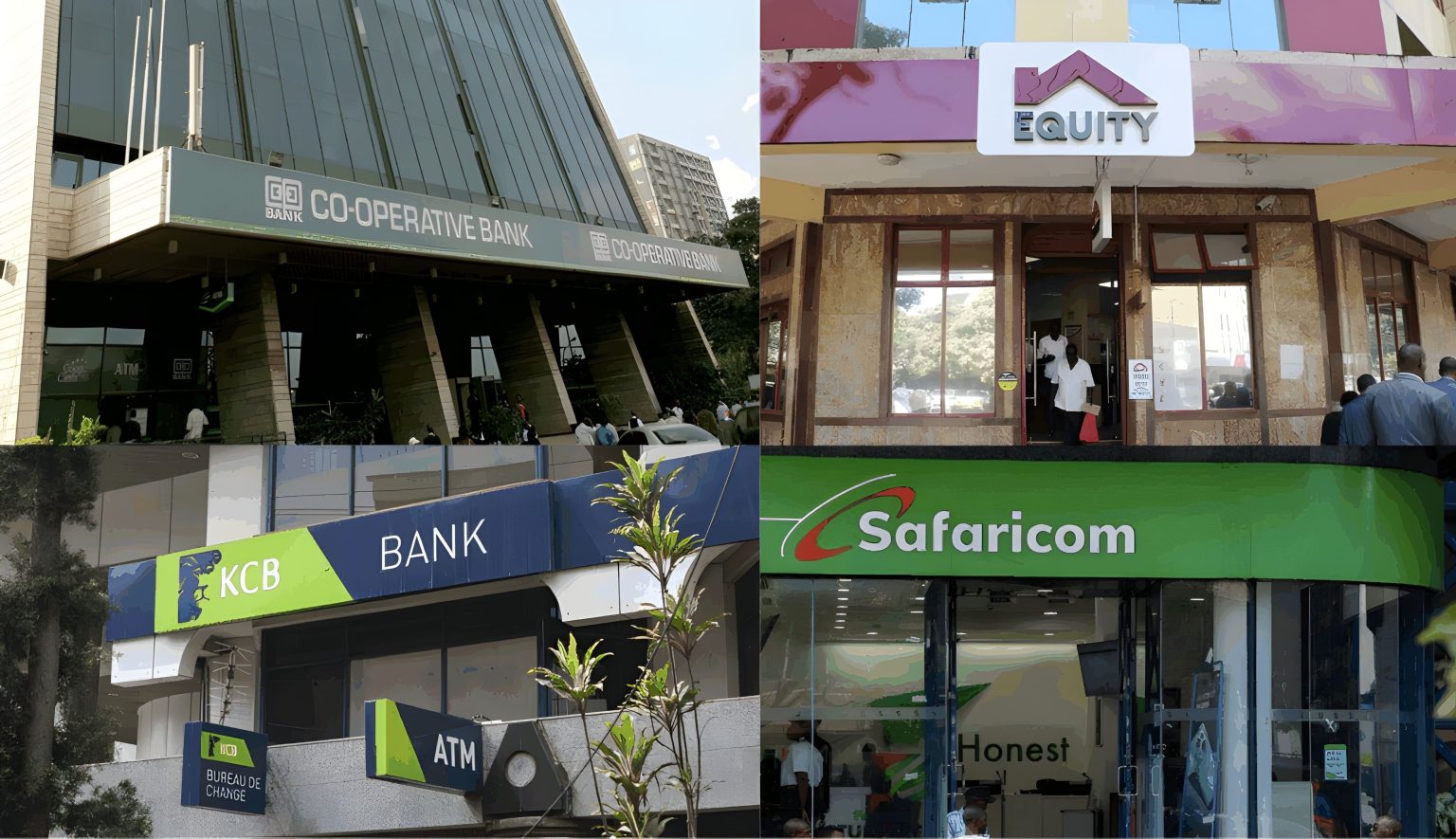
| Safaricom (SCOM) | Telecom / fintech | ~KSh 38 | Largest NSE stock; M-Pesa; Ethiopia expansion; record dividends |
| Equity Group (EQTY) | Banking | ~KSh 105 | Regional bank; strong profit growth; high liquidity |
| KCB Group (KCB) | Banking | ~KSh 98 | Large asset base; East Africa footprint; active dividend payer |
| EABL (EABL) | Consumer staples | ~KSh 296 | Brewer brands; resilient consumer demand |
| Co-operative Bank (COOP) | Banking | ~KSh 38 | Retail/SME base; solid dividend history |
| Absa Bank Kenya (ABSA) | Banking | ~KSh 35 | Parent-backed; retail and SME banking |
| NCBA Group (NCBA) | Banking | ~KSh 92 | Digital lending; competitive payouts |
| Standard Chartered Kenya (SCBK) | Banking | ~KSh 343 | Often high dividend yield; corporate banking |
| Stanbic Holdings (SBIC) | Banking | ~KSh 272 | Standard Bank Group backing; corporate finance |
| KenGen (KEGN) | Energy / utilities | ~KSh 13 | Power generation; geothermal/renewables exposure |
*Prices approximate as of early September 2026 from public market sources. Check live.mystocks.co.ke, NSE or your broker for current figures.
Also listed and often asked about: Kenya Power (KPLC) trades on the NSE (around KSh 24 in early September 2026). It is smaller than the top banks and Safaricom by market cap but is a real, active equity counter for distribution utilities. Kenya Pipeline (KPC) listed in 2026 and sits among the larger energy names by value.
Top 10 companies: short profiles
1. Safaricom PLC (SCOM)
Sector: Telecommunications and mobile money.
Approx. share price: ~KSh 38 (early Sept 2026).
Market role: Still the single largest company on the NSE by market capitalisation (often near or above KSh 1.5 trillion).
Dividend history: FY2026 total payout of about KSh 2.00 per share (interim + final) was reported as a record scale distribution.
Why investors watch it: M-Pesa cash flows, Kenya mobile leadership and Ethiopia expansion. High liquidity makes entry and exit easier for retail investors.
Key risks: Regulation, competition, Ethiopia execution and valuation swings when the whole market turns risk-off.
How to buy: Through any CMA-licensed NSE broker into your CDS account. Investor site: Safaricom IR.
2. Equity Group Holdings (EQTY)
Sector: Banking.
Approx. share price: ~KSh 105.
Why investors watch it: One of East Africa’s largest listed banks by brand and regional footprint (Kenya plus subsidiaries across the region). Profit growth and loan-book scale keep it heavily traded.
Key risks: Credit cycles, cross-border regulation and currency effects on regional books.
How to buy: Licensed broker / CDS. Equity IR.
3. KCB Group (KCB)
Sector: Banking.
Approx. share price: ~KSh 98.
Why investors watch it: Large Kenyan and regional franchise, deep retail base and frequent dividend news. H1 2026 interim dividend of KSh 3.00 per share was among the notable bank payouts.
Key risks: Non-performing loans, regional integration costs and interest-rate cycles.
How to buy: Licensed broker / CDS. KCB IR.
4. East African Breweries (EABL)
Sector: Beverages / consumer staples.
Approx. share price: ~KSh 296.
Why investors watch it: Dominant beer brands and consumer resilience when discretionary spend holds up. Diversifies a portfolio that is otherwise heavy in banks and telecoms.
Key risks: Excise taxes, input costs and volume pressure in weak consumer years.
How to buy: Licensed broker / CDS. EABL IR.
5. Co-operative Bank of Kenya (COOP)
Sector: Banking.
Approx. share price: ~KSh 38.
Why investors watch it: Cooperative roots, SME and agribusiness ties, and a reputation for steady dividends relative to price.
Key risks: Credit quality in agriculture/SME books and competition from digital lenders.
How to buy: Licensed broker / CDS. Co-op Bank.
6. Absa Bank Kenya (ABSA)
Sector: Banking.
Approx. share price: ~KSh 35.
Why investors watch it: Parent-group backing, retail and SME franchise, and improving capital optics after ownership changes in recent years.
Key risks: Margin pressure when rates fall, and parent strategy shifts.
How to buy: Licensed broker / CDS. Absa Kenya.
7. NCBA Group (NCBA)
Sector: Banking / digital finance.
Approx. share price: ~KSh 92.
Why investors watch it: Strong digital and mobile-lending franchise alongside traditional banking; competitive interim dividends in 2026 reporting cycles.
Key risks: Credit risk in digital books and competition in mobile credit.
How to buy: Licensed broker / CDS. NCBA.
8. Standard Chartered Bank Kenya (SCBK)
Sector: Banking.
Approx. share price: ~KSh 343.
Why investors watch it: Often among the higher dividend-yield names on the main board; institutional franchise and clean balance-sheet reputation.
Key risks: Profit can swing with rate cycles; international parent priorities.
How to buy: Licensed broker / CDS. Standard Chartered Kenya.
9. Stanbic Holdings (SBIC)
Sector: Banking / corporate finance.
Approx. share price: ~KSh 272.
Why investors watch it: Standard Bank Group ownership, corporate and investment banking strengths, and regular capital returns when earnings allow.
Key risks: Corporate deal cycles and regional credit conditions.
How to buy: Licensed broker / CDS. Stanbic Kenya.
10. KenGen (KEGN)
Sector: Power generation / utilities.
Approx. share price: ~KSh 13.
Why investors watch it: Kenya’s main electricity generator with geothermal and renewable projects. Adds infrastructure exposure away from pure financials.
Key risks: Hydrology, power purchase contracts, tariff and policy changes.
How to buy: Licensed broker / CDS. KenGen.
Bonus: Kenya Power (KPLC) — yes, shares exist
Ticker: KPLC (ordinary shares). Preference lines (e.g. KPLC-P4) also exist but are tiny and illiquid.
Approx. price: ~KSh 24.30 (3 Sept 2026).
What it is: Transmission, distribution and retail of electricity. Market capitalisation is much smaller than Safaricom or the top banks (tens of billions of shillings, not hundreds), but the stock is actively listed and traded.
Why people ask: Household brand name. Turnaround and tariff stories often move the price.
Risks: Policy, debt, system losses and regulatory tariff decisions.
How to buy: Same CDS + licensed broker path. kplc.co.ke.
Other liquid names worth knowing for diversification (not ranked here): I&M Group (IMH), Jubilee Holdings (JUB), BAT Kenya (BAT), Kenya Pipeline (KPC), Britam (BRIT).
How to choose which Kenyan shares to buy
- Profitability: Read recent profit after tax and return on equity.
- Growth: Revenue and earnings trends over several half-years.
- Dividends: Consistency of payouts and yield after 5% WHT for residents.
- Valuation: Price-to-earnings and price-to-book versus peers.
- Debt and capital: Especially for banks (capital ratios) and utilities.
- Industry outlook: Rates for banks, regulation for telecoms, tariffs for power.
- Liquidity: Daily volume matters if you may need to sell quickly.
- Timeframe: Short trading vs multi-year ownership need different stocks.
- Diversification: Avoid putting everything in one bank or one sector.
Past dividends and share-price gains do not guarantee future results.
How to buy shares in Kenya (step by step)
- Confirm you will only use a CMA-licensed stockbroker or investment bank (or a platform that routes through one).
- Open a CDS account with that CDA (or via Dosikaa / similar industry app linking a broker).
- Submit ID/passport, KRA PIN, photos and any proof of address the agent requires.
- Fund the trading account (bank transfer or M-Pesa where supported).
- Select the listed company ticker (e.g. SCOM, EQTY, KCB).
- Place a buy order (market or limit). Confirm lot size and fees.
- Shares settle into your CDS account. Monitor statements and company notices.
- To sell, reverse the process through the same licensed channel.
CMA’s beginner guidance stresses licensed intermediaries and a CDS account as the proper route into listed equities.
How much money do you need?
Cost ≈ share price × number of shares + trading fees.
Example only (not a recommendation): If a stock trades at KSh 40 and the normal board lot is 100 shares, the shares alone cost KSh 4,000. Add brokerage and statutory levies. Some mobile platforms advertise very low starting amounts (for example a few hundred shillings) by allowing small odd-lot style access, but fees as a percentage can be high on tiny tickets. Always ask your broker for the all-in cost before you click buy.
There is no guaranteed return. You can lose part or all of the capital you put into equities.
Are Kenyan shares a good investment?
Possible upsides: Capital growth when earnings and valuations rise; dividends from profitable banks, Safaricom and selected industrials; long-term ownership of businesses that serve a growing economy.
Real downsides: Prices fall in rate shocks, political risk and global risk-off periods. Single stocks can lag for years. Illiquid counters are hard to exit. Currency and inflation affect real returns for everyone, including foreigners.
Whether shares suit you depends on your goals, horizon and ability to absorb losses. Many households blend listed equities with cash, government securities and diversified funds rather than concentrating on one ticker.
Related:10 Best Money Market Funds in Kenya in 2026: Yields, Minimums & How to Choose
Frequently asked questions
What companies can I buy shares in Kenya?
Any company listed on the NSE (and other CMA-authorised products your broker offers). The ten above are large, liquid examples, not an exclusive list.
How do I buy shares in Kenya?
Open a CDS account via a CMA-licensed CDA, fund it, then place orders through that broker or an approved app.
What is the minimum amount needed?
It varies by broker, lot size and share price. Some digital channels allow small amounts; traditional board lots can need a few thousand shillings or more per order once fees are included.
Do I need a CDS account?
Yes, for standard ownership of NSE-listed shares in your name.
Which companies pay dividends in Kenya?
Many large banks, Safaricom, EABL, BAT, KenGen, Jubilee and others have paid cash dividends in recent cycles. Payouts change every year. Check each company’s latest notices.
Can foreigners buy Kenyan shares?
Yes, subject to account opening, KYC and any sector ownership limits. Use a licensed intermediary and confirm foreign investor procedures with your broker.
How do I sell shares in Kenya?
Place a sell order through your licensed broker. Proceeds settle according to market rules into your linked account.
Does Kenya Power (KPLC) still have shares?
Yes. Ordinary shares trade under ticker KPLC on the NSE. Preference share lines also exist but are not the main retail vehicle.
Is this investment advice?
No. It is general information about listed companies and market access.
Bottom line
Safaricom, Equity, KCB, EABL and the large banks still dominate NSE value and daily conversation. KenGen and Kenya Power give utility exposure; Jubilee and others sit further down the size ladder but remain investable. The practical path is the same for all of them: licensed broker, CDS account, funded order, and ongoing reading of results. Rank by market cap is not a promise of future returns. Research each company, spread risk, and only commit money you can afford to leave at market risk.
Sources
- Nairobi Securities Exchange
- Capital Markets Authority – investor information
- CDSC – CDS accounts and Dosikaa
- myStocks / live NSE quotes
- Safaricom investor relations
- KCB dividends
- KPLC NSE quote and profile
- Public market capitalisation tables and CMA/NSE reporting on largest listed firms (2026)
Updated early September 2026. Share prices and market caps change every session. Not investment advice. Verify live prices, dividends and licensing on official CMA, NSE, CDSC and company sites.