

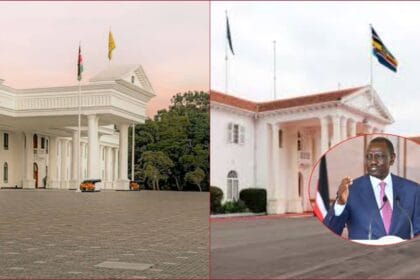



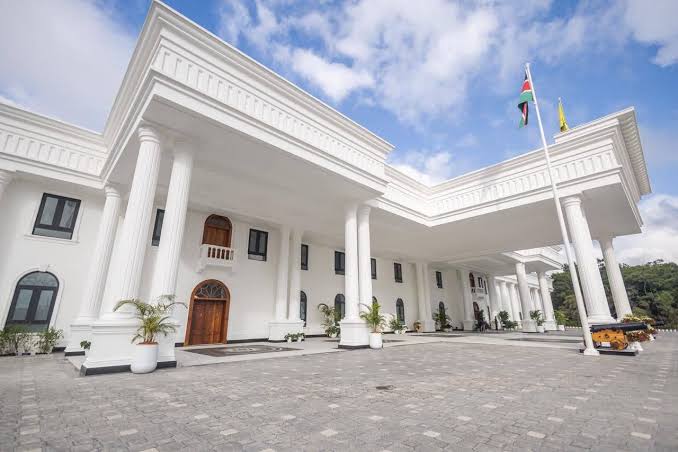
Kenya’s State House spent Sh1.27 billion on foreign travel in just nine months, between July 2025 and March 2026, marking the first time in the country’s history that presidential travel expenditure has crossed the Sh1 billion mark. The figure represents an eightfold increase compared to the Sh146.5 million spent during the same period the previous year, according to a budget review by the Controller of Budget highlighted by Business Daily Africa.
The surge comes at a particularly sensitive moment. President Ruto’s administration has been publicly calling for austerity and cuts to non-essential government spending while simultaneously running up a foreign travel bill that dwarfs anything Kenya has seen before from State House.
Where President Ruto Travelled
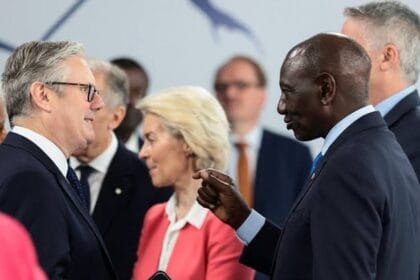
The spending coincides with an aggressive international diplomacy schedule. During the nine-month period, President Ruto visited Washington DC at the invitation of US President Donald Trump, London for meetings with UK Prime Minister Keir Starmer, and Yokohama, Japan for the Ninth Tokyo International Conference on African Development.
Additional state visits covered Saudi Arabia, Italy, Azerbaijan, Kazakhstan, and Tanzania. Each of these trips involves airline ticketing, delegation logistics, and foreign per diems in cities where daily costs run high, all of which add up quickly when travel is this frequent.
How State House Compares to Other Government Arms
State House was the second largest consumer of foreign travel funds across the entire national government, behind only the Ministry of Foreign Affairs. The National Assembly spent Sh1.48 billion on foreign travel during the same period, while the Senate spent Sh815 million.
The Office of the Deputy President, by contrast, spent just Sh76 million on foreign travel, a fraction of what State House consumed. Across the entire national government machinery, combined domestic and overseas travel reached Sh17.3 billion in the same nine-month window.
The Austerity Contradiction
The numbers sit uncomfortably alongside the government’s repeated public calls for fiscal discipline. Kenya is carrying a heavy debt servicing burden, running a KSh 1.19 trillion deficit in the 2026/2027 budget, and asking citizens to accept new tax measures through the Finance Bill 2026. An eightfold increase in presidential travel spending during the same period creates a credibility problem that is difficult to talk around.
Citizens and opposition figures have pointed to the contrast as evidence that austerity is being applied selectively, falling harder on ordinary Kenyans than on the institutions that call for it most loudly.
What State House Says in Defence
President Ruto has maintained publicly that international travel is a core part of his executive responsibilities and not a discretionary expense that can simply be cut. State House argues that the trips are essential for building Kenya’s economic diplomacy, securing foreign labour market agreements for Kenyan workers, and unlocking development financing from bilateral and multilateral partners.
Also read:Kenya, US Near Critical Minerals Deal That Prioritises Local Processing
Those are legitimate functions of the presidency. The question being asked by critics is not whether the president should travel, but whether the scale and cost of those trips can be justified given the fiscal pressures the government is simultaneously citing as reasons for tighter public spending everywhere else.
What Accountability Looks Like Here
The Controller of Budget has done its job by publishing these figures. The next step is for Parliament to demand a detailed breakdown of what each trip cost, how many people travelled in each delegation, and what concrete economic or diplomatic outcomes were secured as a result.
Zero-based budgeting, which the Treasury introduced for the 2026/2027 financial year, is supposed to require every department to justify its spending from scratch. Applying that same standard to State House travel would be a meaningful first test of whether the reform has real teeth or is simply a slogan applied to ministries but not to the presidency itself.