








Kenya is edging closer to a landmark minerals agreement with the United States that could reshape the country’s mining sector by requiring strategic minerals to be processed locally before export.
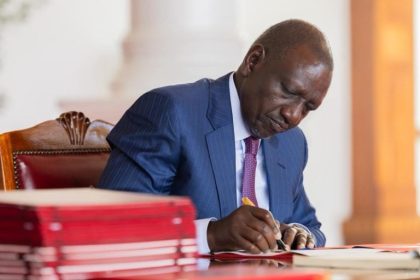
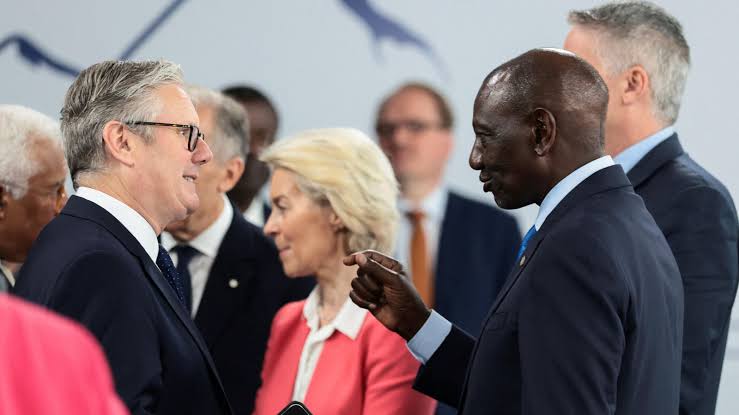
President William Ruto disclosed the development on the sidelines of the G7 Summit in Évian-les-Bains, France, saying discussions with Washington had reached an advanced stage. The proposed partnership is expected to increase local value addition, create jobs, and support industrial growth.
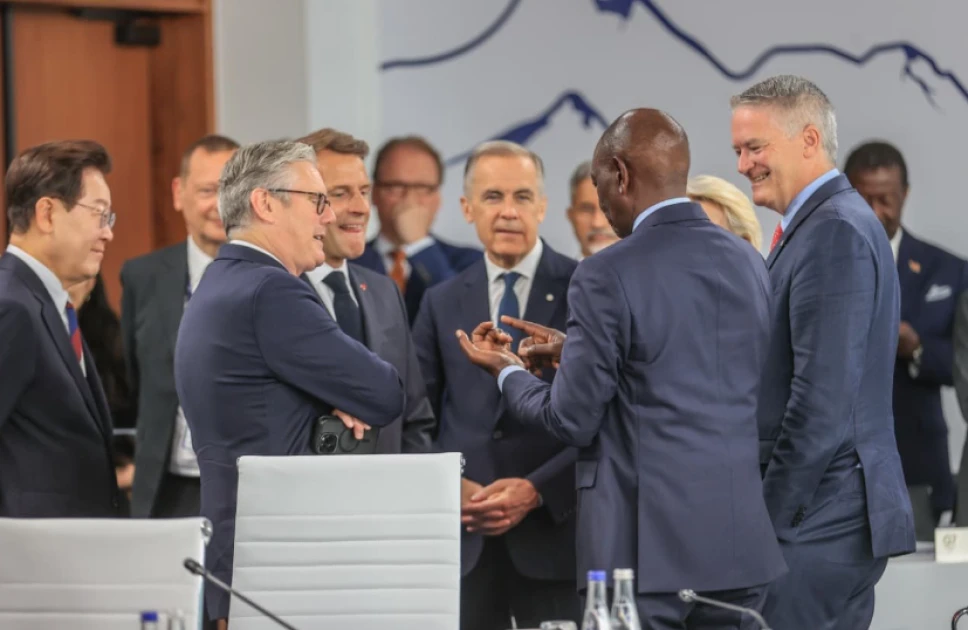
Caption: President William Ruto attends meetings on the sidelines of the G7 Summit in France.
The agreement marks a shift from the traditional model where raw minerals are exported for processing abroad. Instead, minerals extracted under the partnership would be refined and processed within Kenya, allowing the country to retain a larger share of the economic benefits.
Mrima Hill Deposits Attract Global Interest
At the centre of the discussions is Mrima Hill in Kwale County, one of Kenya’s most significant mineral deposits. The site contains rare earth elements and niobium, minerals that are increasingly important in the production of electric vehicles, renewable energy technologies, electronics, and defence systems.
Government estimates have previously valued the deposits at about KSh 8.1 trillion, placing Mrima Hill among the country’s most strategically important natural resource assets.
Race for Critical Minerals Intensifies
The planned deal comes as major economies seek to secure reliable supplies of critical minerals needed for the global energy transition. Demand for rare earth elements has risen sharply as countries invest in clean energy infrastructure and advanced manufacturing.
Kenya’s untapped reserves of rare earths, lithium, graphite, copper, and nickel have increasingly drawn interest from international investors looking for alternative supply sources.
Kenya Seeks Investment Without Taking Sides
President Ruto said Kenya’s approach is focused on securing partnerships that deliver tangible economic benefits rather than aligning with competing geopolitical interests.
The government’s strategy is to attract investment, encourage technology transfer, and ensure local communities benefit from the country’s natural resources through employment and industrial development.
Read also:Kenya Business News: World Bank Snub, Fuel Crisis and JKIA Row
That approach comes as Western countries and China compete for access to critical minerals that are expected to play a central role in future technologies and energy systems.
What the Deal Could Mean for Kenya
If finalised, the agreement could accelerate investment in Kenya’s mining industry while supporting the development of local processing facilities.
For businesses, the deal could create opportunities in manufacturing, logistics, engineering, and infrastructure. For investors, it signals growing international confidence in Kenya’s mineral potential.
As negotiations move toward completion, attention will turn to the final terms of the partnership and how quickly projects can be implemented. The outcome could determine how much value Kenya captures from its vast mineral resources in the years ahead.