






Government tenders can be a genuine growth opportunity for Kenyan businesses, but the process has changed a lot in recent years. Everything now runs through mandatory online systems, and skipping a step can get your bid disqualified before anyone even reviews it.
This guide walks you through exactly what you need, from gathering documents to submitting your final bid. Whether you run a construction firm or a small supplies business, the process below applies to you.

Overview of Kenya’s Tender Process
Since July 1, 2025, all government procurement in Kenya runs exclusively through the Electronic Government Procurement system, known as e-GP. This shift falls under the Public Procurement and Asset Disposal Act, and it covers everything from registration to contract award.
The goal behind this system is straightforward. It cuts down on paperwork, increases transparency, and gives businesses across the country fairer access to public tenders, regardless of size or location.
Who Can Apply
Any registered business, whether a sole proprietorship, partnership, or limited company, can apply for government tenders in Kenya. Foreign suppliers can also register, though business registration with Kenya’s Business Registration Service becomes a requirement before any contract award.
Businesses owned by youth, women, or persons with disabilities have an added advantage too. Through AGPO certification, these groups gain access to a 30 percent quota reserved specifically for their procurement participation.
Required Documents
Incomplete paperwork is one of the biggest reasons vendors get disqualified during technical screening. Prepare these documents before you begin:
- Certificate of Incorporation or Business Name Registration Certificate
- Current CR12 Form listing directors and shareholders, for limited companies
- Valid KRA PIN and Tax Compliance Certificate
- Current single business permit from your County Government
- AGPO Certification, if applicable, for youth, women, or persons with disabilities
- Sector-specific licensing, such as National Construction Authority certification for structural work
Step-by-Step Application Process
- Gather your compliance documents. Have everything scanned and ready before you start the registration process.
- Register on the e-GP Kenya system. Visit the official portal, select Supplier Registration, and enter your business data, KRA PIN, and contact details. Upload your compliance documents for verification by the National Treasury.
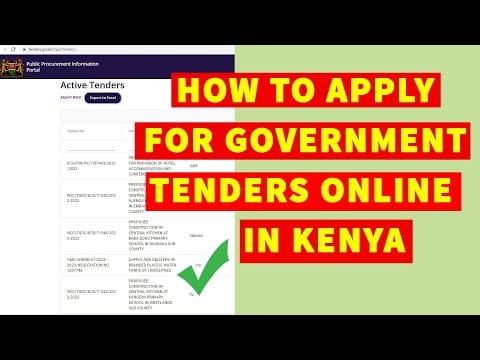
- Check the PPIP portal. Use the Public Procurement Information Portal to browse published awards, procurement schedules, and open tender notices from ministries, state corporations, and county units.
- Search for active tenders. Log into e-GP and filter open tenders by category or procuring entity to find opportunities matching your business.
- Download and review the tender document. Pay close attention to evaluation criteria, technical scope, financial instructions, and formatting guidelines.
- Prepare your technical and financial proposals. Include proof of expertise, references, financial statements, and itemized pricing that matches the tender’s required format.
- Submit your bid before the deadline. Upload all attachments, complete the required web forms, and submit digitally through the e-GP portal before the system cutoff.
Costs and Fees
Registration on the e-GP system itself does not carry a direct fee, but preparing your compliance documents does involve some costs. These include KRA Tax Compliance Certificate processing, county business permit fees, and any sector-specific licensing charges relevant to your industry.
Some tenders also require a tender security guarantee, which you can arrange through a bank or insurance provider directly within the e-GP system module if the procuring entity requests it.
Processing Time
Supplier registration approval through the e-GP system depends on how quickly the National Treasury verifies your submitted documents. Incomplete or inconsistent information tends to slow this down significantly, so accuracy at this stage matters.
Once registered, individual tender evaluation timelines vary by procuring entity, though most publish clear submission deadlines and award notification dates within the tender document itself.
Tips for Success
Keep your business documents updated at all times, since expired certificates are a common reason for disqualification. Regularly check the e-GP and PPIP portals for new opportunities rather than waiting for tenders to come to you.
Read every tender document carefully before bidding. Missing a specific formatting requirement or evaluation criterion can eliminate an otherwise strong bid before it is even properly reviewed.
If you qualify for AGPO certification, apply for it early. That 30 percent reserved quota can meaningfully improve your chances, particularly against larger, more established competitors.
Official Resources
Register and manage your supplier profile through the e-GP Kenya System. For published awards and open tender notices, check the Public Procurement Information Portal. For AGPO certification, visit the official AGPO registration channels through the National Treasury.
Frequently Asked Questions
Is e-GP registration mandatory for all government tenders in Kenya?
Yes, since July 1, 2025, all government procurement in Kenya runs exclusively through the e-GP system, making registration mandatory for any business wanting to bid.
What is AGPO certification?
AGPO stands for Access to Government Procurement Opportunities, a certification that gives businesses owned by youth, women, or persons with disabilities access to a 30 percent reserved procurement quota.
Do foreign suppliers need to register with Kenya’s Business Registration Service?
Foreign suppliers can begin the e-GP registration process without prior BRS registration, but they must complete it before any contract can be awarded.
What happens if my documents are incomplete during registration?
Incomplete or inconsistent documentation is one of the most common reasons for disqualification during technical screening, so accuracy matters from the start.
Where can I find open government tenders in Kenya?
Open tenders are published on both the e-GP Kenya System and the Public Procurement Information Portal, searchable by category or procuring entity.
Is there a fee to register on the e-GP system?
Registration itself does not carry a direct fee, though preparing supporting documents like tax compliance certificates and licenses involves standard associated costs.
Conclusion
Applying for government tenders in Kenya now runs entirely through the e-GP system, and understanding this process properly can make a real difference to your success rate. Getting your documents in order early, registering correctly, and reading each tender document closely all matter more than people often expect.
With the right preparation and consistent monitoring of new opportunities, government tenders can become a genuinely reliable revenue stream for Kenyan businesses of any size.