





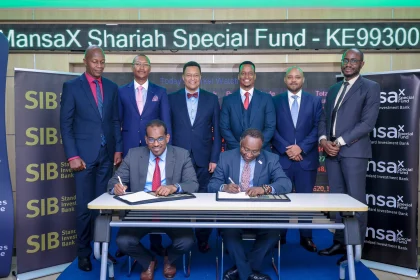
Japan’s business footprint in Kenya has grown quietly but steadily, and Nairobi has become the clear center of that activity. Over 120 Japanese companies now operate branches or subsidiaries in the country, making it the central hub for Japanese enterprise across East Africa.
These businesses span automotive manufacturing, infrastructure, green energy, logistics, and technology. Here is a full breakdown of the major players and what they are actually building in Kenya right now.
Automotive and Mobility
Toyota Tsusho Corporation, operating locally through CFAO Mobility Kenya, represents Japan’s largest and most visible corporate presence in the country. Beyond distributing and servicing Toyota, Suzuki, and Hino vehicles, the company began semi-knockdown production of the Toyota Hiace in Kenya back in 2021 and has since expanded into assembling the Fortuner SUV at the Kenya Vehicle Manufacturers plant in Thika.
The partnership has deepened further in 2026. CFAO Kenya, Toyota Tsusho, and Japan’s Unicharm Corporation are jointly establishing Sofy East Africa Limited, a Nairobi-based venture to manufacture sanitary pads locally, backed by a planned capital of KSh 2 billion. Unicharm holds the majority stake, with Toyota Tsusho and CFAO Kenya splitting the remainder.
Honda Motor Co. runs local assembly lines through a joint venture, building a genuine manufacturing base for motorcycles and motor vehicles rather than just importing finished units.
Nissan Motor Corporation maintains a prominent presence too, using local vehicle assembly partnerships to service demand across East Africa.
Hakki Africa takes a different approach entirely as a Tokyo-backed fintech startup, providing microfinance vehicle loans to local taxi and delivery drivers who need financing to get on the road.
Construction and Infrastructure
Toyo Construction Co. Ltd. serves as a key engineering partner leading major expansion and technology transfer projects at the Port of Mombasa, one of East Africa’s busiest maritime gateways.
JFE Engineering Corporation is actively involved in building infrastructure projects, including high-profile transport bridges near the Nairobi Train Station.
Konoike Construction Co. manages large-scale civil engineering and public utility contracts, including upgrades to urban water supply systems that many Nairobi residents rely on daily.
Trading Houses and Conglomerates
Japan’s major trading houses, known as sogo shosha, all maintain a real presence in Kenya’s economy.
Marubeni Corporation actively invests in Kenya’s expanding energy grid and green technology sectors, positioning itself within the country’s renewable energy push.
Sumitomo Corporation stays heavily engaged in public-private partnerships, large industrial machinery supply, and broader infrastructure development.
Mitsubishi Corporation focuses on large enterprise investments, trading, and technology installations across the East African region.
Logistics and Shipping
Mitsui O.S.K. Lines, known as MOL, operates dedicated warehousing, shipping lines, and end-to-end global supply chain logistics out of both Mombasa and Nairobi, connecting Kenyan trade to international markets.
Finance and Banking
Hokkoku Bank, through its CC Innovation arm, notably became the first Japanese regional bank to establish an official advisory and corporate branch network in Kenya, a meaningful step for a regional Japanese lender rather than one of the country’s larger megabanks.
A Bigger Push Behind the Scenes
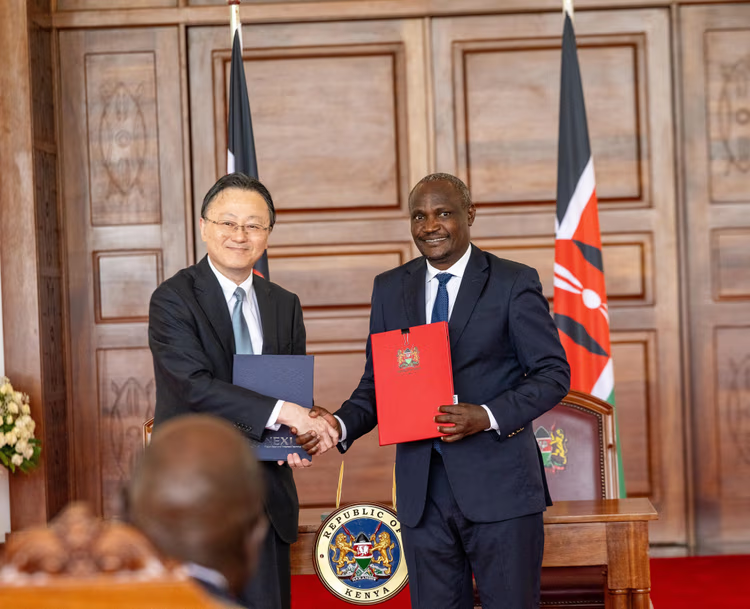
Japan’s government has been backing this private investment with real money too. In 2025, Japan and Kenya signed a yen-denominated Samurai loan agreement worth approximately 25 billion yen, aimed specifically at boosting Kenya’s shift toward becoming a genuine car-manufacturing nation rather than just a market for imported used vehicles.
This kind of state-backed financing, paired with private investment from firms like Toyota Tsusho, suggests Japan sees Kenya as a long-term manufacturing base rather than just a distribution market.
Also read:Top Chinese Companies Operating in Kenya (2026)
Top Indian Companies Operating in Kenya (2026
Frequently Asked Questions
How many Japanese companies operate in Kenya?
Over 120 Japanese companies currently operate branches or subsidiaries in Kenya, up from 114 recorded by Japan’s Ministry of Foreign Affairs in 2022.
Which Japanese company has the largest presence in Kenya?
Toyota Tsusho Corporation, operating through CFAO Mobility Kenya, holds Japan’s largest and most visible corporate footprint in the country.
Is Toyota manufacturing vehicles locally in Kenya?
Yes, Toyota Tsusho has been assembling vehicles like the Hiace and Fortuner SUV at the Kenya Vehicle Manufacturers plant in Thika since 2021.
What is the Samurai loan between Japan and Kenya?
It is a yen-denominated loan agreement worth roughly 25 billion yen, backed by Japanese commercial banks and insured by Nippon Export and Investment Insurance, aimed at boosting Kenya’s automotive manufacturing sector.
Which Japanese trading houses operate in Kenya?
Marubeni, Sumitomo, and Mitsubishi Corporation all maintain active operations in Kenya, spanning energy, infrastructure, and industrial trading.
Japanese investment in Kenya has moved well beyond simple vehicle distribution, now spanning genuine local manufacturing, infrastructure development, and green energy projects. With state-backed financing reinforcing private investment from companies like Toyota Tsusho, this partnership looks set to deepen further in the years ahead.
For Kenya, this relationship brings not just capital, but real manufacturing capacity and technology transfer that few other investment partnerships currently offer at the same scale.