


The best teacher training colleges (TTCs) in Kenya for 2026 charge a government-guided first-year fee of KES 67,189 for KUCCPS-placed students at public institutions, well above the KES 25,000 to 35,000 figure many sites still quote as “tuition only.”
A Note on Fee Accuracy
This is worth flagging upfront because it trips up a lot of applicants. Many sites still quote TTC fees as “tuition only,” somewhere in the KES 25,000 to 35,000 range, without making clear what that actually covers. In 2026, the KUCCPS-guided first-year programme cost across public TTCs is KES 67,189. The full published vote-head structure for primary and DPTE programmes, covering boarding, activity fees, PE kit, and administration, reaches KES 77,276 for Year 1, with a minimum of KES 50,000 typically payable on reporting day. Separate KNEC exam registration, roughly KES 15,700, is billed on top and often phased across terms.
Kagumo and Thogoto’s own fee documentation, along with independent college directories, show total annual costs landing in the KES 70,000 to 80,000 range once every line item is included. If a fee figure you find online looks suspiciously low, it’s very likely a tuition-only number, not what you’ll actually pay per year. Always download the college’s latest fee structure PDF or joining instructions before budgeting.
Top Public Teacher Training Colleges
| College | Location | Est. Total Annual Fees | Specialization |
|---|---|---|---|
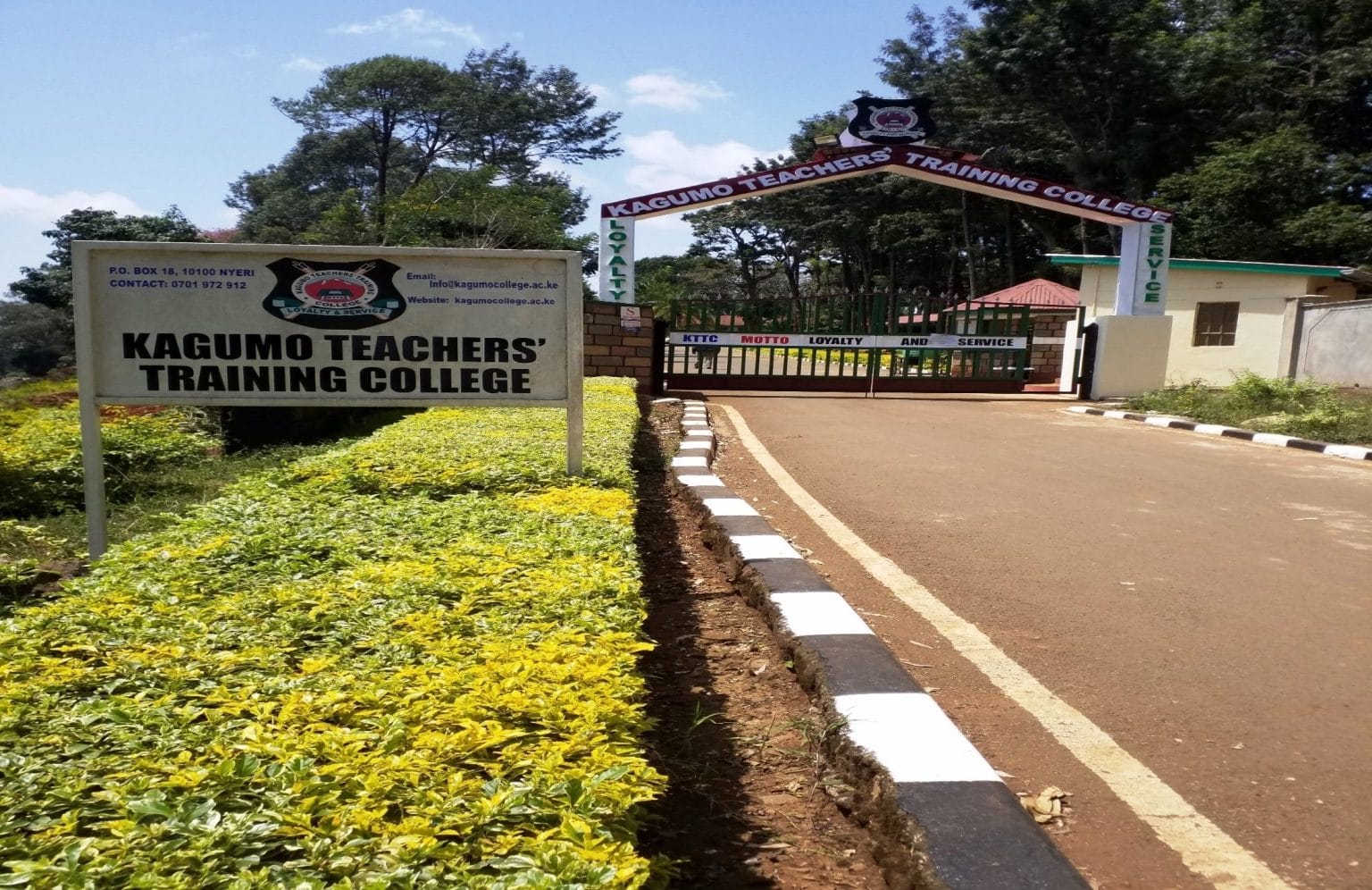
| Kagumo Teachers Training College | Nyeri County | KES 67,189 (KUCCPS programme cost); KES 70,000 to 80,000+ with boarding and extras | Diploma in Secondary Teacher Education (DSTE) |
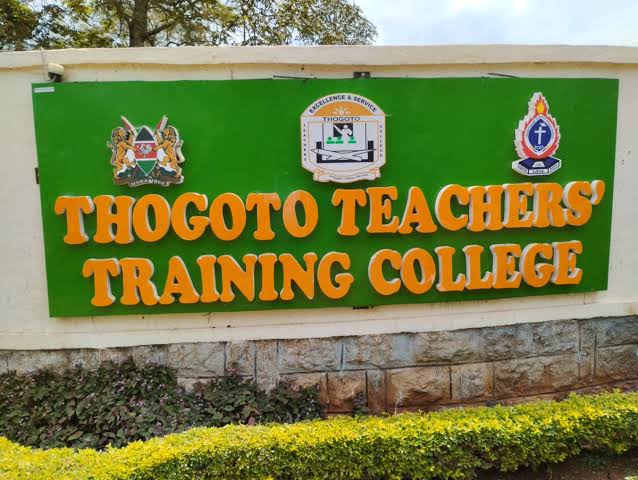
| Thogoto Teachers Training College | Kikuyu Sub-County, Kiambu County | ~KES 77,276 (Year 1 full vote-head structure); ~KES 72,000 to 78,000 including boarding | Diploma in Primary Teacher Education (DPTE) |
| Asumbi Teachers Training College | Homa Bay County | ~KES 72,000 to 77,000 (Year 1, standard structure) | Primary and Early Childhood teacher education |
| Shanzu Teachers Training College | Mombasa County | Standard public DPTE structure applies, ~KES 67,189 to 77,276 Year 1; confirm rates for upgrade modules separately | Coast region DPTE and upgrade modules |
| Eregi Teachers Training College | Kakamega County | ~KES 72,000 to 77,000 (Year 1, standard structure) | Primary teacher training for Western Kenya |
Notice the gap between what’s commonly published and what the official fee structures actually show. That’s not a one-off. Government subsidies and capitation reduce what students pay compared to full-cost training, but the subsidized figure still lands well above the KES 25,000 to 35,000 range that circulates on aggregator sites. Shanzu specifically is worth a second look: a KES 12,000 per term figure floating online applies to a separate certificate or older PTE track, not the standard DPTE programme, so don’t assume it’s the diploma rate.
Top Private Teacher Training Colleges
| College | Location | Fees | Specialization |
|---|---|---|---|
| MIT Teachers Training College | Machakos Town, Machakos County | KES 17,500 per term (full-time DSTE), or KES 139,740 for the full 3-year course | Early Childhood (DECTE), Secondary Education, Special Needs Education |
| Kajiado Teachers Training College (KTTC) | Kitengela, Kajiado County | KES 22,000 to 28,000 per term, depending on programme | Blended DPTE and Montessori method updates |
| Presbyterian Teachers College Rubate | Chuka, Meru/Tharaka Nithi border | ~KES 25,400 per term; confirm directly with college | Standard diploma and holiday school-based programs |
Private colleges tend to be more transparent about per-term costs upfront, which is part of why they appeal to working adults and school-based trainees juggling a job alongside studies. The trade-off is usually a smaller campus and fewer boarding options compared to the older public institutions.
Programs and Entry Requirements at a Glance
| Program | Minimum KCSE Grade | Duration | Career Path |
|---|---|---|---|
| DPTE (Primary Education) | C (Plain) | 2 years at most public institutions for 2026 intakes | Primary school teacher, Grade 1 to 6 |
| DECTE (Early Childhood) | C (Plain) | 3 years | Nursery or pre-primary educator |
| DSTE (Secondary Education) | C+ overall, with C+ in two teaching subjects | 3 years | Junior or senior secondary teacher |
| DSNE (Special Needs) | C (Plain), affirmative action applies | 2 years | Special needs and inclusive educator |
DPTE duration has shifted from the older 3-year structure to a 2-year programme at most public institutions for 2026 intakes. Confirm the exact duration listed for your specific college and intake year rather than assuming it matches an older reference, since some private colleges and school-based tracks still run on different timelines.
A Bigger Change on the Horizon
Every college listed here could look structurally different within a couple of years. Parliament is currently considering the Pre-Service Education and In-Service Training Bill, 2026, which would merge all 32 public TTCs into a single institution called the Kenya Teachers Training College (KTTC). Under the proposal, colleges like Kagumo, Thogoto, Asumbi, and Shanzu would stop operating as independent legal entities and instead become regional campuses of one centralized body, similar in structure to how Kenya Medical Training College already operates across multiple sites.
If the Bill passes, fee structures, admissions, and staffing could all be standardized under one administration rather than set college by college. Nothing changes immediately, current students and this year’s applicants aren’t affected yet, but anyone planning an application for the 2027 intake should watch for updates before assuming today’s college-specific fee structures will still apply.
Frequently Asked Questions
Are public TTC fees really cheaper than private colleges?
Not always, once you compare total annual costs rather than advertised tuition. The KUCCPS-guided public rate of KES 67,189, or up to KES 77,276 with the full vote-head structure, can run close to or above some private college totals once boarding and exam fees are added. Compare full-year figures, not just headline tuition numbers.
Do I apply to TTCs through KUCCPS or directly?
Public TTC placements run through the KUCCPS Student Portal, which handles government-subsidized slots. Private colleges and school-based programs are usually applied to directly through the institution.
What’s the difference between DPTE and DSTE?
DPTE trains primary school teachers and requires a C plain minimum grade. DSTE trains secondary school teachers, requires a higher C+ grade with C+ in two teaching subjects, and qualifies graduates for junior and senior secondary posting.
Can I study at a TTC while working?
Yes, several private colleges and some public ones offer school-based or holiday-based programs designed for working adults, typically running sessions during school holidays rather than year-round.
Is there a planned merger of public TTCs?
Yes. As of August 2026, a Bill before the National Assembly proposes placing all 32 public TTCs under a single Kenya Teachers Training College (KTTC). If passed, fees and admissions could be further standardized, so check the latest government announcements before applying for the 2027 intake.
Note: Fees can change. Verify directly with the college’s official website, joining instructions PDF, or the KUCCPS portal before budgeting or applying.