









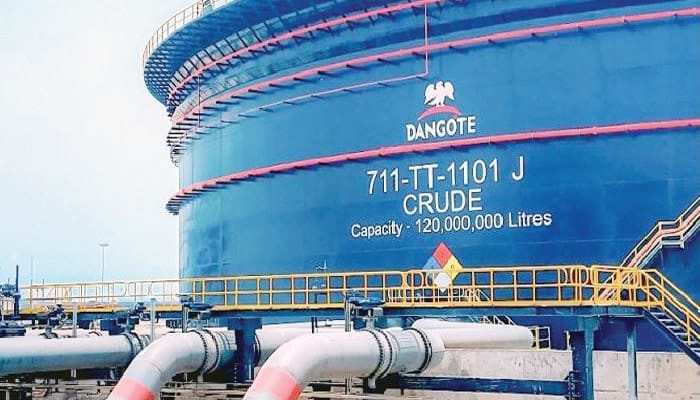
Nigeria’s Dangote Petroleum Refinery has crossed a major threshold, processing 700,000 barrels of crude oil per day during a formal performance test, beating its official nameplate capacity of 650,000 barrels per day. The result confirms that the $20 billion facility is not just operational but performing beyond what its original design specified, a significant vote of confidence for a project that faced years of construction delays and financing hurdles before producing its first refined products in 2024.
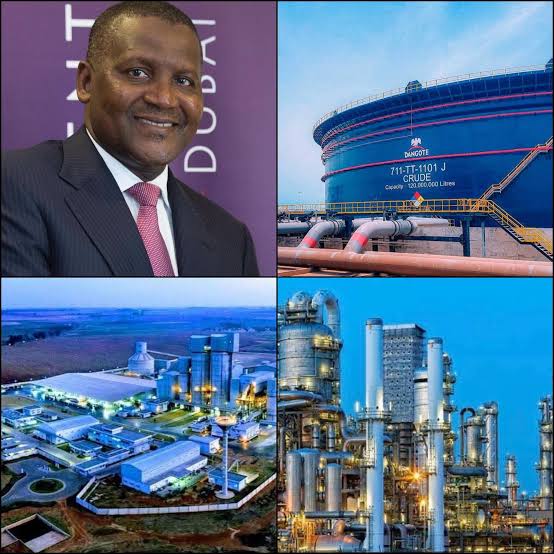
Owned by Aliko Dangote, Africa’s richest man, the refinery has moved quickly from construction project to continental energy supplier. It now produces petrol, diesel, aviation fuel, and other refined petroleum products, and is already exporting to markets across Africa, Europe, and beyond.
The Plan to Double Capacity in 30 Months
The performance test was conducted by process licensors and is part of a broader expansion strategy. Devakumar Edwin, Vice President of Oil and Gas at Dangote Industries, confirmed that the refinery is targeting a processing capacity of 1.4 million barrels per day within the next 30 months.
If that target is met, the facility would rank among the largest refining complexes anywhere in the world, competing with major plants in Asia and the Middle East. For a continent that has historically exported crude oil only to import it back as refined fuel, that would represent a fundamental shift in Africa’s energy economy.
Africa’s Fuel Import Problem and How Dangote Is Changing It
For decades, African nations including Nigeria, the continent’s largest crude producer, spent billions of dollars annually importing refined petroleum products. Domestic refining capacity was limited, state-owned facilities ran far below potential, and the result was a paradox that cost African economies enormously.
Dangote’s refinery is beginning to dismantle that dependency. Export data from energy analytics firm Kpler shows shipments from the refinery climbing sharply, from 168,000 barrels per day in February to 353,000 barrels per day in April. Roughly half of those exports went to other African countries, directly reducing the continent’s reliance on imported fuels from Europe and Asia.
Exports eased to 285,000 barrels per day in May, but analysts say the trajectory points clearly toward the emergence of a new regional refining hub anchored in West Africa.
Global Reach Beyond Africa
The refinery’s footprint now extends well beyond the continent. It has shipped refined products to the United Kingdom, France, and the Netherlands in Europe, and has exported cargoes to the United States and Saudi Arabia, placing it firmly on the map of international energy suppliers.
Aviation fuel is becoming another growth area. CEO David Bird recently disclosed that the refinery has built up substantial jet fuel inventories and is positioned to compete for supply contracts in global aviation markets, an area where African production has historically been negligible.
Read also:KRA Lost KSh 9.1 Billion in Two Months After Government Cut Fuel VAT in Half
The facility’s growing scale is also drawing interest from international crude suppliers and commodity trading houses looking to access one of the world’s newest large-scale refining centres. That commercial attention adds another layer of stability to a project that was once viewed with scepticism about whether it would ever reach full operation.
Why the Timing Matters
The refinery’s rise comes at a moment when global fuel supply chains are under strain. Escalating tensions in the Middle East have disrupted traditional trade flows, pushing African governments and fuel importers to look for more reliable and geographically closer sources of refined products.
Dangote has stepped into that gap at exactly the right time. With OPEC dynamics shifting and European refiners facing their own margin pressures, having a large, well-capitalised African refinery capable of flexible production and export is a genuine regional asset.
Challenges That Still Remain
The milestone should not obscure the challenges ahead. Securing a consistent supply of crude feedstock at competitive prices remains a real operational concern, particularly given Nigeria’s history of pipeline disruptions and crude lifting disputes. Maintaining profitability through volatile global energy price cycles will also require careful management as the refinery scales further.
But those are the challenges of a functioning, growing business, not the existential questions that surrounded the project during its construction years. The 700,000 barrel test result suggests the refinery’s foundations, both physical and operational, are solid enough to support the ambitious expansion that follows.