






East African Breweries just posted its strongest full year in recent memory, and it’s happening while the company’s biggest shareholder is in the middle of packing up and leaving. Pretax profit rose 43% to KSh 27.66 billion ($214 million) for the financial year ended June 30, 2026, up from KSh 19.31 billion the year before. That’s the kind of number that would stand out in any market. In one dealing with currency swings and stubborn inflation across three countries, it’s notable.
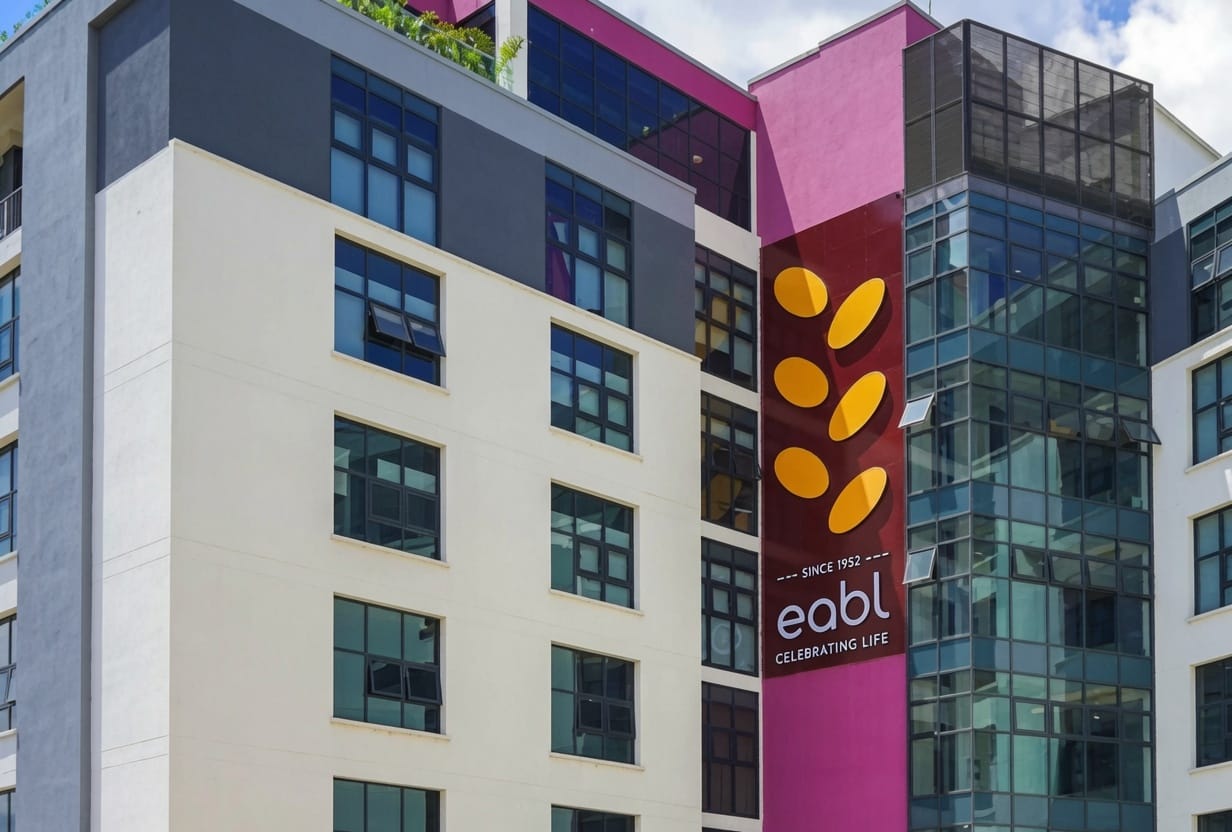
EABL’s net sales crossed KSh 146 billion in FY2026, marking the first time the Nairobi-listed brewer has passed the $1 billion revenue mark, as Diageo finalizes its exit to Asahi Group Holdings.
Profit after tax climbed even faster, up 49% to an all-time high of KSh 18.2 billion, compared to KSh 12.2 billion in FY2025. Net sales grew 13% to KSh 146 billion (about $1.12 billion), which CEO Jane Karuku pointed out is the first time the company has crossed the billion-dollar revenue mark. That milestone matters less as a vanity number and more as a signal: EABL isn’t just recovering, it’s operating at a scale it’s never hit before.
Where the Growth Actually Came From
Volume growth tells the real story here. Overall sales volumes rose 8%, but the breakdown across markets is where it gets interesting. Kenya, still EABL’s biggest market, grew a modest 5%. Uganda grew faster at 9%. Tanzania grew 35%.
That’s not a typo. Tanzania’s growth rate is roughly seven times Kenya’s. For a company that’s historically leaned on Kenya for the bulk of its earnings, that kind of shift matters. It suggests EABL’s regional diversification strategy, spreading risk and growth potential across Uganda and Tanzania rather than staying dependent on one market, is actually working rather than just sitting in a strategy deck.
Product mix backed this up. Mainstream spirits volumes surged 30%, while beer volumes rose 9%, helped along by Kenya keeping its excise tax structure stable for once. Anyone who’s followed East African beverage markets knows how much excise policy swings can hurt margins overnight. A stable tax year is worth more to a brewer’s bottom line than it sounds.
The Debt Story Nobody’s Talking About
Buried under the headline profit numbers is a debt reduction story that deserves more attention. EABL cut total debt by KSh 6.2 billion, bringing its borrowing load down to KSh 33 billion. That paid off directly: net finance costs dropped 24.7% to KSh 4.4 billion.
Here’s why that’s a bigger deal than it looks. Lower financing costs cushioned a KSh 1.2 billion foreign exchange loss that would have otherwise eaten further into profit. Companies operating across multiple African currencies deal with this kind of forex exposure constantly, and it’s usually the line item that quietly wrecks an otherwise good year. EABL managed to absorb that hit because it had already done the harder work of paying down debt earlier in the cycle.
Operating cash flow backs up the balance sheet story too, advancing 17.7% to KSh 42 billion. That’s healthy cash generation relative to the debt load, and it’s part of why the board felt comfortable raising the total dividend by 59% to KSh 12.70 per share, with a final dividend proposal of KSh 8.70.
The Diageo-Asahi Deal in the Background
All of this is happening while EABL’s ownership structure is being rewritten. Parent company Diageo agreed in December 2025 to sell its 65% majority stake to Japan’s Asahi Group Holdings in a deal valued at $2.3 billion, ending decades of British ownership of one of East Africa’s largest listed companies.
The deal hasn’t been entirely smooth. A Kenyan distributor, Bia Tosha, tried to block the sale in a court case tied to litigation going back to 2016. A Kenyan court dismissed that challenge in April 2026, clearing the way for the transaction to move forward. Completion is now expected later in 2026.
Worth noting: this is strictly a shareholder-level transaction. EABL itself has stated the deal doesn’t involve the company as a party, and local listings for brands like Tusker aren’t expected to change. That distinction matters for investors and consumers alike. A change in majority ownership at the parent level doesn’t automatically mean operational disruption on the ground, though it’s fair to watch closely once Asahi actually takes the wheel.
Read also:EABL Cleared to Move Forward as High Court Throws Out Bid to Block Diageo-Asahi Deal
What This Means Going Forward
The timing here is genuinely interesting. Diageo is exiting at a moment when EABL just posted arguably its best year on record. That’s either a sign Diageo is leaving real value on the table, or a sign the company priced the sale to reflect exactly this kind of momentum. Either way, Asahi is inheriting a business with a much healthier balance sheet than it would have had two years ago.
For a beverage company operating across three East African markets with different currencies, tax regimes, and consumer bases, this year’s results show something that’s easy to underestimate: financial discipline can matter as much as top-line growth. EABL didn’t just sell more product. It paid down debt aggressively, kept financing costs under control, and let that combination cushion currency losses that would have dented a less disciplined balance sheet.
The bigger question for shareholders now isn’t whether EABL had a good year. It clearly did. It’s whether that operational discipline survives the ownership transition once Asahi is fully in charge, and whether Tanzania’s 35% volume growth is the start of a genuine shift in where EABL’s future earnings come from.
For the full results, see the EABL investor relations page.