







Kenya’s banking sector is home to a genuinely global mix of institutions, spanning European, American, Pan-African, and Asian multinationals, all licensed and supervised by the Central Bank of Kenya (CBK) under the same regulatory framework as local banks. This list breaks down the foreign-owned commercial banks currently operating in the country, grouped by region of origin, with official website links and a few corrections to details that commonly get outdated or overstated elsewhere.
- Global and European Multinational Banks
- Pan-African Corporate Banks
- Asian Multinational Banks
- Foreign Banks at a Glance
- Why This Mix Matters
- Representative Offices vs Full Banking Licenses
- Frequently Asked Questions
- Which is the oldest foreign bank operating in Kenya?
- Are foreign banks in Kenya regulated the same way as local banks?
- Has Access Bank fully taken over National Bank of Kenya?
- How many branches does DIB Bank Kenya have?
- Bottom Line

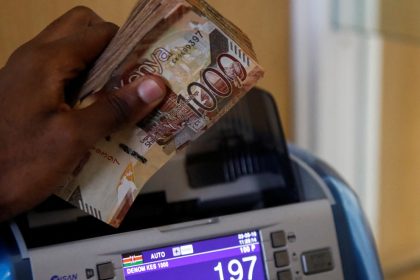
Kenya’s banking sector holds over KSh 8 trillion in total assets as of early 2026, with foreign-owned banks forming a significant share of that market alongside local giants like KCB and Equity. Photo: Foreign banks
Global and European Multinational Banks
Standard Chartered Bank Kenya: A subsidiary of UK-headquartered Standard Chartered PLC, and the oldest foreign bank in the country, having operated in Kenya since 1911.
Absa Bank Kenya: Formerly branded Barclays Bank Kenya, it’s now a subsidiary of South Africa’s Absa Group Limited, one of the continent’s largest financial services groups.
Citibank N.A. Kenya: A branch of Citibank N.A., part of US-based Citigroup, operating in Kenya since 1974 and focused mainly on corporate and institutional banking. It’s Kenya’s only solely corporate bank, with just two branches, in Nairobi and Mombasa.
Habib Bank AG Zurich: A Swiss-based international banking group offering commercial banking services in Kenya, with a smaller retail footprint than the larger names on this list. Worth noting for clarity: this is distinct from the separate Habib Bank Limited, a Pakistani institution that also operates internationally, so double-check which entity you’re dealing with if the name comes up elsewhere.
Pan-African Corporate Banks
Ecobank Kenya: Part of Togo-headquartered Ecobank Transnational Inc., which operates across most of sub-Saharan Africa under a single unified banking platform.
Stanbic Bank Kenya: A subsidiary of South Africa’s Standard Bank Group, the largest banking group on the African continent by assets.
Access Bank Kenya: A subsidiary of Nigeria’s Access Holdings. Worth clarifying since this detail moves around a lot in current reporting: Access Bank agreed to acquire National Bank of Kenya from KCB Group back in March 2024, and the Central Bank of Kenya approved the deal in April 2025, with a signing announced that May. But as of Access Holdings’ full-year 2025 disclosures, the acquisition still hadn’t been fully consolidated, pending final approval from Nigeria’s central bank. Treat NBK as in the process of becoming part of Access Bank Kenya rather than fully merged as of this writing.
United Bank for Africa (UBA) Kenya: Part of Nigeria’s UBA Group, which operates across 24 countries on multiple continents.
Guaranty Trust Bank (GTBank) Kenya: Owned by Nigeria’s GTCO Group, one of the country’s largest financial conglomerates.
Commercial International Bank (CIB) Kenya: A wholly owned subsidiary of Egypt’s CIB, North Africa’s leading private-sector bank. CIB entered Kenya in 2020 by acquiring 51% of the former Mayfair Bank, then bought out the remaining 49% in January 2023, making CIB Kenya its first fully owned subsidiary outside Egypt.
Bank of Africa Kenya: Part of the wider Bank of Africa Group. One correction worth making here: while the network’s roots trace to Mali in 1982, the group has been majority-owned since 2010 by BMCE Bank of Africa, headquartered in Casablanca, Morocco, which is now the controlling parent and the more accurate country to associate with current ownership.
Asian Multinational Banks
Bank of Baroda Kenya: A direct subsidiary of India’s Bank of Baroda group, focused on corporate and international lending.
Bank of India (Kenya): An overseas branch operation of the Mumbai-headquartered Bank of India.
SBM Bank Kenya: Part of SBM Holdings, based in Mauritius, with a presence across the Indian Ocean region.
DIB Bank Kenya: A fully Sharia-compliant subsidiary of Dubai Islamic Bank PJSC, the UAE’s largest Islamic bank. One correction worth flagging directly: DIB Kenya’s branch network is nowhere near 33 branches. As of its most recent openings, the bank operates 8 branches nationwide, split mainly between Nairobi (5 branches, including its Upper Hill headquarters) and Mombasa (3 branches, its most recent being a Nyali location). It’s still the third fully Sharia-compliant bank licensed in Kenya, following Gulf African Bank and First Community Bank.
Foreign Banks at a Glance
| Bank | Parent Country | Parent Group | Website |
|---|---|---|---|
| Standard Chartered Bank Kenya | United Kingdom | Standard Chartered PLC | sc.com/ke |
| Absa Bank Kenya | South Africa | Absa Group Limited | absabank.co.ke |
| Citibank N.A. Kenya | United States | Citigroup | citibank.co.ke |
| Habib Bank AG Zurich | Switzerland | Habib Bank AG Zurich | habibbank.com |
| Ecobank Kenya | Togo | Ecobank Transnational Inc. | ecobank.com/ke |
| Stanbic Bank Kenya | South Africa | Standard Bank Group | stanbicbank.co.ke |
| Access Bank Kenya | Nigeria | Access Holdings | kenya.accessbankplc.com |
| UBA Kenya | Nigeria | UBA Group | ubagroup.com/countries/ke |
| GTBank Kenya | Nigeria | GTCO Group | gtbank.co.ke |
| CIB Kenya | Egypt | Commercial International Bank | cibke.com |
| Bank of Africa Kenya | Morocco (BMCE parent, Mali-founded) | Bank of Africa Group | boakenya.com |
| Bank of Baroda Kenya | India | Bank of Baroda | bankofbaroda.co.ke |
| Bank of India (Kenya) | India | Bank of India | boikenya.com |
| SBM Bank Kenya | Mauritius | SBM Holdings | sbmbank.co.ke |
| DIB Bank Kenya | UAE | Dubai Islamic Bank PJSC | dibkenya.co.ke |
All fifteen links in this table have been verified as active and correctly matched to their respective institutions.
Why This Mix Matters
Kenya’s position as East Africa’s financial hub is a big part of why so many foreign banks maintain a presence here rather than just a representative office. Total banking sector assets crossed KSh 8 trillion in early 2026, with customer deposits around KSh 5.9 trillion, and Nairobi remains the natural base for banks serving cross-border trade across the wider East African Community.
The mix also reflects specific corridors of trade and diaspora connection. Nigerian banks like Access, UBA, and GTBank followed growing Nigeria-Kenya trade and investment flows. Indian-owned banks like Bank of Baroda and Bank of India serve Kenya’s large and long-established Indian business community. Gulf-linked institutions like DIB serve demand for Sharia-compliant banking, which has grown steadily as Kenya’s Muslim-owned business sector has expanded.
Representative Offices vs Full Banking Licenses
One distinction worth knowing if you’re researching this space: not every foreign bank name you’ll encounter in Kenya operates as a fully licensed commercial bank. Some foreign banks maintain representative offices instead, authorized by the CBK strictly for research, marketing, and liaison work on behalf of their parent institution. These offices are not permitted to conduct actual banking business, take deposits, or issue loans. Every bank listed above holds a full commercial banking license and operates under the same CBK Banking Act supervision as Kenya’s domestic banks.
Related:Tier 1, 2, and 3 Banks in Kenya (2026 List)
Frequently Asked Questions
Which is the oldest foreign bank operating in Kenya?
Standard Chartered Bank Kenya, which has operated continuously in the country since 1911.
Are foreign banks in Kenya regulated the same way as local banks?
Yes. All licensed commercial banks, foreign-owned or domestic, are regulated and supervised by the Central Bank of Kenya under the Banking Act, and eligible customer deposits are covered by the Kenya Deposit Insurance Corporation.
Has Access Bank fully taken over National Bank of Kenya?
Not entirely as of this writing. The deal received Kenyan regulatory approval and a signing in 2025, but full consolidation was still pending final approval from Nigeria’s central bank as of Access Holdings’ latest disclosed results.
How many branches does DIB Bank Kenya have?
Eight, as of its most recent branch openings, split between Nairobi and Mombasa. This corrects a commonly repeated but inaccurate figure of 33 branches that circulates in some listings.
Bottom Line
Kenya’s foreign banking sector spans four distinct corridors: legacy European and American institutions like Standard Chartered and Citibank, Pan-African players expanding from Nigeria, South Africa, Egypt, and Morocco, and Asian and Gulf institutions serving trade and diaspora ties with India and the Middle East. All operate under the same CBK licensing regime as Kenya’s domestic banks, though ownership structures and branch networks do shift, as both the Access Bank-NBK integration and DIB’s steady branch expansion show, so it’s worth checking current figures directly with each bank before publishing anything time-sensitive.
Sources: Central Bank of Kenya (Bank Supervision), List of Banks in Kenya, DIB Bank Kenya (branch history), Kenyan Wallstreet (Access-NBK deal status), Bank of Africa Group ownership, CIB Kenya ownership history