
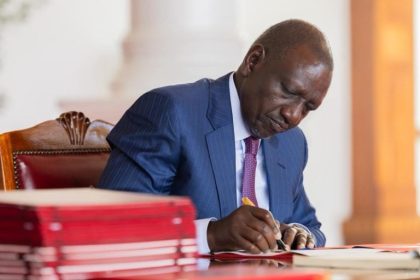
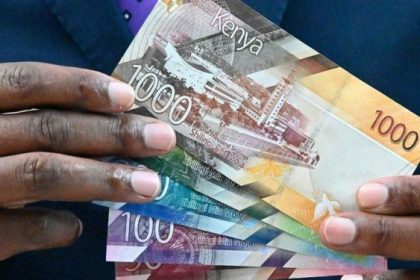


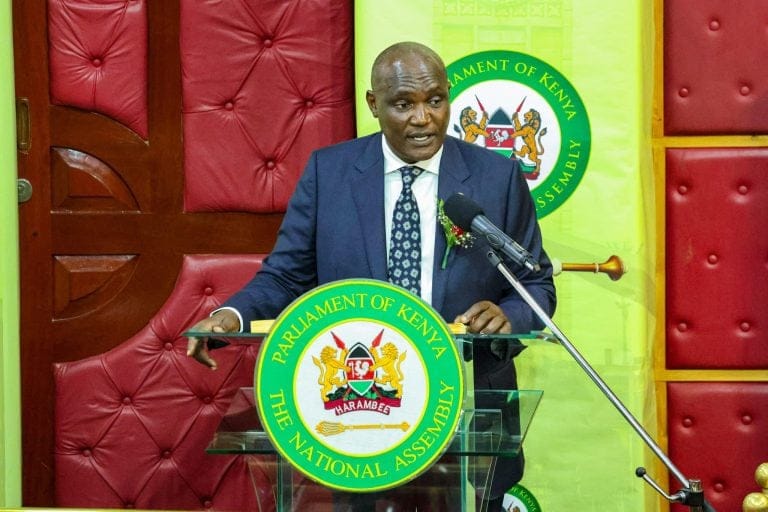
National Treasury Cabinet Secretary John Mbadi has presented Kenya’s largest ever budget to Parliament, a KSh 4.82 trillion spending plan for the 2026/2027 financial year. The budget is built around economic transformation and job creation, and notably steps back from introducing new taxes, choosing instead to widen the existing tax base and enforce a mandatory zero-based budgeting system across government to reduce wastage.
The numbers tell the story clearly. Kenya expects to collect KSh 3.63 trillion in revenue, with KSh 2.98 trillion coming from ordinary tax collections. That leaves a fiscal deficit of KSh 1.19 trillion, roughly 5.3 percent of GDP, which the government plans to plug through domestic and external borrowing. Here is where the money is going.

Education Gets the Biggest Share
Education walks away with the largest single allocation in the entire budget at KSh 784.5 billion. The funds cover teacher promotions, Higher Education Loans Board disbursements, and university scholarships. For a country where education access and quality remain uneven, this allocation signals where the government sees its long-term economic foundation.
It is the kind of number that reflects political priority as much as economic planning. Education spending of this scale, if well managed, builds the human capital that every other sector in the budget depends on.
Security, Counties and Roads Follow
National security receives KSh 566.8 billion, split between KSh 252.1 billion for Defence and KSh 144.7 billion for the National Police Service. County governments receive KSh 428 billion as their equitable share, an increase that gives devolved units more resources to deliver services at the local level.
Roads and transport get KSh 230.3 billion for highway maintenance and ongoing infrastructure projects, reflecting the government’s continued push to improve connectivity across the country. Poor roads raise the cost of doing business and moving goods, so this allocation has a direct economic multiplier effect.
Health, Housing and Agriculture
The health sector receives KSh 175.5 billion, with a focus on expanding Universal Health Coverage and emergency care. Affordable housing gets KSh 135.8 billion directed at building lower-cost urban units, continuing the government’s push to close Kenya’s housing deficit.
Read also:CBK Goes to Market for KSh 40 Billion Just Days Before Budget Reading
Agriculture receives KSh 62.9 billion, targeting fertilizer subsidies and food system resilience. With food inflation remaining a persistent pressure on households, this allocation is aimed at keeping production costs manageable for farmers and food prices stable for consumers.
Smaller But Significant Allocations
Sports, tourism and culture receive a boosted KSh 45.4 billion, largely to meet the requirements of hosting the upcoming AFCON tournament. Social protection gets KSh 41.7 billion for cash transfers to the elderly and affirmative action programmes.
Youth and jobs receive KSh 23 billion for technical training and skills development, while manufacturing gets KSh 19.2 billion targeting small enterprise recovery and regional industrial parks. ICT and the digital superhighway receive a scaled-down KSh 10.4 billion focused strictly on core fibre maintenance.
How Government Arms Are Funded
Of the total KSh 4.82 trillion, the Executive takes KSh 2.92 trillion. Parliament receives KSh 50.98 billion, while the Judiciary gets KSh 30.38 billion, an increase specifically intended to help clear the backlog of court cases that has built up across the country.
Economic Projections Behind the Numbers
The government has revised its GDP growth projection down to 5.0 percent for 2026, citing disruptions from ongoing geopolitical conflicts in the Middle East that have affected global supply chains and fuel prices. Inflation is projected to remain within the Central Bank of Kenya’s preferred buffer zone of 2.5 to 7.5 percent.
Whether those projections hold depends heavily on how global conditions evolve and whether Kenya’s revenue collection targets are met. A KSh 1.19 trillion deficit is a significant gap to finance, and the pressure it places on domestic borrowing markets will be closely watched by businesses and investors throughout the financial year.