







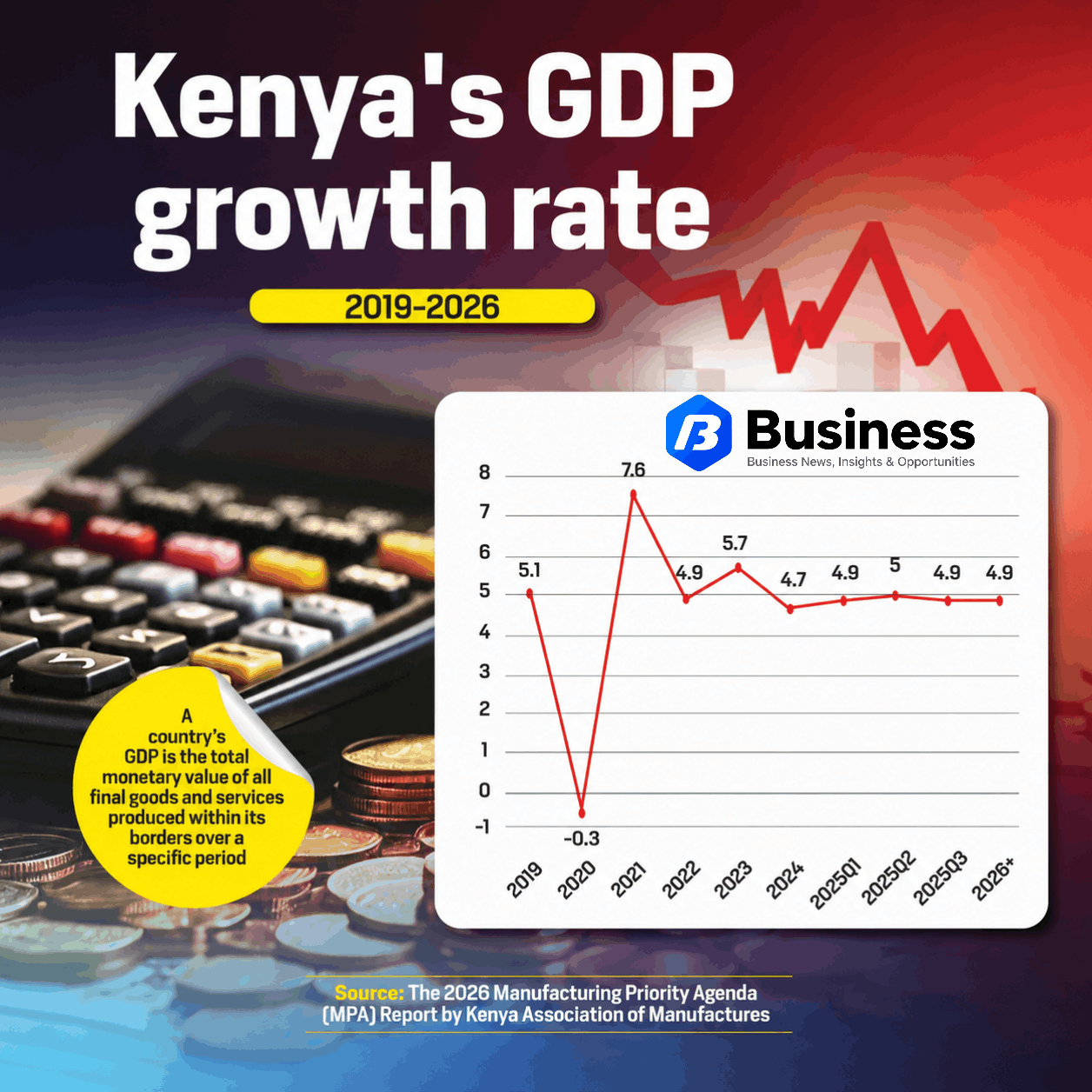
Kenya’s Ministry of Investments, Trade and Industry is pushing to double the manufacturing sector’s contribution to GDP, lifting it to 15 percent by 2027. The government is courting global investors through targeted infrastructure spending, sharper trade policy, and sustainable industrialisation programmes designed to make Kenya a more attractive manufacturing base across multiple sectors.
Doubling manufacturing’s GDP share within a few years is an ambitious target by any measure. It requires more than policy statements. It demands real infrastructure, predictable regulation, and investor confidence sustained over several budget cycles.

The Sectors Kenya Is Betting On
The government has identified specific value chains for priority focus rather than spreading investment thin across the entire manufacturing landscape. Agro-processing, the MSME economy, healthcare manufacturing, textiles and apparel, leather, and the digital superhighway are all named as core priority areas.
This targeted approach makes sense given Kenya’s existing strengths. Agro-processing builds directly on the country’s agricultural base, while textiles and leather draw on raw material supply chains that already exist domestically but have historically been exported unprocessed rather than turned into finished goods locally.
Industrial Parks Bringing Manufacturing to County Level
One of the more concrete elements of the strategy is the development of County Aggregation and Industrial Parks, known as CAIPs, being rolled out nationwide. These parks are designed to bring industrial infrastructure closer to local producers rather than concentrating everything in Nairobi and a handful of major cities.
For agro-processing in particular, proximity matters enormously. A farmer or small processor in a county far from Nairobi benefits significantly from having processing infrastructure nearby rather than having to transport raw produce long distances before any value addition can happen. The State Department for Industry has positioned CAIPs as the practical mechanism for stimulating priority value chains at the grassroots level.
Pushing Local Vehicle Assembly and E-Mobility
The strategy also leans heavily into domestic automotive assembly and the growing electric mobility sector. This builds on momentum already visible in the market, including CFAO’s recent investment in Kenya Vehicle Manufacturers and the expansion of electric vehicle assembly through Associated Vehicle Assemblers in Mombasa.
Leather value chain transformation gets specific attention too, reflecting Kenya’s significant livestock base and the historical gap between raw hide export and finished leather goods production. Moving further up that value chain domestically could meaningfully increase the sector’s contribution to manufacturing GDP.
Green Industrialisation as a Core Principle
Rather than treating sustainability as an afterthought, the strategy embeds green industrialisation into how resources get allocated across medium and high-tech industries. The approach pairs environmental stewardship with manufacturing growth rather than positioning the two as competing priorities.
This matters for export competitiveness as much as for domestic environmental goals. Global buyers, particularly in Europe, are tightening sustainability requirements across their supply chains, and Kenyan manufacturers that build environmental compliance in from the start will have an easier path into those markets than those retrofitting sustainability measures later.
Trade Policy and the US Partnership
Beyond domestic infrastructure, the ministry is working to refine trade policy and create a more predictable business environment, including investment in standards laboratories and value-addition facilities that manufacturers need to meet both local and export quality requirements.
A significant piece of this is the ongoing negotiation of the US-Kenya Strategic Trade and Investment Partnership, which aims to secure permanent trading arrangements and smoother investment flows between the two countries. A finalised STIP agreement would give Kenyan manufacturers clearer, more durable access to US markets and provide American investors with greater certainty when committing capital to Kenyan manufacturing ventures.
Also read:Kenya Manufacturing 2026: EVs, KSh 2.4B Deal and Sector Growth Concerns
What Needs to Happen for the Target to Be Realistic
Doubling manufacturing’s GDP contribution to 15 percent by 2027 is achievable only if the infrastructure, policy, and investment pieces move in tandem rather than in isolation. Industrial parks need reliable power and transport links to function. Trade policy reforms need to translate into actual reduced costs for manufacturers, not just improved rankings on paper.
The Kenya Association of Manufacturers has consistently flagged the cost of doing business, including energy prices and overlapping levies, as the practical barrier standing between ambitious targets and actual delivery. Whether this latest push addresses those underlying cost pressures will determine if the 15 percent target is a genuine milestone or simply an aspiration that slips past its 2027 deadline.