



Businesses that supply goods or services to the Kenyan government just got a new hurdle to clear before getting paid. The Kenya Revenue Authority confirmed on Monday, August 31, 2026, that it has completed the integration of its Electronic Tax Invoice Management System with the government’s Integrated Financial Management Information System, the platform that processes virtually every payment the state makes.
In practice, this means tax compliance is no longer something suppliers can sort out after the fact. It now sits directly inside the payment pipeline.
What Actually Changed
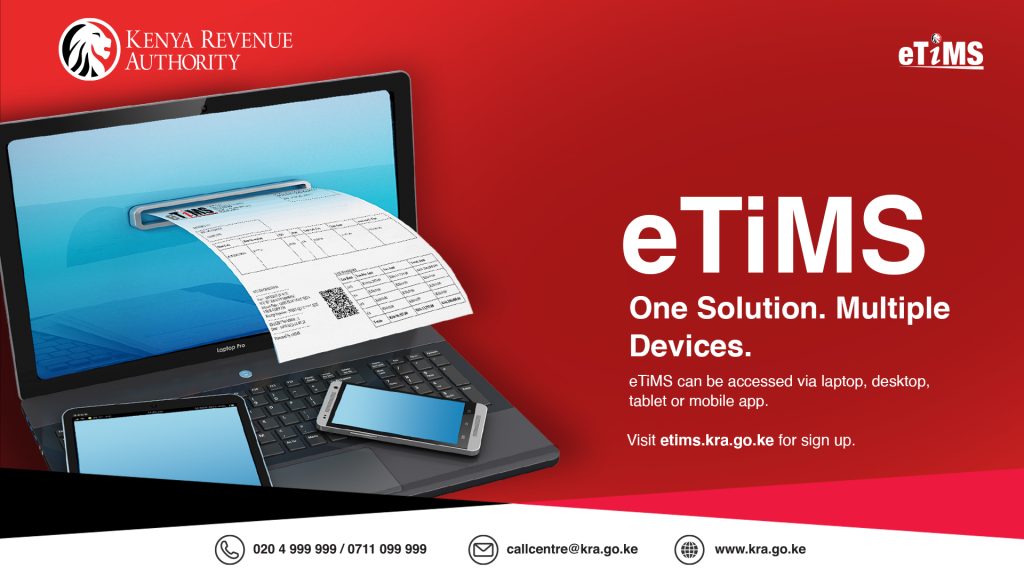
KRA framed the move as part of the government’s Digital Transformation Agenda, saying it would strengthen transparency, accountability, and efficiency in government transactions. “In collaboration with the National Treasury, we have successfully implemented the integration of eTIMS with IFMIS, marking an important milestone in improving transparency, accountability and efficiency in Government transactions,” the authority said in its public notice.
The core change is simple to state but consequential in practice: invoices submitted for payment through IFMIS are now checked automatically against the eTIMS database. If the two don’t match, the payment stalls.
Three Requirements Every Government Supplier Now Faces
Invoice first, payment second. Suppliers must generate a valid eTIMS invoice for every supply before submitting a claim for payment through IFMIS. Under the old process, tax documentation was often squared away after the transaction. That order is now reversed.
The numbers have to match exactly. Amounts, quantities, and descriptions submitted to the government entity must correspond precisely with what’s recorded in eTIMS. KRA was direct about this in its notice: “The details of invoices submitted to Government entities must correspond precisely with the invoices generated and recorded in eTIMS.” Any mismatch triggers an automated validation failure, and the payment simply doesn’t move.
Compliance has to stay current, not just accurate at the point of invoicing. KRA is urging suppliers to regularly verify their tax compliance status rather than waiting for a payment to get stuck before checking. Outdated records with KRA can hold up a payment even if the invoice itself is correct.
Why This Hits Small Suppliers Hardest
Capital FM’s reporting on the rollout flagged the real pressure point here: this shifts more responsibility onto suppliers to get invoicing right the first time, and that burden lands unevenly. Larger firms with dedicated finance teams can absorb a new compliance step without much friction. Small and medium-sized businesses that depend heavily on government contracts, and often run invoicing manually or through a single bookkeeper, are the ones most likely to see payments delayed while they adjust.
KRA and the Treasury say they’ll continue offering sensitization and technical support through the transition, but for now the requirement is already active, not phased in gradually.
What Happens If You Don’t Comply
Two consequences stand out. IFMIS will automatically delay or reject payment claims that lack a matching, validated eTIMS invoice, which means cash flow disruption for any business relying on government payment cycles. Separately, and this catches people off guard, expenses without backing eTIMS invoices are disallowed by KRA at tax return time, which can inflate a business’s final tax liability well beyond the immediate payment delay.
Part of a Bigger Digitisation Push
This isn’t an isolated move. Treasury Cabinet Secretary John Mbadi separately directed Kenya’s 47 county governments on August 25, 2026, to complete integration between the Electronic Government Procurement System and IFMIS by the end of September. That directive covers the procurement side, tenders, bids, and contract awards, while the eTIMS-IFMIS link covers the payment side. Together, the two form a more complete digital chain from tender to payment, with the same stated goal of tightening transparency and value for money in public spending.
IFMIS has already absorbed several KRA integrations in recent years, including automated supplier registration validated against KRA data and automatic generation of withholding certificates, so this latest link extends a pattern rather than starting one.
How to Get Compliant
Businesses can onboard through the eCitizen platform, where the KRA eTIMS portal handles registration. Smaller merchants and informal traders without regular internet access can use the USSD shortcode *222# instead. For direct troubleshooting on invoice generation, KRA’s Contact Centre is reachable at 020 4 999 999 or 0711 099 999.
Read also:Kenya Revenue Authority (KRA) — iTax, Tax Returns & Customs Services | Business Listings Kenya
Frequently Asked Questions
When did the eTIMS-IFMIS integration take effect?
KRA confirmed the integration was complete in a public notice issued on August 31, 2026.
Do I need an eTIMS invoice before I can get paid by a government agency?
Yes. Suppliers must generate a valid eTIMS invoice before submitting a payment claim through IFMIS.
What happens if my invoice details don’t match eTIMS records?
The system triggers an automated validation failure and halts the payment process until the discrepancy is corrected.
Can small traders without smartphones still comply?
Yes, KRA offers a USSD option through *222# specifically for smaller merchants and informal traders.
Is this connected to the county e-GP and IFMIS integration deadline?
They’re related but separate. The e-GP integration covers procurement and tendering for counties, with a September 30, 2026 deadline, while the eTIMS-IFMIS link covers invoicing and payment validation nationally.
Bottom line
For any business that supplies government ministries, counties, or state agencies, the message from KRA is straightforward: get your eTIMS invoicing right before you submit a claim, not after. The suppliers who adjust their processes now will avoid the payment delays that are almost certainly coming for those who don’t.