







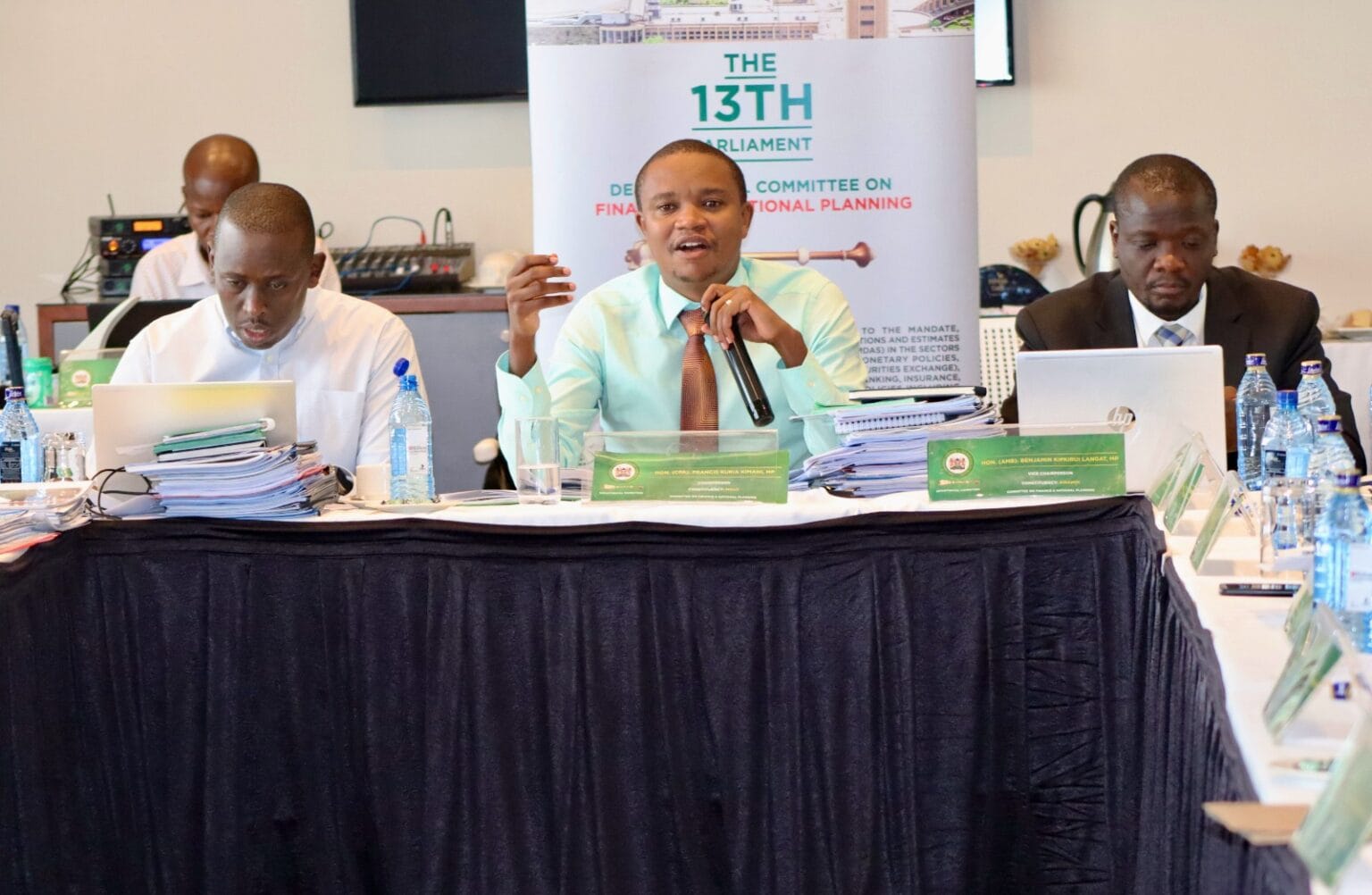
Kenya’s National Assembly Finance and National Planning Committee has called for tougher enforcement against exploitative lenders after residents of Turkana County raised serious concerns about high-interest loans crippling small businesses in the region. The calls came during public participation forums on the Business Amendment Act 2024, held at Turkana University on Friday, where traders, pastoralists, and community members took turns airing grievances that stretched well beyond lending practices.

Committee Chairperson Kimani Kuria told the forum that existing laws already protect borrowers from excessive charges and need to be fully enforced rather than supplemented with new legislation. He noted that it is already an offence for any lender to charge interest that exceeds the principal amount borrowed, a protection many digital lending customers appear unaware of. He urged the Central Bank of Kenya to take firm and visible action against digital lenders and microfinance institutions that continue to ignore those boundaries.
Small Businesses Drowning in Predatory Loan Costs
The frustration in Turkana was palpable. Residents described a pattern familiar across many underserved counties: small traders and business owners taking out loans to grow their enterprises, only to find themselves trapped by interest rates so high that repayment becomes impossible.
Digital lending apps have expanded credit access in counties that traditional banks have largely ignored, but that access has come at a steep price. Without meaningful oversight, some platforms have charged rates that strip borrowers of whatever income the loan was meant to generate. For traders in a county already dealing with harsh economic conditions, those lending practices are not just exploitative. They are actively destructive to local economic development.
Kuria’s commitment to push for stronger CBK enforcement was welcomed by residents, though many called for faster action given how long the problem has persisted.
Turkana Wants Its Share of Natural Resource Revenue
Residents also used the forum to weigh in on plans to establish a Sovereign Wealth Fund, broadly welcoming the idea but pushing hard for a framework that ensures counties with significant natural resources receive a meaningful direct share of the revenues those resources generate.
Turkana County sits on substantial petroleum and mineral deposits, making it one of Kenya’s most resource-rich counties. Community members argued that the county and its residents should receive a substantial portion of proceeds from those resources rather than watching wealth extracted from their land flow to the national government with limited local benefit.
Read also:Parliament Orders Audit of Kenya’s Government Internship Programme
The debate touches on long-standing questions about how Kenya’s devolution framework handles resource revenue sharing, an issue that has created tension between resource-rich counties and the national government for years.
Tax Relief Sought for Livestock Farmers
Pastoralist communities raised a separate but equally pressing concern. They called on the committee to extend tax exemptions to animal feeds and veterinary drugs, arguing that the current tax treatment of these inputs is pushing up production costs at a time when livestock farmers are already under pressure from climate-related challenges and rising commodity prices.
For communities whose livelihoods depend almost entirely on livestock, the cost of keeping animals healthy and fed is not an optional expense. Extending exemptions in this area would provide direct and immediate relief to some of Kenya’s most economically vulnerable farming households.
Digital Transactions Need Clearer Rules
Residents also pressed for greater clarity on how the legislation handles digital platform transactions, expressing concern that vague wording could leave room for misinterpretation or exploitation. Kuria responded with a direct commitment.
“There is nothing that can be hidden in the law. I agree with you on the clarity of digital platform transactions. As a Committee, we will ensure that it is crystal clear,” he said.
The assurance matters in a county where mobile money and digital platforms are often the primary financial tools available. If the rules governing those transactions are ambiguous, the people least equipped to navigate legal grey areas will bear the consequences.
KRA Tax Amnesty on the Table
Kuria also took time to explain provisions in the proposed Kenya Revenue Authority Amendment Bill, clarifying that if enacted, taxpayers currently in disputes with KRA would be eligible for a tax amnesty programme. The detail was welcomed by business owners who have outstanding tax matters and are wary of the escalating penalties that accumulate during prolonged disputes.
The Finance Committee’s three sub-committees are expected to wrap up their nationwide public participation exercise by June 8, after which report writing begins ahead of parliamentary consideration of the proposed legislation. How the committee incorporates the concerns raised in Turkana and other counties will determine whether this round of public participation produces legislation that works for ordinary Kenyans or simply ticks a procedural box.