




Community Health Nursing, Clinical Medicine and Surgery, and Medical Laboratory Sciences top the list of the most marketable Kenya Medical Training College (KMTC) diploma courses for 2026, driven by persistent local staffing shortages and growing international nursing recruitment pathways. This ranking is based on employment absorption, staffing gaps, and international recruitment trends as of 2026, and it can shift as hospital hiring patterns and recruitment agreements change. This guide breaks down all ten courses, their KCSE entry requirements, duration, and what actually makes each one employable, plus current application windows and a real scam warning worth knowing before you apply.
- Quick Ranking Overview
- 1. Diploma in Kenya Registered Community Health Nursing
- 2. Diploma in Clinical Medicine and Surgery
- 3. Diploma in Medical Laboratory Sciences
- 4. Diploma in Pharmacy
- 5. Diploma in Health Records and Information Technology
- 6. Diploma in Medical Imaging Sciences (Radiography)
- 7. Diploma in Orthopaedic and Trauma Medicine
- 8. Diploma in Public Health
- 9. Diploma in Physiotherapy
- 10. Diploma in Medical Engineering
- How and When to Apply
- What You’ll Actually Pay
- Funding Your KMTC Diploma
- A Real Scam Warning Worth Knowing
- Common Mistakes Applicants Make
- Frequently Asked Questions
- What’s the most marketable KMTC course in 2026?
- Do I apply to KMTC directly or through KUCCPS?
- Can I get a HELB loan for a KMTC diploma?
- What if I don’t meet the C (Plain) mean grade for my preferred course?
- When does the next KMTC application window open?
- Is it true KMTC admissions can be bought or guaranteed?
- Bottom Line

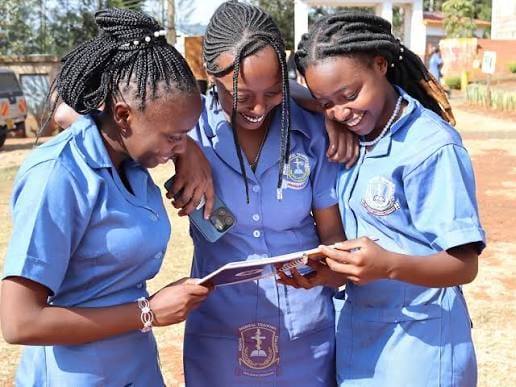
Community Health Nursing remains KMTC’s most marketable diploma, driven by chronic staffing shortages in Kenyan hospitals and growing UK and US nursing recruitment pipelines. Photo: Kmtc students
Quick Ranking Overview
All ten courses below require a mean KCSE grade of C (Plain). Cut-off points, not just the minimum grade, ultimately decide placement, and cut-offs vary by campus and year depending on how many applicants compete for each slot.
| Rank | Course | Why It’s In Demand | Min. Mean Grade |
|---|---|---|---|
| 1 | Community Health Nursing | Highest local and international placement | C (Plain) |
| 2 | Clinical Medicine and Surgery | High hospital absorption nationwide | C (Plain) |
| 3 | Medical Laboratory Sciences | Growing diagnostic and research demand | C (Plain) |
| 4 | Pharmacy | Strong retail and clinical demand | C (Plain) |
| 5 | Health Records and Information Technology | UHC-driven hospital digitization | C (Plain) |
| 6 | Medical Imaging Sciences (Radiography) | Specialized, low graduate competition | C (Plain) |
| 7 | Orthopaedic and Trauma Medicine | Essential in trauma and referral units | C (Plain) |
| 8 | Public Health | NGO, UN, and county-funded roles | C (Plain) |
| 9 | Physiotherapy | Rehabilitation and sports medicine growth | C (Plain) |
| 10 | Medical Engineering | Hospital equipment maintenance, low competition | C (Plain) |
1. Diploma in Kenya Registered Community Health Nursing
This stays the single most marketable course KMTC offers, largely because Kenya, and much of the world, remains chronically short of trained nurses. Graduates get absorbed by county governments, private hospitals, and international recruitment pipelines into the UK and US health systems.
Duration: 3 to 3.5 years depending on the exact programme track. Requirements: C (Plain) overall, C in English or Kiswahili, C in Biology, and C- in Chemistry, Physics, or Mathematics.
2. Diploma in Clinical Medicine and Surgery
Clinical Officers are the backbone of outpatient care at most Kenyan sub-county hospitals, and they’re licensed to perform minor surgical procedures. High employment rates across both public and private sectors, plus a realistic path to opening a private clinic after licensing, keep demand strong.
Duration: 3 years. Requirements: C (Plain) overall, C in English or Kiswahili, C in Biology, C- in Chemistry, and C- in Mathematics or Physics.
3. Diploma in Medical Laboratory Sciences
Lab scientists run the diagnostic tests that guide almost every treatment decision a doctor makes. Growth in diagnostic labs, research institutions like KEMRI, and blood banks keeps demand for this course consistently high.
Duration: 3 years. Requirements: C (Plain) overall, C in English or Kiswahili, C in Biology, C in Chemistry, and C in Mathematics or Physics. This is one of the more academically demanding entry profiles on this list, with fewer C- allowances than other courses.
4. Diploma in Pharmacy
Pharmaceutical technologists dispense medication, manage pharmacy operations, and counsel patients directly. Most graduates who want to go into business eventually run their own private chemist, which gives this diploma a genuine entrepreneurial track alongside employment.
Duration: 3 years. Requirements: C (Plain) overall, C in English or Kiswahili, C in Chemistry, C in Biology, and C in Mathematics or Physics.
5. Diploma in Health Records and Information Technology
This course sits at the intersection of healthcare and IT, training students to manage patient data and hospital information systems. Kenya’s ongoing digitization push under Universal Health Coverage has significantly increased demand for IT-literate records officers in the past few years.
Duration: 3 years for the diploma, 2 years for the certificate. Requirements: C (Plain) overall, C in English or Kiswahili, C- in Mathematics, D+ in Biology, and C- in one of Physics, Chemistry, or Computer Studies.
6. Diploma in Medical Imaging Sciences (Radiography)
Radiographers operate X-ray, ultrasound, CT, and MRI equipment. It’s a narrower specialization than nursing or clinical medicine, which means fewer graduates entering the field each year and comparatively better pay at major referral hospitals.
Duration: 3 years. Requirements: C (Plain) overall, C in English or Kiswahili, C in Physics, C in Biology, and C- in Chemistry or Mathematics.
7. Diploma in Orthopaedic and Trauma Medicine
Orthopaedic technologists manage traction, cast application, and assistive devices for patients with bone and tissue injuries. This training is essential in emergency departments and specialized orthopaedic units.
Duration: 3 years. Requirements: C (Plain) overall, C in English or Kiswahili, C in Biology, and C- across Physics, Chemistry, or Mathematics.
8. Diploma in Public Health
Public health officers focus on disease prevention, sanitation, food safety inspection, and community health education. Funding from NGOs, UN agencies, and county health departments targeting preventive rather than curative care keeps this field active.
Duration: 3 years. Requirements: C (Plain) overall, C in English or Kiswahili, C in Biology, and C- in Mathematics plus one other science subject.
9. Diploma in Physiotherapy
Physiotherapists treat physical injuries and disabilities through therapy, exercise, and mechanical equipment. Growing public interest in rehabilitation, fitness, and sports medicine has expanded the private client base for this profession noticeably in urban areas.
Duration: 3 years. Requirements: C (Plain) overall, C in English or Kiswahili, C- in Biology, and C- across two of Chemistry, Mathematics, or Physics.
10. Diploma in Medical Engineering
This course trains technicians to install, calibrate, and repair hospital equipment like ventilators, dialysis machines, and patient monitors. It blends engineering with medical knowledge, a combination few graduates have, which keeps competition genuinely low relative to other diplomas.
Duration: 3 years. Requirements: C (Plain) overall, C in English or Kiswahili, C- in Mathematics, C- in Physics, and D+ in Biology or Chemistry.
How and When to Apply
For standard diploma and certificate intakes straight out of KCSE, applications run through the Kenya Universities and Colleges Central Placement Service (KUCCPS) student portal, not directly through KMTC’s own admissions system. That distinction trips up a lot of first-time applicants who go looking for a KMTC-specific application form and can’t find one.
Application windows open roughly twice a year: typically January to February for the March intake, and July to August for the September intake. As a real, current example, the September 2026 KMTC intake application window ran from July 23 to August 11, 2026, and has now closed. If you missed it, the next major pre-service window will open around January 2027 for the March 2027 intake. Watch the official KUCCPS and KMTC pages directly for the exact opening date, since these shift slightly year to year.
Higher diploma, upgrading, and in-service courses, aimed at practising healthcare workers who already hold a relevant certificate or diploma, bypass KUCCPS entirely and apply directly through the KMTC admissions portal, with an application fee of roughly KSh 2,072 payable via mobile money.
What You’ll Actually Pay
Once admitted, tuition and other charges vary by course and campus, and figures shift slightly year to year, so treat these as a ballpark rather than a locked-in number. A typical Year 1 regular diploma student pays roughly KSh 82,200 in combined tuition and levies, dropping to around KSh 78,000 in Years 2 and 3. On top of that, specific courses carry small additional charges: Community Health Nursing students pay a KSh 1,500 skills lab fee, and Clinical Medicine students pay KSh 2,750. Meals and accommodation costs are set individually at each campus and confirmed on reporting.
Funding Your KMTC Diploma
Most KMTC students don’t self-fund entirely, and a genuinely useful update landed in 2026: KMTC students now apply through the Higher Education Financing (HEF) portal at hef.co.ke rather than the old standalone HELB system, following a broader restructuring of how Kenya funds TVET and university students. In 2026, KMTC applicants specifically could access the loan portal from June 1, ahead of the general university and TVET opening on June 15.
Typical loan amounts for KMTC students run close to KSh 40,000 a year toward tuition and upkeep combined, though your exact award depends on assessed financial need and your specific programme. Apply at hef.co.ke once you have your official admission letter in hand, since HELB will not process an application without confirmed placement. It’s worth applying for county bursaries and NG-CDF bursaries from your local constituency office at the same time rather than waiting, since these have their own separate deadlines and don’t depend on your HELB outcome.
A Real Scam Warning Worth Knowing
This isn’t a hypothetical caution. KMTC has issued repeated public warnings through 2026 about fraudsters targeting applicants directly, including a case in August 2026 where scammers advertised a fake “Kipkelion KMTC September 2026 Intake,” inviting applicants to submit forms and pay a KSh 1,500 registration fee at a sub-county hospital that had no actual connection to KMTC. Similar scams surfaced around the March 2026 intake, where fraudsters circulated fake admission letters via WhatsApp and Gmail and demanded payment to “release” them.
KMTC has stated plainly, more than once, that admissions are based strictly on merit and cluster points, that the college never processes admissions or payments through WhatsApp or Gmail, and that all official payments go through eCitizen. Anyone asking for money outside that system, no matter how convincing the story, is committing fraud. If you’re applying, work only through students.kuccps.net or kmtc.ac.ke directly, and treat any unsolicited WhatsApp message offering a “guaranteed slot” as an immediate red flag.
Common Mistakes Applicants Make
Applying to only one course is the most common and costly mistake. KUCCPS allows multiple choices ranked by preference, so list your top course alongside a couple of realistic backups rather than risking missing out entirely if your first choice’s cutoff moves.
Assuming certificate-level entry isn’t an option is another one worth correcting. Several of these fields, including Community Health Nursing and Medical Imaging, have certificate-track equivalents that accept a C- or D+ mean grade, which then allow later upgrading to the full diploma once you’re already working or once your grades support it.
Related:Kenya Medical Training College (KMTC) — Courses, Campuses & Admissions | Business Listings Kenya
—Top 10 Approved Private Medical Colleges in Kenya 2026: Fees & Courses
Frequently Asked Questions
What’s the most marketable KMTC course in 2026?
Community Health Nursing, driven by consistent local hospital shortages and growing recruitment pipelines into UK and US healthcare systems.
Do I apply to KMTC directly or through KUCCPS?
Standard diploma and certificate applicants coming straight from KCSE apply through KUCCPS. Higher diploma, upgrading, and in-service courses for students who already hold a relevant qualification apply directly through KMTC’s own admissions portal.
Can I get a HELB loan for a KMTC diploma?
Yes, now processed through the Higher Education Financing (HEF) portal at hef.co.ke rather than the old HELB-only system. Typical awards run close to KSh 40,000 a year. Apply after receiving your admission letter, and apply for county and NG-CDF bursaries at the same time.
What if I don’t meet the C (Plain) mean grade for my preferred course?
Certificate-level entry points exist for most courses on this list, typically accepting a C- or D+ mean grade, with a clear pathway to upgrade to the full diploma later once you’re working or once your grades improve.
When does the next KMTC application window open?
Windows generally open twice yearly: January to February for the March intake, and July to August for the September intake. The September 2026 window has already closed, so the next pre-service opportunity will likely be around January 2027.
Is it true KMTC admissions can be bought or guaranteed?
No, and KMTC has repeatedly and publicly warned against this exact scam. Admissions are decided strictly by merit and cluster points through KUCCPS. Anyone offering a guaranteed slot for a fee is committing fraud.
Bottom Line
The strongest KMTC courses for 2026 all share one trait: they solve a genuine staffing gap that Kenya’s health system hasn’t closed on its own. Nursing, clinical medicine, and lab sciences sit at the top because the shortage is broad and constant, while specialized fields like radiography and medical engineering earn their spot through low graduate competition rather than sheer demand volume. Whichever course fits your grades, apply through the correct channel, KUCCPS for standard intake and KMTC directly for upgrading, get your HELB and bursary applications moving in parallel, and stay wary of anyone outside official KUCCPS and KMTC channels offering to speed up or guarantee your placement.
Sources: Kenya Medical Training College (Official), KUCCPS Portal, Higher Education Financing (HEF), The Star (September 2026 Intake Deadline), Streamline Feed (KMTC Scam Warning), cross-checked against secondary guides including EduGuide and Education News Hub