






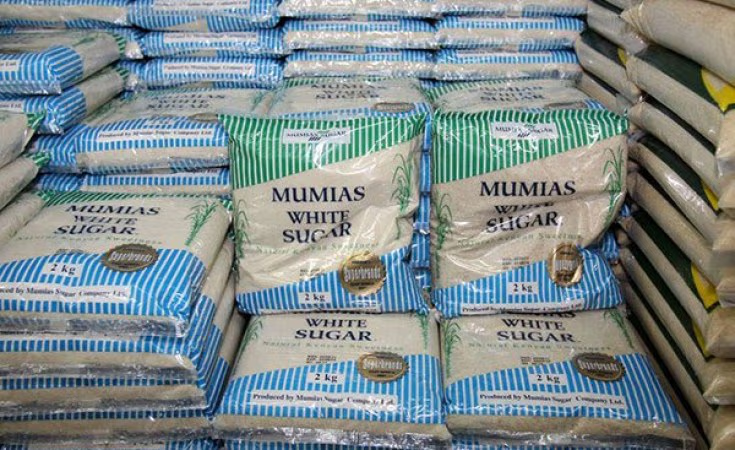
The National Treasury has defended a Sh104.09 million tax waiver granted on raw sugar imports for Mombasa Sugar Refinery Limited, arguing the exemption supports local refining capacity and job creation. Treasury Cabinet Secretary John Mbadi told a parliamentary committee that the waiver, covering Sh57.83 million in Import Declaration Fees and Sh46.26 million in Railway Development Levy, falls under East African Community regulations designed to encourage industrial sugar refining.
But that Sh104 million figure is a small piece of a much larger controversy. The same 27,839-tonne consignment from South Africa is at the centre of a Sh2.98 billion tax exemption dispute, and separately, roughly 28,000 tonnes of sugar from an earlier shipment that KEBS had flagged as unfit for consumption has already left the Mombasa port under circumstances MPs are still trying to piece together.

How KRA’s Position Changed Dramatically
What makes this case unusual is that KRA did not always support the exemption it is now defending. According to submissions before the National Assembly’s Departmental Committee on Trade, Industry and Cooperatives, customs officers initially rejected Mombasa Sugar Refinery’s tariff classification after laboratory analysis, and demanded taxes of approximately Sh2.9 billion, arguing the sugar did not qualify for preferential industrial refining treatment.
That position was later reversed. The importer ultimately paid Sh511.8 million in taxes, while KRA acknowledged foregoing Sh2.152 billion in import duty under the EAC Duty Remission Scheme, alongside Sh208.8 million in excise duty, Sh490.1 million in VAT, and the Sh104.09 million in IDF and RDL that Mbadi is now defending publicly.
KRA Says the Importer Complied With the Rules
Appearing before the committee on July 16, 2026, KRA Commissioner for Customs and Border Control Lilian Nyawanda defended the agency’s clearance decision, stating the importer had submitted all required documentation and paid approximately Sh500 million in duty before the shipment was released. Her position is that the process followed established customs procedure once the tariff classification issue was resolved.
MPs remain unconvinced. The scale of the reversal, from a Sh2.9 billion demand to a substantially reduced final tax bill, is precisely what has kept lawmakers pressing for a fuller explanation of how and why the classification changed.
The Sh1.5 Billion Sugar That Left the Port
Running alongside this dispute is a separate but related controversy involving roughly 28,000 tonnes of sugar, valued at around Sh1.5 billion, that the Kenya Bureau of Standards had flagged as unfit for consumption. MPs discovered that this consignment left Mombasa for Nairobi via the Standard Gauge Railway, with the first batch of 19 wagons carrying 26,220 bags arriving on May 3, 2026.
Kenya Sugar Board officials told the committee the sugar was never diverted into the market and remained secured in a customs bonded warehouse in Mombasa before transport, with Treasury CS Mbadi having constituted a multi-agency team in March 2026, involving the Kenya Sugar Board, KRA, KEBS, the State Department of Industry, and the National Police Service, to monitor the consignment and prevent diversion.
The committee was not satisfied with that explanation. Lawmakers have demanded further documentation, including seal serial numbers, bonded warehouse records, and details of the Nairobi storage facility where the sugar is currently held.
Questions Over the Legal Basis for the Import Permit
Beyond the tax questions, the committee, chaired by Ikolomani MP Bernard Shinali, has also challenged the legal basis on which the Kenya Sugar Board issued the import permit in the first place, arguing that existing law does not clearly provide for a licence of this kind to have been granted.
That question strikes at something more fundamental than the tax waiver itself. If the underlying import permit lacked proper legal grounding, the tax treatment that followed becomes a secondary issue to a more basic question of regulatory authority.
Also read:Kenya Tea, Coffee and Sugar Sectors Growing, Says Mbadi in Budget Speech
Kenya Sugar Factories to Generate Electricity and Ethanol
Why This Matters Beyond One Shipment
For Kenya’s domestic sugar millers, cases like this raise real competitive concerns. If imported raw sugar receives substantial tax relief intended for industrial refining but questions remain about whether that sugar stays within the refining process or reaches retail shelves, local producers who compete without equivalent exemptions have legitimate grounds for concern.
For taxpayers, the sheer scale of exemptions involved, Sh2.98 billion foregone against roughly Sh500 million actually collected, makes this one of the more significant tax waiver disputes Parliament has scrutinised this year. How the committee resolves the documentation gaps around both the tax classification reversal and the whereabouts of the KEBS-flagged sugar will determine whether this becomes a case of legitimate industrial policy or a cautionary tale about weak oversight in Kenya’s sugar import regime.