






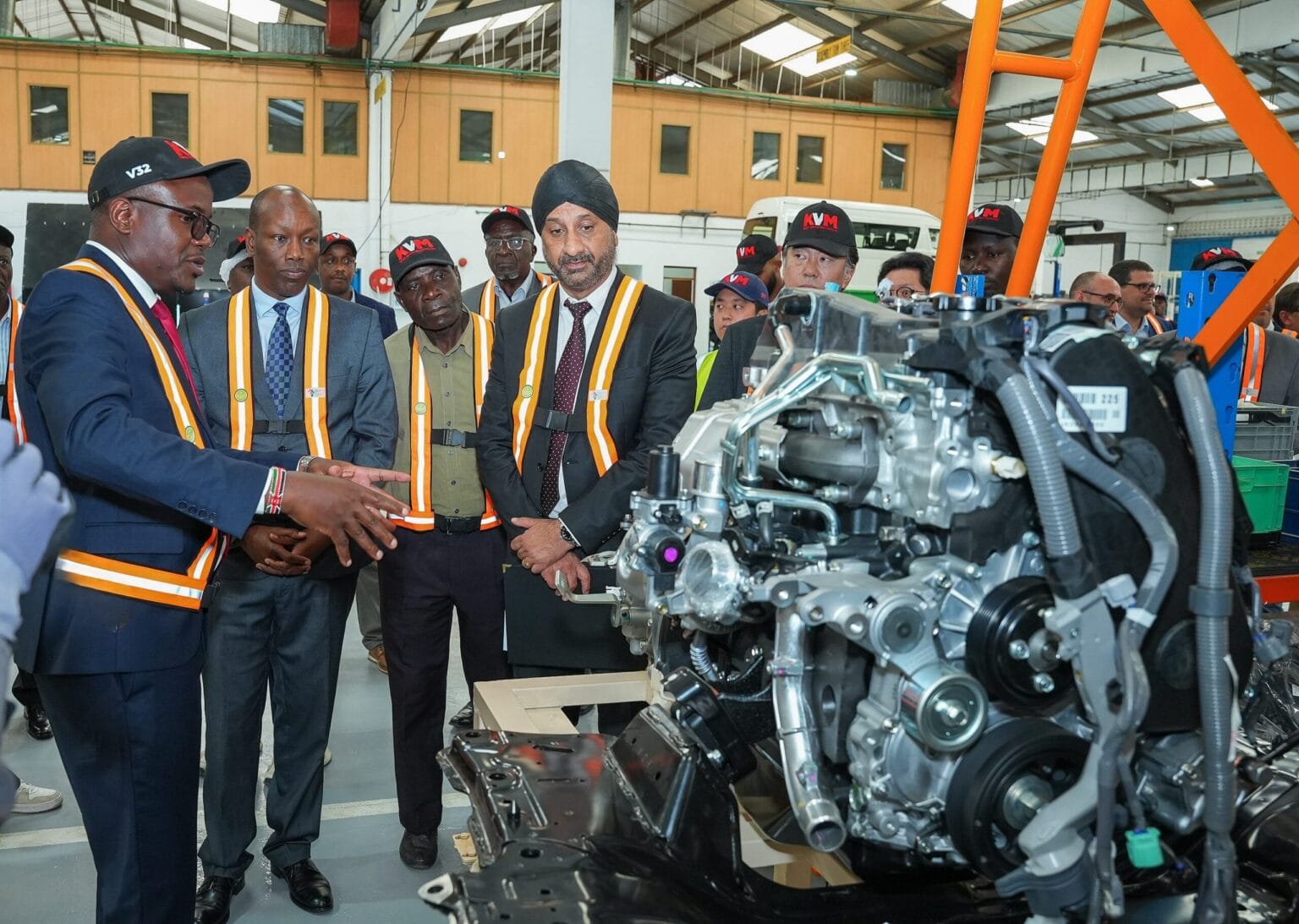
Kenya Vehicle Manufacturers has launched a dedicated Toyota Hiace assembly line at its Thika plant, backed by a Sh2.3 billion investment from CFAO Mobility Kenya. The new production line marks one of the most significant expansions in Kenya’s automotive manufacturing sector in recent years, bringing local assembly of one of the country’s most widely used vehicles under one roof in Thika.
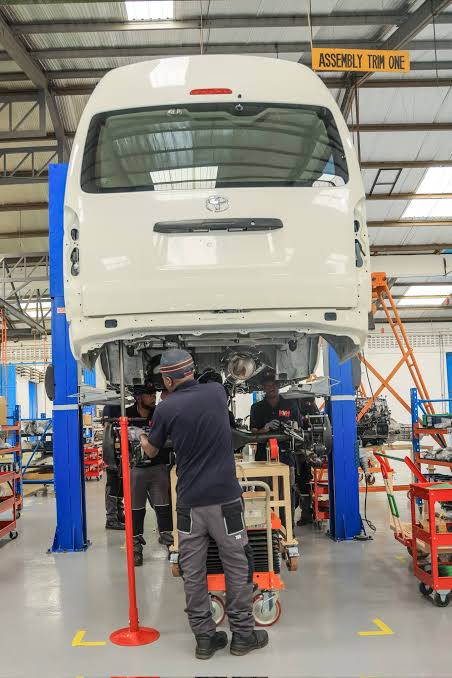
The Toyota Hiace is a fixture of Kenyan daily life. It powers public transport routes across the country, ferries tourists between parks and lodges, and serves as the workhorse vehicle of choice for commercial operators in virtually every sector. Having it assembled locally rather than imported fully built is a meaningful shift for an industry the government has been working to grow through targeted incentives.
What the Sh2.3 Billion Investment Covers
CFAO Mobility Kenya’s investment is part of a broader modernisation and expansion programme at the KVM Thika plant. Beyond the Hiace assembly line itself, the funding is directed at upgrading manufacturing technology, building local skills capacity, and expanding overall vehicle production output at the facility.
KVM described the scope of the project clearly: “The project underscores a long-term commitment to local manufacturing, technology transfer, skills development and job creation while supporting Kenya’s industrial growth agenda.”
Technology transfer is particularly significant in this context. When global automotive brands assemble vehicles locally rather than shipping finished units, they bring engineering knowledge, quality control systems, and technical training with them. That knowledge does not stay within the factory walls. It builds a wider skills base in the surrounding industry and supply chain over time.
KVM’s Growing Role in Regional Automotive Manufacturing
Kenya Vehicle Manufacturers already assembles vehicles for several major global brands at its Thika facility, including Volkswagen, Tata, Mercedes-Benz, and Sinotruk, covering both passenger vehicles and heavy commercial trucks for local and regional markets. The addition of the Toyota Hiace line adds one of the most commercially significant nameplates in East Africa to that roster.
The breadth of brands KVM handles positions the company as a genuine multi-brand assembly hub rather than a single-manufacturer plant, a distinction that matters for Kenya’s ambitions to become a regional automotive production centre. Each brand that commits to local assembly adds volume, employment, and credibility to that case.
Government Push Behind Local Assembly
The KVM expansion does not happen in a policy vacuum. The Kenyan government has been actively promoting local vehicle assembly through incentives designed to reduce dependence on fully imported vehicles and encourage value addition within the country. Those incentives include duty structures that favour locally assembled vehicles over fully built imports, giving manufacturers a commercial reason to invest in domestic production capacity rather than simply shipping finished vehicles from overseas plants.
Read also:AI, Robots, and Local Roots: What Is Happening in Global and East African Manufacturing Right Now
Industry players say the logic behind those incentives is sound. Increased local assembly creates direct manufacturing jobs, develops supplier networks, deepens engineering skills across the economy, and generates tax revenue that imported vehicles do not produce at the same scale. The Kenya Investment Authority has identified automotive assembly as one of the priority sectors for attracting foreign direct investment, and deals like the CFAO Mobility commitment validate that approach.
What This Means for Kenya’s Industrial Ambitions
Kenya has long positioned itself as East Africa’s commercial and industrial hub, but manufacturing’s share of the economy has remained smaller than the country’s ambitions suggest. Automotive assembly, done at sufficient scale, is one of the faster routes to changing that picture. It creates formal employment, develops technical skills, and builds supplier ecosystems that benefit industries well beyond the factory floor.
The Toyota Hiace line at Thika is one plant and one model, but it sits within a broader pattern of automotive investment that, if sustained, could meaningfully shift Kenya’s manufacturing profile over the next decade. For a vehicle already embedded in how Kenyans move, work, and travel, having it built locally carries both economic and symbolic weight.