


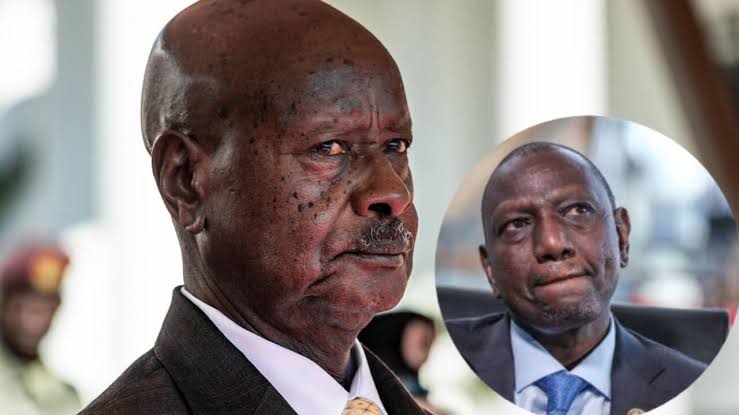
Kenya’s government has moved to defend its Government-to-Government fuel importation arrangement after Ugandan President Yoweri Museveni revealed that Uganda had been buying petroleum through Kenyan middlemen at inflated prices for years. Energy Cabinet Secretary Opiyo Wandayi issued a formal statement on September 20, insisting the framework has been transparent and private-sector-led throughout.
- How a Kenyan Senator Tipped Off Museveni
- What Uganda Did About It
- Wandayi’s Defence: It Was Never Meant to Be Permanent
- How the Deal Actually Works
- Who the Actual “Middlemen” Are
- The Political Backlash Has Been Fierce
- The Audit Demands Are Growing
- What Ruto Has Said About the Deal Before
- Where This Goes From Here
The controversy has reignited a debate that’s simmered in Kenya since 2023, when the G-to-G deal first replaced the old system of oil marketing companies independently bidding for monthly fuel supplies. Museveni’s remarks gave that debate new fuel, quite literally, by putting hard numbers on what Uganda says it was overpaying.

How a Kenyan Senator Tipped Off Museveni
Museveni’s revelation came during the groundbreaking of a 320-million-litre petroleum storage terminal in Mpigi District, Uganda, on September 17. “The Republic of Uganda was buying petroleum products through middlemen in Kenya. Can you imagine that? And the person who woke me up first was a senator from Kenya,” he told the audience, according to Citizen Digital.
He didn’t name the senator, but he was specific about the numbers. According to figures cited by Museveni and Uganda’s Permanent Secretary for Energy Irene Batebe, Uganda’s diesel import premium fell from $118 to $83 per metric tonne, petrol from $97.50 to $61.50, and aviation fuel from $114.25 to $79.25, once Kampala shifted its procurement model.
What Uganda Did About It
Once alerted, Museveni said he intervened directly. “So that’s when I had to come in and say, this must end. And it ended,” he said, according to Citizen Digital.
Uganda subsequently gave its state-owned Uganda National Oil Company a greater role in directly importing petroleum, cutting out the Kenyan intermediaries entirely. It now works instead with bulk suppliers like Vitol.
Wandayi’s Defence: It Was Never Meant to Be Permanent
Kenya’s Ministry of Energy and Petroleum said the G-to-G arrangement was born out of genuine crisis, not convenience. When President William Ruto’s administration took office in September 2022, oil marketing companies were required to pay for imported petroleum in US dollars within five days of cargo receipt, according to Pulse Kenya.
At the time, Kenya’s monthly petroleum import bill stood at roughly $500 million, about 35 percent of the country’s total import bill. That relentless five-day dollar demand was draining Kenya’s forex reserves and putting sustained downward pressure on the shilling.
How the Deal Actually Works
The G-to-G framework replaced that scramble with a structured system. Kenya negotiates directly with Gulf state oil companies, Saudi Aramco, ADNOC, and ENOC, for fixed premium prices over an extended period, rather than leaving local companies to bid independently each month.
Gulf suppliers extend Kenya 180 days of credit instead of demanding immediate payment. During that window, local oil marketing companies buy their share of the imported fuel using Kenyan shillings.
Kenyan banks step in to back those shilling transactions with letters of credit, settled in dollars once the six-month window closes. According to Switch TV News, the pool of banks issuing these letters of credit has grown from KCB alone to include Equity Bank, Stanbic, I&M Bank, DTB, MCB, and UBA.
Who the Actual “Middlemen” Are
Wandayi’s most specific defence addressed exactly who sits between the Gulf suppliers and Kenyan pumps. He said the international oil companies, not the Kenyan government, choose which local firms handle logistics and distribution.
The government initially handed suppliers a list of licensed oil marketing companies to choose from. Suppliers first selected Gulf Energy Limited, Galana Energies Limited, and Oryx Energies Kenya Limited.
They later added One Petroleum Limited, Asharami Synergy Limited, and BE Energy Limited as the arrangement expanded, according to Switch TV News.
The Political Backlash Has Been Fierce
Museveni’s remarks have handed Kenya’s opposition fresh ammunition against Ruto’s government. Former Deputy President Rigathi Gachagua said the revelations vindicated concerns he’d raised for years.
He alleged the deal involves handpicked Middle Eastern firms working alongside local proxy companies in what he described as billions of dollars in opaque transactions. Democratic Action Party leader Eugene Wamalwa went further, calling it a “G to G rip-off” on social media.
“We shall revisit this G to G rip off… These Kenyan brokers shall be held to account for each shilling they ripped off Kenyans and Ugandans who bore the brunt of high fuel prices as profiteers made billions of shillings,” Wamalwa wrote, according to People Daily.
Senior Counsel Paul Muite was blunter still. “President M-7 is 100 percent correct. In the G-G Oil deal, UAE & S. Arabia, G stands for Government. For Kenya, G stands for brokers. Lies calling it G-G. It is not,” he said.
The Audit Demands Are Growing
The Motorists Association of Kenya has called for a full forensic audit of the G-to-G arrangement to establish exactly how pump prices are set. “President Museveni has opened the door. Kenya must now walk through it,” the association said, as reported by The Star.
Former Interior Cabinet Secretary Fred Matiang’i has demanded the full contract be made public. He wants the identities of every entity operating in the middleman layer disclosed as well.
What Ruto Has Said About the Deal Before
Long before this controversy, President Ruto had held the G-to-G framework up as one of his administration’s signature economic wins. He’s previously described it as “akili tupu,” pure brainpower, an innovative strategy that stabilised fuel supply and eased pressure on Kenya’s foreign exchange reserves.
Read also:Kenya Assures Fuel Supply Secure Amid Hormuz Tensions
That framing is now colliding directly with Museveni’s numbers. A growing chorus in Kenya is arguing that whatever dollar-liquidity problem the deal solved in 2023, it has since become a vehicle for a small group of connected firms to extract outsized margins at the expense of consumers in both countries.
Where This Goes From Here
Kenya’s government insists the state has never acted as a broker in these transactions, positioning itself purely as the facilitator that opened dollar access for local oil marketers. Whether that framing survives sustained scrutiny will depend heavily on what a forensic audit, if one actually happens, uncovers about pricing at each stage between the Gulf suppliers and the pump.
For now, the deal continues to run domestically even as Uganda has already walked away from it. That contrast is unlikely to make the pressure on Nairobi to open its books any easier to resist.