








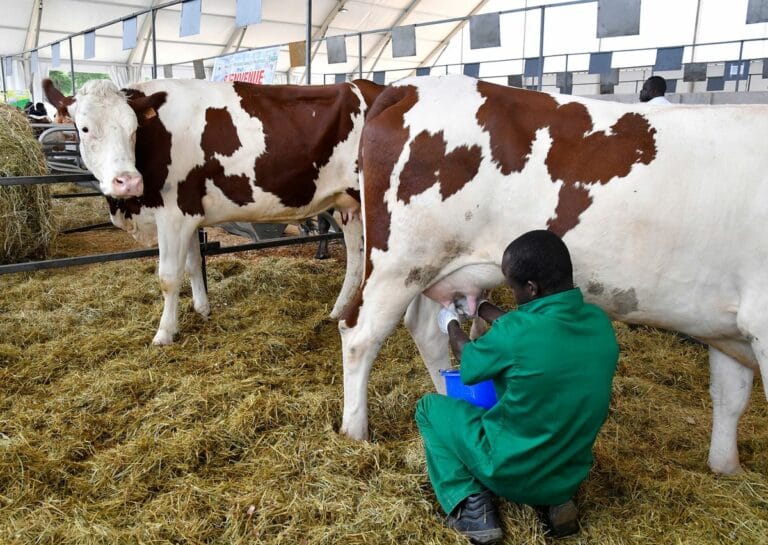
The government has delivered 12 bulk milk coolers to dairy cooperatives across Murang’a County, a move expected to benefit more than 18,500 farmers and cut post-harvest milk losses. The coolers, handed over at the KALRO Seeds Head Office in Gatanga, will support the aggregation of 37,000 litres of milk daily across participating cooperatives.
The handover is part of a much larger national push. Kenya is rolling out 230 bulk milk coolers across 41 counties, a Ksh1.428 billion investment aimed at tackling the post-harvest losses and supply shortages that have been squeezing the country’s dairy sector for months.

What Was Said at the Handover
Principal Secretary for Livestock Development Jonathan Mueke framed the investment as part of a longer-term strategy. “As Government, we will continue supporting dairy farmers through investments that improve production, reduce losses and strengthen market access,” he said, according to KBC Digital.
The event drew a notable political turnout. Cabinet Secretary Alice Wahome, National Assembly Majority Leader Kimani Ichung’wah, Kangema MP Peter Kihungi, and Nominated Senator Veronica Maina were all in attendance, underlining how central the dairy sector has become to the government’s rural economic agenda.
How This Fits the National Rollout
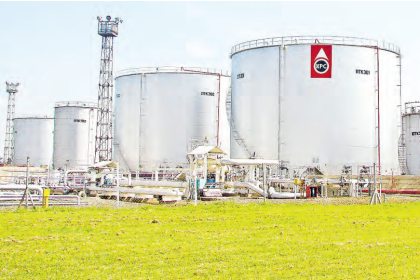
Murang’a’s 12 coolers are a slice of a much bigger programme. Agriculture Cabinet Secretary Mutahi Kagwe told Parliament that the government is investing Ksh1.428 billion, roughly $11.02 million, in 230 bulk milk coolers nationwide, 200 of them solar-powered, according to Sacco Review.
Kagwe said the solar units alone are expected to save dairy cooperatives roughly Ksh73 million a year in electricity costs, while the full rollout is projected to support more than 115,000 farmers across 41 counties. Following a presidential directive, the government plans to deliver an additional 650 coolers by January 2027, according to KBC’s reporting, a scale-up that would push the total well past 800 units nationwide.
Why the Timing Matters
This investment lands at a genuinely difficult moment for Kenya’s dairy sector. Formal milk production has come under pressure from prolonged dry spells, and shops and supermarkets in parts of the country have reported reduced milk supplies in recent weeks, according to People Daily.
Bulk milk coolers matter directly in this context because they extend the window farmers have to get their milk to a buyer before it spoils. In a supply-constrained market, cutting that spoilage rate at the cooperative level effectively adds volume back into the formal system without requiring a single additional cow.
Cheaper Breeding to Match the Infrastructure Push
Kagwe paired the cooler rollout with a separate move to cut the cost of improving dairy herd genetics. The subsidised price of sexed semen has been slashed by nearly 65 percent, from Ksh2,900 to Ksh1,000 per dose, under the government’s existing subsidy programme.
Sexed semen allows farmers to selectively breed for female calves, which go on to become milk-producing cows, rather than leaving herd composition to chance. Making that technology dramatically cheaper is a longer-term play, one aimed at strengthening the productive capacity of Kenya’s dairy herd rather than simply managing today’s shortage.
Murang’a’s History With This Programme
This isn’t Murang’a’s first delivery under the national cooler drive. In April 2026, President William Ruto personally handed over a 10,000-litre bulk milk cooler to Kangari United Dairy Cooperative Society in Kigumo Constituency, part of what officials described at the time as a wider plan to install 12 bulk coolers across the county, according to Dairy Business Middle East & Africa.
That earlier handover was projected to benefit more than 3,600 farmers and support the aggregation of roughly 37,000 litres of milk daily on its own, figures that closely track what officials are now citing for the broader county-wide rollout. Read together, the two events suggest Murang’a’s 12-cooler target announced in April has now been substantially delivered.
Related:Kenya Milk Shortage: Prices Rise as Formal Milk Supply Falls 5%
The Bigger Picture for Dairy Farmers
None of these interventions solve the underlying problem of dry-spell disruption to milk output on their own. What they do is reduce the amount of milk that farmers lose simply because there was nowhere cold enough to store it while waiting for a buyer or processor.
For a cooperative farmer in Murang’a, that’s the difference between milk that reaches a formal buyer at a fair, regulated price and milk that spoils, gets sold at a discount to an informal broker, or doesn’t get sold at all.
Combined with cheaper breeding genetics and continued national expansion of cooler capacity, the government is betting that shoring up this kind of basic cold-chain infrastructure will do more for farmer incomes over time than any single price intervention could.