




Kenya’s manufacturing sector runs on a small cluster of dominant players spanning fast-moving consumer goods, beverages, construction materials, steel, and textiles, most of them clustered around Nairobi and the Thika industrial corridor.
- The List
- 1. Bidco Africa
- 2. East African Breweries PLC (EABL)
- 3. Brookside Dairy Limited
- 4. Bamburi Cement PLC
- 5. Mabati Rolling Mills (MRM)
- 6. Kapa Oil Refineries
- 7. Devki Steel Mills
- 8. Farmer’s Choice Limited
- 9. Unga Group Limited
- 10. British American Tobacco (BAT) Kenya
- Where These Companies Cluster, and Why
- A Sector Facing Real Headwinds
- Frequently Asked Questions
- Is Mabati Rolling Mills part of the Devki Group?
- Who owns Bamburi Cement now?
- Is the EABL-Asahi deal finalized?
- Which is Kenya’s largest manufacturing company by revenue?
- Bottom Line
This list combines company scale, manufacturing footprint, market presence, and available revenue data to rank the ten companies shaping that sector in 2026. It is not an official government ranking, and where private-company revenue figures come from third-party estimates rather than audited financial statements, that’s noted explicitly below.
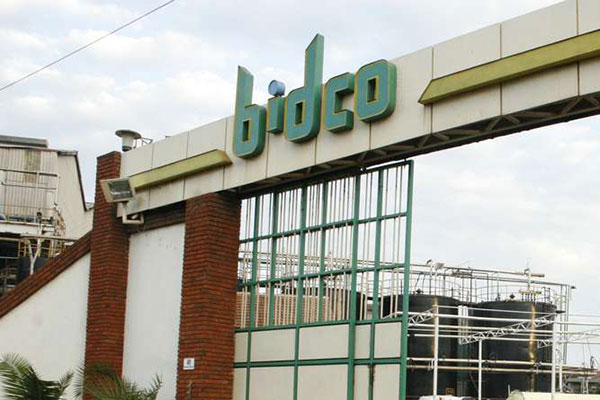
Bidco Africa, headquartered in Thika, is widely cited as Kenya’s largest FMCG manufacturer by revenue, though the exact figure comes from third-party company-data estimates rather than audited results.
The List
| Rank | Company | Sector | HQ / Main Plant |
|---|---|---|---|
| 1 | Bidco Africa | FMCG | Thika, Kiambu County |
| 2 | East African Breweries PLC | Beverages | Ruaraka, Nairobi |
| 3 | Brookside Dairy | Dairy processing | Ruiru, Kiambu County |
| 4 | Bamburi Cement PLC | Construction materials | Mombasa & Athi River |
| 5 | Mabati Rolling Mills | Steel roofing | Mariakani, near Mombasa |
| 6 | Kapa Oil Refineries | FMCG / agro-processing | Mlolongo, Machakos County |
| 7 | Devki Steel Mills | Steel & construction materials | Ruiru & Athi River |
| 8 | Farmer’s Choice | Meat processing | Nairobi |
| 9 | Unga Group | Grain milling & animal feed | Industrial Area, Nairobi |
| 10 | British American Tobacco Kenya | Tobacco | Industrial Area, Nairobi |
A note on methodology worth being upfront about: some publicly available revenue estimates for these companies don’t line up cleanly with this ranking order. One frequently cited estimate, for instance, puts Farmer’s Choice’s 2026 revenue above EABL’s. That estimate comes from a third-party business-data aggregator rather than audited company filings, and private Kenyan manufacturers generally don’t publish detailed revenue breakdowns the way listed companies like EABL and Bamburi do. Where a company is listed with a specific revenue figure below, treat it as a cited estimate, not a verified number.
1. Bidco Africa
Bidco is consistently cited as Kenya’s largest FMCG manufacturer, with third-party business-data estimates putting its annual revenue at roughly $848 million. That figure isn’t drawn from audited financial statements, since Bidco is privately held, so it should be read as a well-sourced estimate rather than a confirmed number. What’s not in dispute is the company’s scale: it started in 1985 as a soap plant before expanding into edible oils, baking fats, detergents, hygiene products, and animal feed, and it now markets more than 50 brands across 13 African countries. Founder Bhimji Depar Shah built the company from that original soap venture, and his son Vimal Shah now runs it as CEO.
2. East African Breweries PLC (EABL)
EABL is East Africa’s dominant beverage manufacturer, producing both alcoholic and non-alcoholic drinks under brands like Tusker through its Kenya Breweries subsidiary, founded back in 1922. As a listed company, its financials are audited and public, which makes it one of the more reliably measured entries on this list.
Its ownership is mid-transition. Diageo agreed in December 2025 to sell its 65% stake in EABL, including its stake in Kenyan spirits producer UDV Kenya, to Japan’s Asahi Group Holdings for roughly $2.3 billion, a deal that would value EABL at about $4.8 billion. East African capital markets regulators approved the deal in May 2026 without requiring a mandatory buyout of minority shareholders, and EABL will remain listed on the Nairobi, Dar es Salaam, and Uganda exchanges regardless of outcome. But the deal has hit real legal friction: a Kenyan distributor, Bia Tosha, has twice sought court intervention over a separate long-running 2016 dispute, while a separate minority-shareholder case in June 2026 resulted in conservatory orders affecting completion. As of this writing, the transaction remains subject to that ongoing litigation alongside standard regulatory clearance, with parties still targeting completion in the second half of 2026.
3. Brookside Dairy Limited
Brookside is East Africa’s largest dairy processor, founded in 1993 on Sukari Farm in Ruiru with an initial capacity of just 5,000 litres a day. It now processes over a million litres daily. Its exact share of Kenya’s formal milk market varies depending on the source, one industry trade publication cites over 67% as of late 2025, while other estimates put it closer to half. Given the spread, it is safer to describe Brookside as the leading player in Kenya’s formal milk-processing market without pinning an exact percentage.
It’s owned in large part by the Kenyatta family, with Muhoho Kenyatta serving as Executive Chairman, alongside minority stakes held by Danone (acquired in 2014) and, earlier, Dubai-based Abraaj Capital.
4. Bamburi Cement PLC
Bamburi is Kenya’s best-known cement brand, holding roughly 30% of the domestic cement market, with plants in Mombasa and Athi River. Its ownership changed significantly in December 2024: Swiss group Holcim, its longtime majority shareholder, sold its entire 58.6% stake to Tanzania’s Amsons Group for over $100 million, ending Holcim’s presence in Kenya entirely. Bamburi is now controlled by Amsons, a family-owned conglomerate with existing interests in oil and gas, real estate, and cement across several African markets, and the company has since made board changes reflecting that new ownership structure.
5. Mabati Rolling Mills (MRM)
MRM is Kenya’s leading manufacturer of coated steel roofing sheets and building solutions, and it’s the flagship company of the Safal Group, not Devki, a distinction worth being precise about since the two are separate steel conglomerates that compete with each other. MRM was founded in 1962 in Mariakani near Mombasa, where its integrated coil facility still sits today, alongside service centres in Athi River, Thika, Kisumu, Eldoret, and several other towns. Its product lines include Dumuzas, Versatile, Covermax, and Lifestile, distinct from Devki’s Maisha Mabati brand, which is a direct competitor rather than a related product line.
6. Kapa Oil Refineries
Based in Mlolongo, Kapa Oil is a major FMCG and agro-processing manufacturer producing cooking oils, margarine, baking powder, and laundry soaps, competing directly with Bidco and Pwani Oil in Kenya’s crowded edible oils and home care segment.
7. Devki Steel Mills
Devki Steel Mills is the flagship of Narendra Raval’s Devki Group, one of Kenya’s largest industrial conglomerates and, separately from MRM, a genuinely major steel and cement producer in its own right. The group, which Raval built starting in 1986, now employs more than 14,000 people across 19 factories in Kenya and Uganda, making it the single largest private-sector employer in the country. Beyond structural steel, rebars, and wire rods, its National Cement Company subsidiary produces the Simba Cement brand and its Maisha Mabati Mills produces roofing sheets, putting Devki in direct competition with both Bamburi and MRM/Safal across different product lines.
8. Farmer’s Choice Limited
Farmer’s Choice is Kenya’s top meat processing company, supplying both local retail chains and export markets with processed meat products. As a privately held company, its current revenue is not publicly disclosed in the same way as listed manufacturers, so third-party estimates should be treated cautiously.
9. Unga Group Limited
Unga is one of Kenya’s oldest grain millers, producing flour for human consumption as well as animal feed. It’s a long-established name in Kenyan manufacturing, operating from Nairobi’s Industrial Area and remaining one of the country’s most recognizable food brands despite newer competitors entering the milling sector.
10. British American Tobacco (BAT) Kenya
BAT Kenya manufactures and exports tobacco and nicotine products from its Industrial Area facility, and it’s one of the few companies on this list with a genuinely global parent structure, as a subsidiary of British American Tobacco PLC. It remains a significant contributor to Kenya’s manufacturing export volumes despite facing the same regulatory and public health pressures tobacco manufacturers face worldwide.
Where These Companies Cluster, and Why
Bidco (Thika) and Brookside (Ruiru) sit within a fairly tight radius in Kiambu County, close enough to Nairobi’s labor market and transport links while offering cheaper industrial land than the capital itself. Devki’s operations, by contrast, span several distinct locations, Ruiru, Athi River, and beyond, so it’s more accurate to describe Devki’s footprint as spread across Kenya’s main industrial corridors than concentrated in any one hub. The Mombasa-Athi River corridor separately hosts Bamburi and MRM, giving cement and steel producers direct access to the port for raw material imports and finished product exports.
A Sector Facing Real Headwinds
Kenya’s manufacturing sector has faced genuine pressure through 2025 and 2026, including high electricity costs, competition from cheaper imports, and periodic currency volatility that raises the cost of imported raw materials and machinery. The Kenya Association of Manufacturers, which represents over 800 member companies across these subsectors, has repeatedly flagged the sector’s contribution to GDP as below government targets set under national industrialization plans, even as individual companies like Bidco and Devki continue to expand.
Related:Top Companies in Thika, Kenya (2026 List)
—Top Manufacturing Companies in Nakuru, Kenya
Frequently Asked Questions
Is Mabati Rolling Mills part of the Devki Group?
No. MRM is the flagship company of the Safal Group, a separate steel and building materials conglomerate. Devki Group’s own roofing brand is Maisha Mabati, a direct competitor to MRM rather than a related company.
Who owns Bamburi Cement now?
Tanzania’s Amsons Group, which acquired Holcim’s entire 58.6% stake in December 2024. Holcim, the former longtime majority owner, has fully exited the Kenyan market.
Is the EABL-Asahi deal finalized?
Not as of this writing. The deal has regulatory approval across Kenya, Uganda, and Tanzania’s capital markets authorities, but separate court cases, including a minority-shareholder petition that produced conservatory orders in June 2026, have repeatedly delayed final completion. Parties are still targeting a close in the second half of 2026.
Which is Kenya’s largest manufacturing company by revenue?
Bidco Africa is most commonly cited as the largest, with estimated revenue around $848 million, but this figure comes from third-party business-data estimates rather than audited results, since Bidco is privately held. Among listed companies with audited financials, EABL is one of the most reliably measured.
Bottom Line
Kenya’s manufacturing sector is dominated by a handful of family-founded businesses. Bidco’s Shah family, Devki’s Narendra Raval, Brookside’s Kenyatta family ownership, and Safal Group’s stewardship of MRM have built genuine industrial scale over three to six decades.
Ownership itself is shifting too, with Amsons replacing Holcim at Bamburi and Asahi’s pending EABL acquisition still working through Kenyan courts. Revenue rankings for the privately held names on this list should be read as estimates, not verified figures, and the geography, concentrated around Thika, Ruiru, Nairobi’s Industrial Area, and the Mombasa-Athi River corridor, remains the most stable thing about Kenya’s manufacturing map even as ownership structures change underneath it.
Sources: Devki Group (Official), Mabati Rolling Mills / Safal Group (Official), Holcim (Kenya Divestment Announcement), Diageo (EABL Sale Agreement), Business Daily Africa (Court Conservatory Orders, June 2026), Dairy Business MEA (Brookside Market Share), ZoomInfo (Revenue Estimates, cited with caution)