





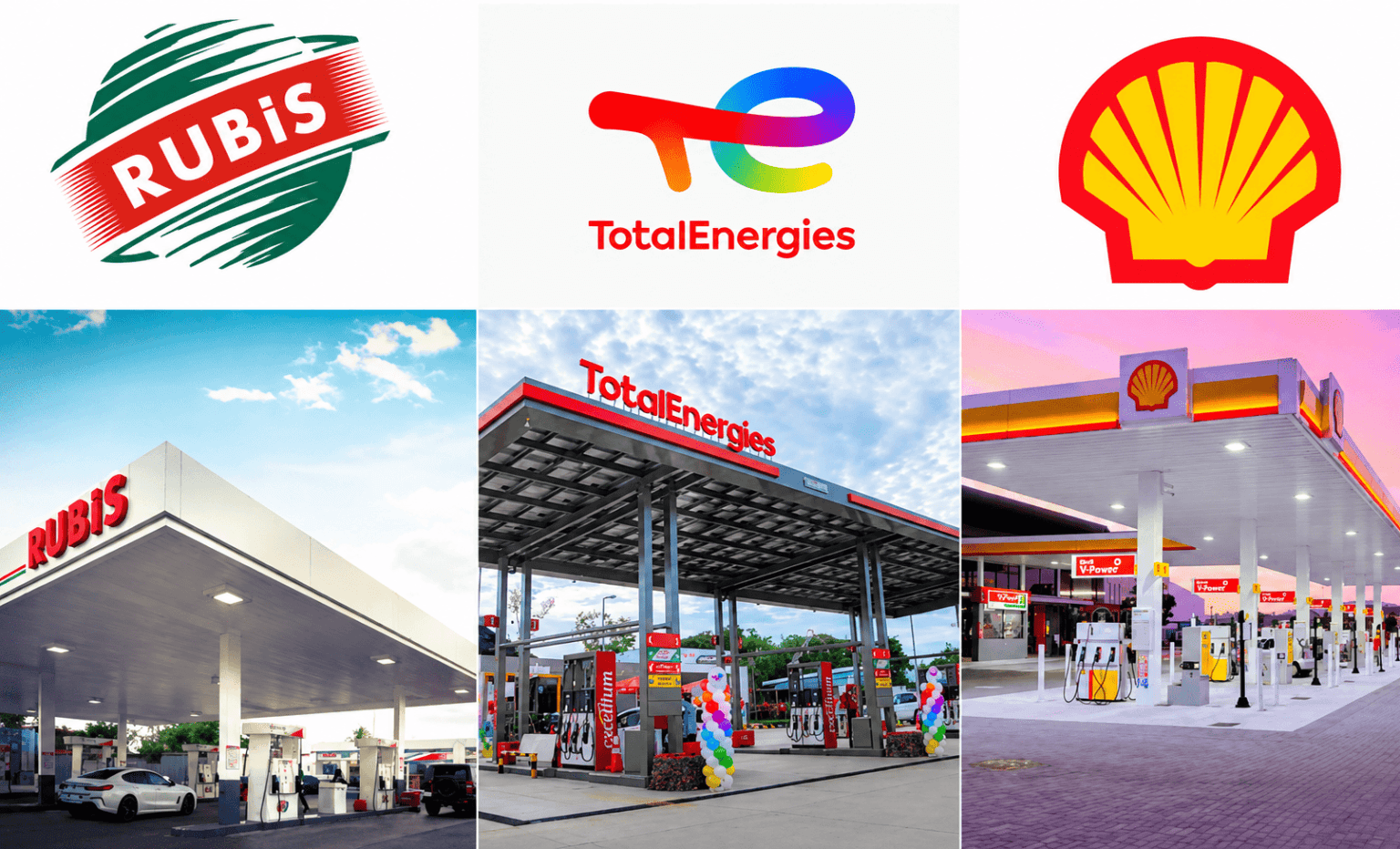
Kenya’s fuel retail market is genuinely more competitive than most drivers realize, even though three familiar names still dominate the pumps. According to EPRA’s latest biannual report, Vivo Energy leads the pack, trading under the Shell brand, with TotalEnergies and Rubis close behind.
Modern fuel stations have evolved well beyond simple filling points too, now doubling as convenience stores, fast-food outlets, and full vehicle service centers. Here is a complete breakdown of who leads the market, what each brand actually offers, and which specific stations consistently earn the best reviews.
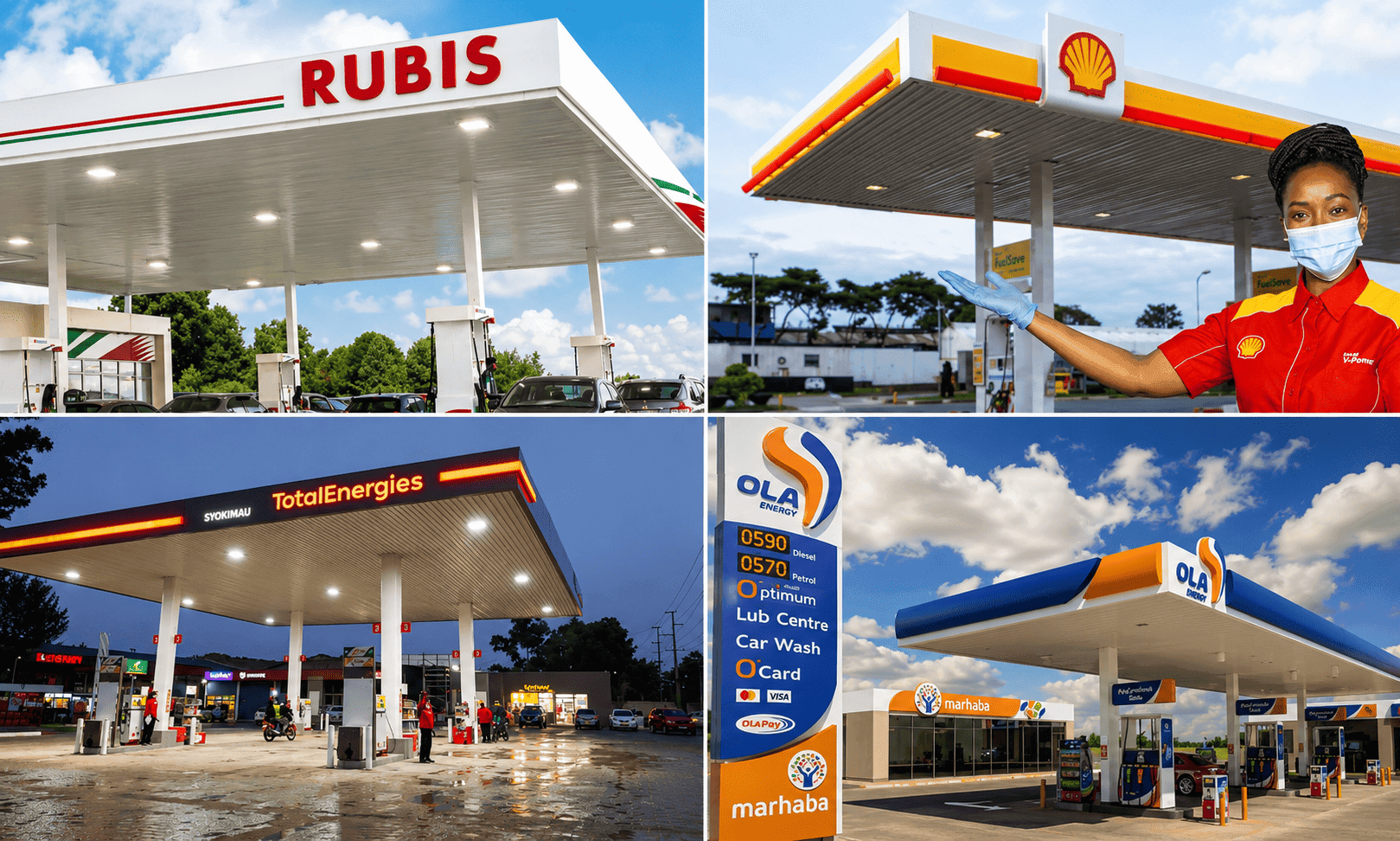
Top Fuel Companies by Market Share in Kenya
Kenya’s fuel retail landscape is anchored by what industry watchers call the Big Three, which together still command a significant chunk of the entire market, though their combined grip has been steadily loosening.
| Rank | Oil Marketing Company | Station Brand | Market Share (EPRA) | Key Highlights |
|---|---|---|---|---|
| 1 | Vivo Energy Kenya | Shell | 20.56% | Premium Shell V-Power fuel, Afrigas LPG, Shell Select stores |
| 2 | TotalEnergies Marketing | Total | 14.01% | Quartz lubricants, Bonjour Shops, solar-powered stations |
| 3 | Rubis Energy Kenya | Rubis / Kobil / Kenol | 13.77% | K-Gas distribution, network of 300+ stations, Rubis Express |
| 4 | Ola Energy Kenya | OLA | 3.49% | Modernized stations, OLA-branded lubricants and fuel |
| 5 | Hass Petroleum | Hass | 3.41% | Leading indigenous regional brand, competitive pricing |
Together, the top five oil marketing companies account for a combined 55.24 percent of the market, according to EPRA’s most recent Biannual Energy and Petroleum Statistics Report covering the 2025/2026 financial year. Kenya currently has around 144 registered oil marketing companies in total, though the vast majority hold market shares under 2 percent each.
How the Market Has Shifted
Vivo Energy has held the top position since November 2012, but its share has actually declined steadily, dropping from 22.24 percent in June 2024 to 20.56 percent by December 2025, its lowest reading in the entire series. That said, it still retains a lead of more than 6 percentage points over the second-placed player.
The real story lately is the battle for second place. Rubis overtook TotalEnergies back in mid-2024 through aggressive station expansion and a partnership with the National Oil Corporation of Kenya, peaking at 15.96 percent in December 2024. Since then, Rubis has fallen sharply, dropping to 13.77 percent by December 2025, a decline of over 2 percentage points in just six months, the steepest drop of any major player in EPRA’s current data. It is worth noting that a separate, more recent Q1 2026 snapshot from the Petroleum Institute of East Africa, an industry body distinct from the government regulator, shows both Rubis and TotalEnergies sitting at roughly 13.8 percent. This PIEA figure is a narrower, more immediate industry read rather than EPRA’s official biannual sales-volume report, so treat it as an early signal that the contest for second place remains unsettled, not as a replacement for EPRA’s authoritative numbers.
Meanwhile, the combined share of the top three players has been shrinking too, falling from 51.83 percent in December 2024 to 48.34 percent by December 2025, a sign that smaller and indigenous OMCs are steadily gaining ground.
Best Petrol Station Brands and Their Features
1. Shell (Vivo Energy)
Shell stations remain widely regarded as the premium choice for Kenyan motorists, built around fuel technology designed to protect engine performance over time.
Fuel varieties: Shell V-Power, a high-octane premium fuel, alongside Shell FuelSave Unleaded and Shell FuelSave Diesel.
Value-added services: Shell Select convenience stores, partnered fast-food chains like Java House or KFC at select locations, and fully equipped service bays for oil changes and car washes.
Website: Vivo Energy Kenya
2. TotalEnergies
One of the oldest and most trusted energy brands operating in Kenya, TotalEnergies has increasingly positioned itself around clean fuel technology and sustainable station operations.
Fuel varieties: Excellium Petrol and Excellium Diesel, engineered with additives designed to clean engines and reduce emissions.
Value-added services: Bonjour convenience stores, Quartz lubricant service centers, and digital fuel card payment systems built for corporate fleet management. TotalEnergies has also become a genuine leader in station sustainability, with 154 of its stations running on solar power as of December 2025, expanding to cover roughly 54 percent of its 285-station network by May 2026, part of a broader push to cut grid dependency and reduce operating costs.
Website: TotalEnergies Kenya
3. Rubis Energy
After acquiring both KenolKobil and Gulf Energy, Rubis built one of the largest and most widespread station networks in Kenya, stretching across major highways and smaller rural towns alike.
Fuel varieties: Ultra Tec premium-grade petrol and diesel.
Value-added services: Distribution of K-Gas, Kenya’s most popular cooking gas brand, Rubis Express convenience shops, and an expanding rollout of electric vehicle charging stations in partnership with providers like BasiGo.
Website: Rubis Energy Kenya
4. Astrol Petroleum
Astrol stands out as a fully Kenyan-owned independent oil marketing company, founded in 2000 by the late billionaire Thayu Kabugi and now run by his son, James Mwangi, as managing director. It is worth being clear about scale here: Astrol is not a top-five player nationally, holding roughly 1 to 1.3 percent of the overall market in recent EPRA reports, well below the Big Three and even Ola or Hass. Its reputation comes instead from strong regional loyalty rather than national market size.
Key advantage: Astrol owns its station real estate outright rather than operating under a franchise model, which lets it pass on lower prices per liter, including a standing 5 shilling discount on fuel purchases. Its fuel carries a 91 PON octane rating. The company runs 14 stations in total, with 11 concentrated in and around Nairobi, deliberately targeting the capital since it accounts for roughly 60 percent of Kenya’s total petroleum consumption.
Top Recommended Individual Stations
These specific stations are frequently highlighted by motorists for cleanliness, service quality, and convenience, based on commonly cited customer reviews and local recommendations rather than a single official ranking.
Rubis Loresho Service Station, located along Loresho Ridge in Nairobi, is praised for its cleanliness, well-stocked convenience store, and consistently friendly attendants.
Ola Petrol Station on Lusaka Road, situated in Nairobi’s Industrial Area, has become uniquely popular for hosting a Varta German Battery Hub on-site, making it a convenient stop for vehicle electrical diagnostics and battery replacements alongside regular fueling.
Rubis River Road Service Station, positioned at the intersection of River Road and Tom Mboya Street in Nairobi’s CBD, stays consistently busy but manages to serve travelers efficiently despite the heavy downtown traffic.
Outside Nairobi, Rubis and Shell stations along the major highway corridors, particularly the Nairobi-Nakuru highway and the Mombasa Road route toward the coast, are commonly recommended by long-distance travelers for reliable fuel quality and rest-stop amenities, given both brands’ extensive coverage of Kenya’s primary transit routes.
Why Market Concentration Matters for Consumers
EPRA measures competitiveness in the fuel sector using the Herfindahl-Hirschman Index, and its most recent reading sat just above the Authority’s own benchmark for a competitive market. This suggests no single company holds outright dominance, even though the top three still supply more than half the country’s fuel.
On pump prices specifically, EPRA reported that fuel costs stayed relatively stable through the second half of 2025, with petrol peaking at KSh 186.31 per litre in July 2025 and dropping to a low of KSh 180.67, while diesel ranged between KSh 171.58 and KSh 178.05 per litre over the same period. These prices are set uniformly across all licensed OMCs under EPRA’s monthly pricing formula, so the real competitive differentiation between brands shows up less in the pump price itself and more in service quality, station amenities, and loyalty perks like Astrol’s standing discount.
Related:Shell Kenya (Vivo Energy Kenya) — 350+ Fuel Stations Nationwide
—TotalEnergies Marketing Kenya — Fuel Stations, LPG & Energy Solutions | Business Listings Kenya
Frequently Asked Questions
Which company controls the largest share of Kenya’s fuel market?
Vivo Energy Kenya, operating under the Shell brand, leads with a 20.56 percent market share as of EPRA’s latest report covering December 2025.
Is Rubis or TotalEnergies bigger in Kenya right now?
The two are extremely close, with TotalEnergies at 14.01 percent and Rubis at 13.77 percent as of EPRA’s December 2025 data, though a separate Q1 2026 industry snapshot from the Petroleum Institute of East Africa shows both hovering around 13.8 percent, making the contest for second place genuinely unsettled.
Which fuel brand has the most solar-powered stations in Kenya?
TotalEnergies leads on this front, with roughly 54 percent of its 285-station network running on solar power as of May 2026.
Is Astrol Petroleum a Kenyan-owned company?
Yes, Astrol is a fully Kenyan-owned independent oil marketing company founded by the late Thayu Kabugi, though it holds a relatively small national market share of around 1 to 1.3 percent compared to the top five players.
How many oil marketing companies operate in Kenya?
EPRA’s most recent report identifies around 144 registered oil marketing companies operating in the country.
Bottom line
Kenya’s fuel retail market remains dominated by Vivo Energy, TotalEnergies, and Rubis, but the gap separating the Big Three from smaller players has genuinely been narrowing. Whether you prioritize premium fuel technology from Shell, TotalEnergies’ growing sustainability push, or Astrol’s lower prices as a smaller independent local player, Kenyan motorists now have real, meaningful choice at the pump.
With market shares shifting noticeably every reporting period, expect this competitive landscape to keep evolving well beyond 2026.