







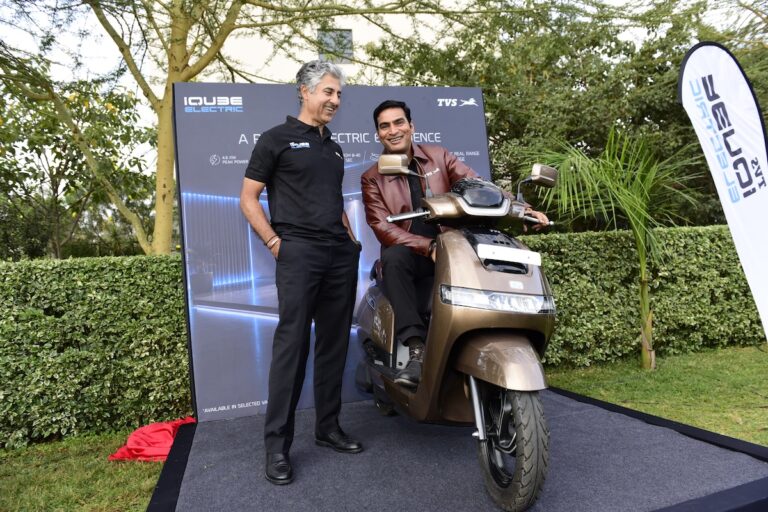
TVS Motor Company has entered Kenya’s electric two-wheeler market, launching the iQube electric scooter in Nairobi in partnership with Car & General, the distributor that’s been part of Kenya’s motoring scene for more than two decades. It’s the Indian manufacturer’s first move into the African continent, and it lands at a moment when Kenya’s electric motorcycle segment is still small but growing fast.
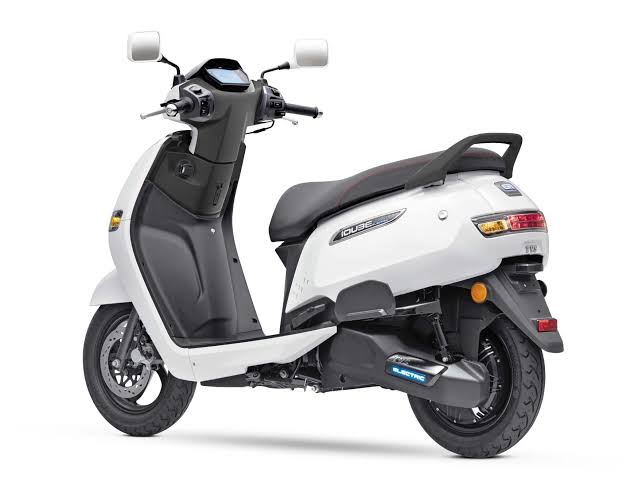
The scooter comes in two variants built for different budgets and riding needs. The TVS iQube 3.5 offers a real-world range of 115 km per charge, while the entry-level iQube 2.2 covers 75 km. Both are backed by a two-year or 30,000-kilometre warranty, whichever comes first, and both plug into a standard domestic power outlet rather than requiring dedicated charging infrastructure, which matters a lot in a market where public EV chargers are still thin on the ground.
What the Numbers Actually Mean
TVS is pitching the iQube on running costs as much as on the technology. The company estimates riders can save roughly KSh 47,000 a year compared to a typical 125cc petrol scooter, a figure that tracks with what you’d expect once you account for Kenya’s fuel prices against the cost of home electricity. Whether that number holds up depends heavily on how much a rider actually uses the bike and local electricity tariffs, but the underlying logic, electric motors costing a fraction of petrol per kilometre, is sound.
Globally, TVS says iQube riders have covered more than 17.8 billion kilometres combined, helping avoid over 623,000 tonnes of CO2 emissions. That’s a meaningful track record for a scooter that first launched in India back in January 2020, and it gives Kenyan buyers a reason to trust the platform beyond marketing claims, since this isn’t an unproven first-generation product.
Connected Features and What They’re Actually Good For
The iQube runs on TVS’s SmartXonnect platform, which pairs with a rider’s smartphone to unlock a set of digital features:
- Navigation and geofencing: turn-by-turn directions plus anti-theft alerts if the bike leaves a set zone.
- Telematics: riding and charging statistics tracked over time, useful for anyone trying to verify those fuel-savings claims for themselves.
- Safety notifications: crash and fall detection, plus reverse parking assistance for tighter city spaces.
Most of these features are nice-to-haves rather than dealbreakers, but the geofencing and anti-theft alerts are genuinely useful in Nairobi, where motorcycle theft is a real concern for boda boda operators and commuters alike. A scooter that can flag if it’s moved without authorization has practical value beyond the novelty of a connected app.
Why This Launch Matters for Kenya’s EV Market
TVS isn’t entering an empty field. Chinese manufacturer Yadea and Kenyan startup Roam are already competing for riders looking to switch from petrol two-wheelers, and Africa’s electric two-wheeler market is projected to grow 15% to 25% annually through 2030-31, well ahead of the broader motorcycle market. What TVS brings that some competitors don’t is scale and an established local partner. Car & General already runs a dealer network across the country, which means buyers get service and spare parts support from day one rather than waiting for infrastructure to catch up with sales.
That local after-sales backbone is often the deciding factor for buyers weighing an electric scooter against a familiar petrol one. A cheap electric bike with nowhere nearby to get it serviced isn’t actually cheap once something breaks. TVS and Car & General are betting that solving the distribution and support problem, not just the vehicle itself, is what gets Kenyan riders to make the switch.
Read also:Foreign Tech Companies Investing in Kenya (2026)
One thing worth watching: battery degradation and replacement costs rarely get mentioned at launch events, but they matter more to total ownership cost over three or four years than the sticker price does. Anyone seriously considering the iQube should ask Car & General directly about battery warranty terms and replacement pricing before buying, since that’s usually the real determinant of whether an electric scooter beats a petrol one on lifetime cost, not just the annual fuel savings figure.
For now, the iQube is available through Car & General’s dealer network nationwide, with full after-sales support already in place.