








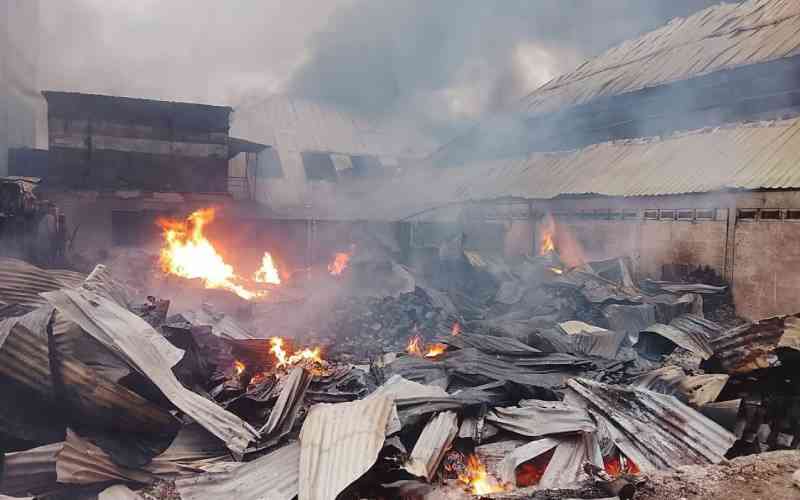
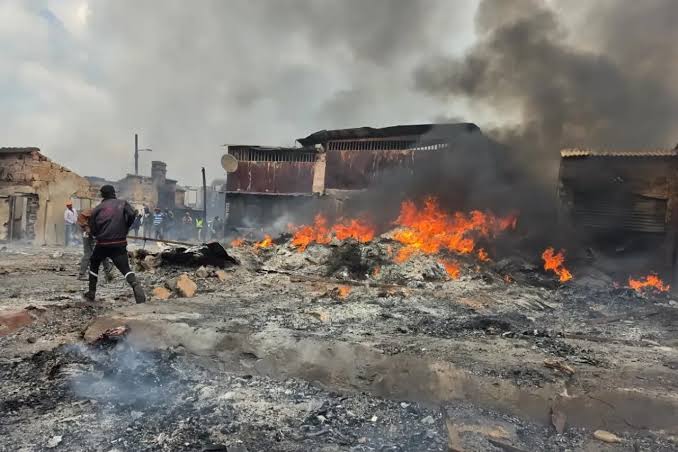
A devastating fire tore through Nairobi’s Gikomba Market in the early hours of the morning, killing two people and leaving countless traders facing massive losses. The blaze ignited around 4:00 a.m. and spread quickly through densely packed stalls, hitting the mitumba and fish sections hardest along with the Kamukunji and Gorofani areas.
Gikomba is one of East Africa’s largest open-air trading hubs, and a fire of this scale represents a significant blow to thousands of traders who depend on the market for their daily livelihoods. Many lost everything they had built over years in a matter of hours.
What Happened During the Fire
The fire claimed two lives, an adult male and an adult female, and at least 17 people were treated for minor injuries including burns and smoke inhalation by the Kenya Red Cross. Emergency teams from the Nairobi City County Fire Department, alongside other multi-agency responders, battled the intense flames for nearly 10 hours before finally bringing the blaze under control.
The scale of the response reflects how serious the situation became before firefighters managed to contain it. Ten hours of continuous firefighting in a densely packed market environment is no small undertaking, particularly given how quickly fire spreads through stalls built close together with flammable merchandise.
The Economic Toll on Traders
Traders lost merchandise, stalls, and equipment worth millions of shillings. For many families, the loss extends beyond financial damage. Their entire livelihood, built up over years of trading, was reduced to ashes in a single night.
Gikomba traders are predominantly small business owners operating on thin margins, often without insurance to cushion losses of this magnitude. Rebuilding stock and stalls from nothing is a significant financial challenge that many affected traders will struggle to overcome without external support.
A Painful Pattern That Keeps Repeating
This is not the first time Gikomba Market has burned. The market has a long and troubling history of recurring fires that have destroyed goods and property repeatedly over the years, sparking frustration and outrage among traders and the wider public each time.
That pattern raises uncomfortable questions about fire safety standards, electrical infrastructure, and emergency preparedness within the market. Until those underlying issues are addressed directly, traders will continue facing the very real risk that their businesses could be wiped out again without warning.
Governor Sakaja’s Response
Nairobi Governor Johnson Sakaja visited the affected areas in the aftermath of the fire and gave displaced traders a direct assurance: they will not lose their trading spaces. He stated firmly that no one will be permitted to use this tragedy as an opportunity to forcefully evict or displace the original stall owners.
Also read:Mitumba Bales Kenya — Wholesale Suppliers, Prices; Where to Buy | Business Listings Kenya
That assurance matters significantly in Gikomba’s context, where land and trading space disputes have historically created additional anxiety for traders following past disasters. Sakaja’s commitment to protecting existing tenure rights is meant to remove that fear from an already devastating situation.
What Comes Next
Authorities have committed to allowing traders to rebuild on their original spaces while the Nairobi City County continues its multi-billion-shilling market modernisation project. That modernisation effort, if implemented with proper fire safety infrastructure built in from the start, could finally break the cycle of repeated fire disasters that has plagued Gikomba for years.
The exact cause of this latest fire remains unknown, and official investigations are ongoing. Until those findings are released, traders and the wider Nairobi business community will be watching closely to see whether this incident finally prompts the structural changes needed to prevent the next one.