











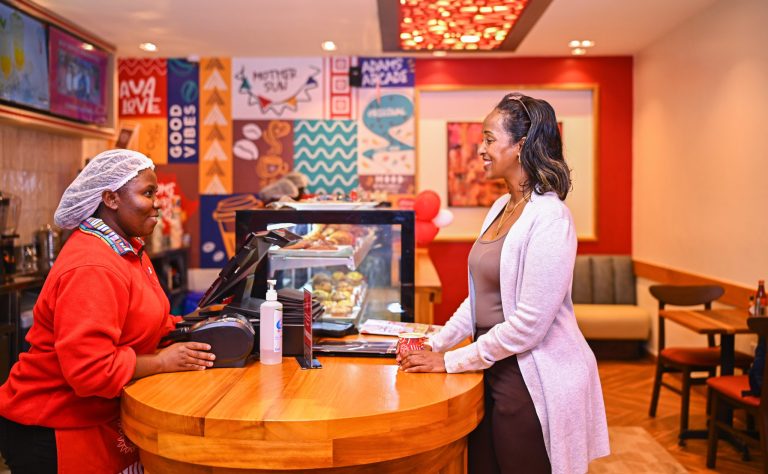
Java House has opened a new outlet at Shell Adams Arcade in Nairobi, bringing its total restaurant count across East Africa to 109. The expansion comes as the casual dining chain responds to a clear shift in how East Africans eat out, with younger, digitally active consumers driving demand for more convenient, accessible, and health-conscious dining options across the region.
The new branch sits close to Java House’s original Adams Arcade outlet, which first opened its doors in 1999. That location has proven its commercial strength over more than two decades, and the new Shell Adams branch is positioned to capture the growing foot traffic from a customer base that has evolved significantly since the brand first established itself in the area.
What Is Driving the Change in Dining Habits
East Africa’s casual dining sector is experiencing a structural shift. Consumers are eating out more frequently than they did five years ago, and their expectations when they do have risen considerably. Health-conscious menus, faster service, digital ordering options, and accessible locations are no longer premium features. They are baseline expectations for a growing segment of the market.
Read also;Uber Eats Kenya — Food Delivery from Local Restaurants Nairobi | Business Listings Kenya
This pattern mirrors broader trends across African consumer markets, where urbanisation, rising incomes, and smartphone penetration are reshaping how people spend on food and leisure. Kenya sits at the centre of that shift, with Nairobi’s young professional population driving much of the demand that chains like Java House are responding to.
What Java House’s COO Says About the Strategy
Java House Group Chief Operating Officer Naima Hassan has been direct about what is informing the company’s expansion decisions. Customer feedback and behavioural data are pointing consistently toward convenience and frequency as the dominant priorities among the chain’s core demographic.
“We’ve noticed that customers want to visit more often, and younger and more digitally active consumers expect convenient options,” Hassan said at the opening of the Shell Adams branch. Her observation reflects a deliberate pivot in how Java House approaches growth, one that prioritises adapting to market trends over simply adding locations to a map.
Expansion With Purpose, Not Just Numbers
Reaching 109 restaurants across East Africa is a significant milestone for a brand that started with a single outlet in Nairobi over two decades ago. But Hassan has made clear that the number itself is not the primary measure of success the company is chasing.
Investments in digital platforms are shaping the customer experience both inside and outside the restaurant. Supplier partnerships are being deepened to support menu quality and consistency at scale. Workforce development is being treated as a strategic priority rather than an operational afterthought. Each new location is being built around these principles rather than simply replicating the same format in a new postcode.
Java House operates within a competitive casual dining landscape that includes both local and international brands. Staying relevant to a digitally engaged customer base requires continuous investment in technology and service quality, not just physical presence. The Kenya Association of Hotel Keepers and Caterers has noted that food service businesses investing in digital ordering and loyalty platforms are outperforming those relying on traditional service models alone.
Jobs, Suppliers and Local Economic Impact
Every new Java House outlet creates direct employment across kitchen, service, and management roles. The Shell Adams branch adds to a workforce that has grown considerably as the chain has expanded across Kenya, Uganda, and other East African markets.
Beyond direct employment, Java House’s supply chain supports local farmers, food processors, and beverage producers. At 109 locations, the volume of produce, dairy, and other inputs the chain sources daily makes it a meaningful commercial partner for suppliers across the region. That economic multiplier effect extends well beyond the restaurant floor into the communities and supply chains each branch connects with.
As Kenya National Bureau of Statistics data consistently shows, the food service sector is one of the faster-growing segments of Kenya’s economy, supported by urbanisation and a young population with rising disposable income. Java House’s continued expansion reflects confidence that this growth trajectory has more runway ahead of it.