







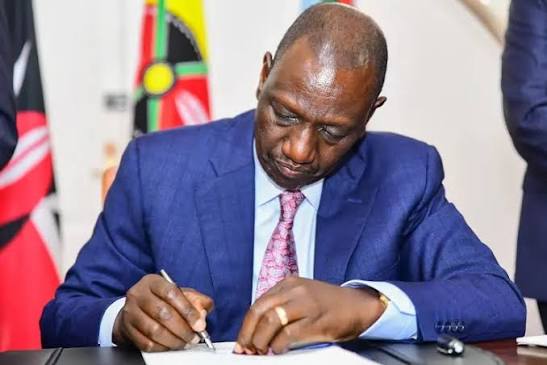
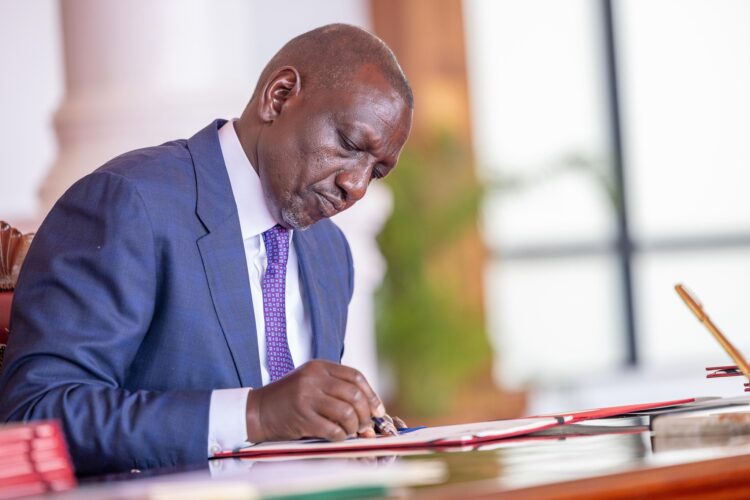
President William Ruto has allocated KSh 21.5 billion to a fuel price stabilisation fund, designed to protect Kenyan consumers and businesses from sudden spikes driven by global oil market volatility. The announcement came on Tuesday, June 23, 2026, following the signing of the Finance Bill 2026 into law.
The move follows an aggressive period of fuel subsidy deployment by the government. According to the Energy and Petroleum Regulatory Authority, KSh 15.72 billion was spent during the May to June pricing cycle alone to cushion consumers after petroleum VAT was doubled to 16 percent.
Current Pump Prices in Nairobi
EPRA’s latest pricing review sets the following maximum retail prices for Nairobi, effective June 2026:
- Super Petrol: KSh 214.03 per litre
- Diesel: KSh 222.86 per litre
- Kerosene: KSh 191.38 per litre
These prices reflect the combined effect of global crude oil movements, the shilling’s exchange rate, and the government’s subsidy intervention. Without the stabilisation fund absorbing part of the cost, pump prices would be higher.
What the KSh 21.5 Billion Is Designed to Do
The fund targets extreme retail price fluctuations driven by geopolitical tensions, particularly instability around Middle East supply corridors that affect global crude prices. Kenya imports virtually all of its refined petroleum products, making local pump prices highly sensitive to international market movements.
By maintaining a dedicated stabilisation reserve, the government aims to absorb short-term price shocks before they translate directly into higher costs for transport, food, and manufacturing. Fuel prices affect virtually every sector of the economy, making price stability a macroeconomic priority, not just a consumer issue.
East African Refinery as a Long-Term Fix
Beyond the stabilisation fund, President Ruto announced seed capital to establish an East African Refinery. The project is designed to reduce Kenya’s long-term dependence on imported refined petroleum products, addressing the structural vulnerability that makes the country susceptible to global supply chain disruptions in the first place.
A regional refinery would give East Africa greater control over fuel pricing and supply security, reducing the exposure to international market volatility that currently makes fuel subsidies a recurring budget pressure for the Kenyan government.
Broader Energy Sector Allocation
The total energy sector budget stands at KSh 34.1 billion. Of that, KSh 26.1 billion goes toward rural electrification, extending power access to communities currently off the national grid. KSh 3.7 billion is allocated to power generation capacity, and KSh 3.2 billion supports alternative energy development.
Read also:KRA Lost KSh 9.1 Billion in Two Months After Government Cut Fuel VAT in Half
An additional KSh 5 billion has been dedicated to an energy loss reduction programme aimed at improving grid efficiency and cutting technical losses that drive up the cost of electricity distribution. The Kenya Power network currently loses a significant portion of generated electricity to technical inefficiencies, and reducing that loss directly lowers costs for consumers and businesses.
Why Fuel Price Stability Matters Beyond the Pump
Keeping pump prices under control is central to Kenya’s broader economic competitiveness. Fuel costs feed directly into transport, food prices, manufacturing inputs, and the cost of running small businesses. When prices spike suddenly, the ripple effect reaches households that may not own a vehicle or directly purchase fuel.
According to the Kenya National Bureau of Statistics, fuel price movements are one of the primary drivers of Kenya’s monthly inflation figures. A well-funded stabilisation mechanism that prevents extreme volatility helps anchor inflation expectations and supports the Central Bank of Kenya’s monetary policy objectives.