






South African conglomerates are pouring Sh413 billion into Kenya’s top corporations, executing a wave of acquisitions that signals deep and sustained confidence in East Africa’s economic trajectory. Johannesburg-listed giants are scaling up stakes in Kenyan blue-chip companies across telecommunications, banking, and financial services, chasing the kind of growth that their sluggish domestic market is no longer delivering.
The scale of this investment wave is striking even by the standards of a market that has been attracting significant foreign capital in recent years. Multiple billion-shilling deals are closing simultaneously, and the companies involved are household names in Kenya’s economy.

The Four Deals Driving the Sh413 Billion
Vodacom Group is acquiring an additional 20 percent stake in Safaricom, Kenya’s most valuable listed company and the dominant force in mobile money and telecommunications across East Africa. This is one of the most significant single transactions in the current investment wave given Safaricom’s market position and the strategic value of its M-Pesa platform.
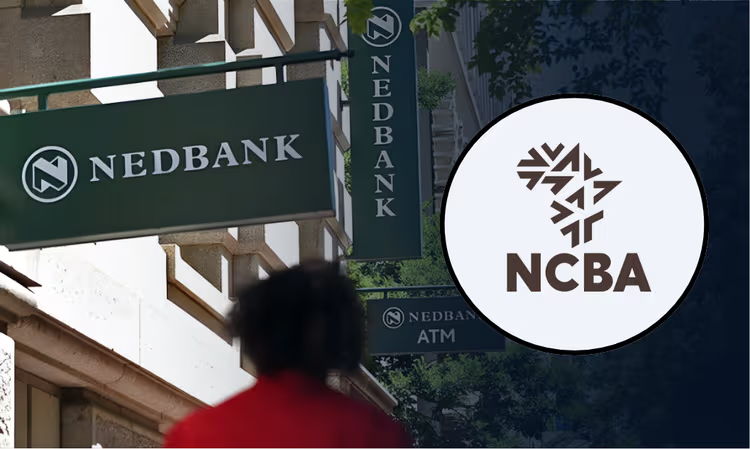
Nedbank Group is executing a takeover of a 66 percent controlling stake in NCBA Group, one of Kenya’s largest banks. The deal delivers substantial payouts to NCBA’s founding shareholders while giving Nedbank a dominant position in one of Africa’s most competitive banking markets.
Absa Group has launched a Sh31 billion tender offer to acquire an additional 16.5 percent stake in Absa Bank Kenya, pushing its total ownership to 85 percent. The move reflects the parent company’s conviction that Kenya’s banking market will deliver superior returns over the medium to long term.
Standard Bank has steadily increased its ownership in Stanbic Holdings, the parent of Stanbic Bank Kenya, from 60 percent to 74.92 percent. Unlike the headline-grabbing tender offers from Nedbank and Absa, Standard Bank has built its position methodically over time, a quieter but equally deliberate expansion strategy.
Why Kenya and Why Now
South Africa’s domestic banking and telecoms markets are mature and growing slowly. The returns available in Kenya, with its young population, rapidly expanding digital economy, and position as the gateway to a wider East African Community market, are simply more attractive by comparison.
Read also:Absa Bank Kenya Sponsors IHS Affordable Housing Conference Amid 2 Million Unit Deficit
Kenya’s fintech ecosystem is among the most developed on the continent, giving acquiring companies infrastructure they can build on rather than having to create from scratch. M-Pesa alone represents a digital financial services platform that most markets in the world have not replicated, making Safaricom uniquely valuable to a telecoms group with regional ambitions.
Banking Sector Consolidation Is Creating More Opportunities
Beyond the four headline deals, South African banks are actively watching Kenya’s mid-tier lenders as new capital requirements force consolidation across the sector. Kenya’s Business Laws Amendment Act raises minimum core capital from KSh 1 billion to KSh 10 billion by 2029, and banks that cannot meet the interim deadline of KSh 5 billion in December 2026 become acquisition candidates.
FirstRand Bank is among the South African players still evaluating entry options into Kenya’s banking market, suggesting the current wave of acquisitions may not be the last. As more smaller lenders face capital pressure, further consolidation opportunities are likely to emerge before the 2029 deadline.
What This Means for Kenya’s Economy
Foreign investment of this scale validates Kenya’s position as East Africa’s premier financial hub and primary gateway for regional trade across Uganda, Tanzania, Rwanda, and the DRC. Capital flowing into Kenyan blue-chips strengthens the companies involved, deepens the Nairobi Securities Exchange, and signals to other international investors that Kenya’s economic fundamentals are worth backing.
The more nuanced question is what increasing South African ownership of Kenya’s most strategic companies means for local economic sovereignty over time. As foreign stakes in Safaricom, NCBA, and major banks grow larger, the balance between attracting capital and retaining meaningful domestic influence over critical financial infrastructure becomes a conversation worth having at the policy level.